
-
Product Categories
-
Live Support Chat


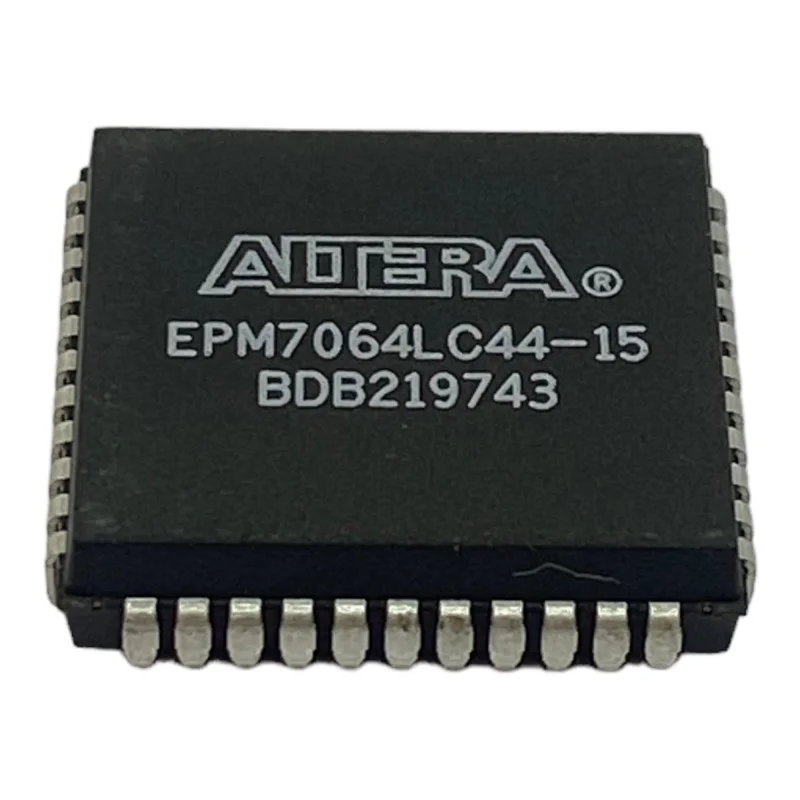
Reverse PLD IC Altera EPM7064LC44-15
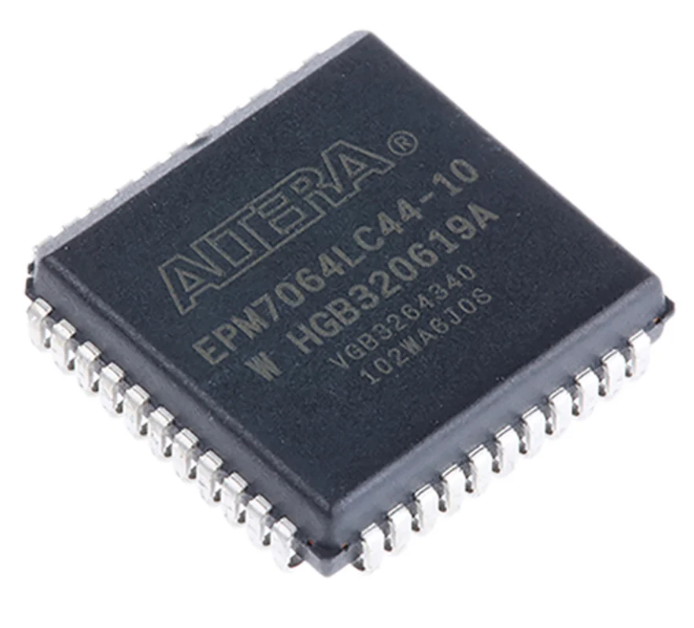
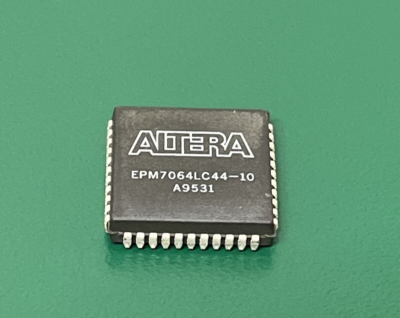
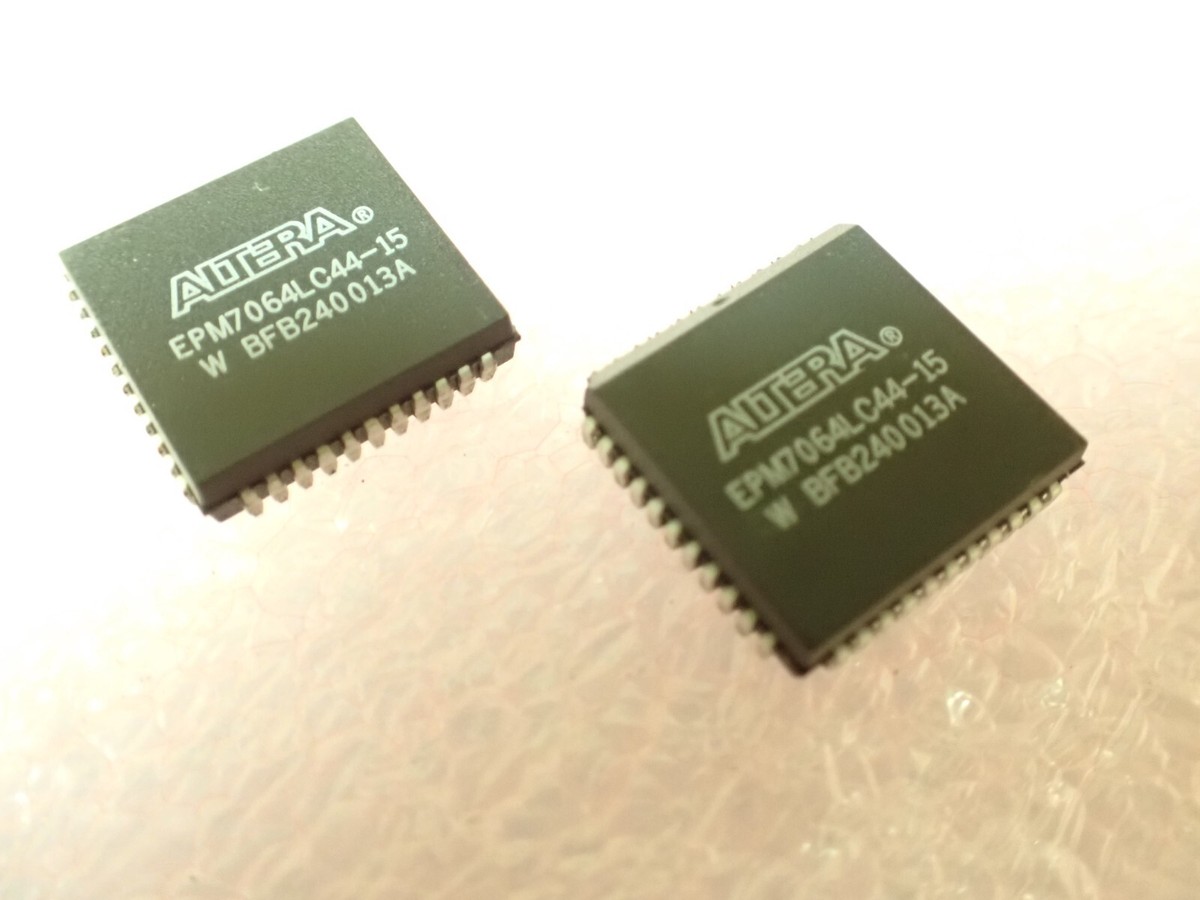
The Altera EPM7064LC44-15 is a widely deployed CPLD device known for its stability, versatility, and long-term availability in the industrial electronics world. As part of the MAX7000 family, this PLD chip has been integrated across multiple sectors for logic control, signal interfacing, timing management, and system coordination. Even as semiconductor technology moves toward more complex programmable devices, the EPM7064LC44-15 remains essential in legacy systems and specialized hardware platforms that depend on its deterministic performance and predictable timing behavior.
Industry Applications and the Importance of Its Logic
Over the last two decades, manufacturers have adopted this PLD IC in:
- Industrial automation machines
- Test & measurement instruments
- Communication controllers
- Medical devices
- Consumer electronics
- Automotive modules
- Military and aerospace subsystems
In these environments, the programmed logic inside the device—often saved as a JED archive, binary fuse map, or configuration data—plays an indispensable role. The internal program structure dictates how signals are processed, redirected, or synchronized. Without the original design source code or project file, even a single failed CPLD can cause downtime, malfunction, or a complete halt in production.
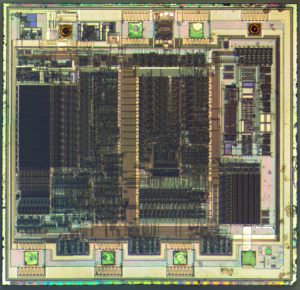
We can Reverse PLD IC Altera EPM7064LC44-15, please view below chip features for your reference:
High-performance, EEPROM-based programmable logic devices (PLDs) based on second-generation MAX® architecture 5.0-V in-system programmability (ISP) through the built-in IEEE Std. 1149.1 Joint Test Action Group (JTAG) interface available in MAX 7000S devices – ISP circuitry compatible with IEEE Std. 1532 Includes 5.0-V MAX 7000 devices and 5.0-V ISP-based MAX 7000S devices Built-in JTAG boundary-scan test (BST) circuitry in MAX 7000S devices with 128 or more macrocells Complete EPLD family with logic densities ranging from 600 to 5,000 usable gates (see Tables 1 and 2) 5-ns pin-to-pin logic delays with up to 175.4-MHz counter frequencies (including interconnect) PCI-compliant devices available.
Open-drain output option in MAX 7000S devices
Programmable macrocell flipflops with individual clear, preset, clock, and clock enable controls
Programmable power-saving mode for a reduction of over 50% in each macrocell
Configurable expander product-term distribution, allowing up to 32 product terms per macrocell 44 to 208 pins available in plastic J-lead chip carrier (PLCC), ceramic pin-grid array (PGA), plastic quad flat pack (PQFP), power quad flat pack (RQFP), and 1.0-mm thin quad flat pack (TQFP) packages
Programmable security bit for protection of proprietary designs 3.3-V or 5.0-V operation
– MultiVoltTM I/O interface operation, allowing devices to interface with 3.3-V or 5.0-V devices (MultiVolt I/O operation is not available in 44-pin packages)
– Pin compatible with low-voltage MAX 7000A and MAX 7000B devices
Enhanced features available in MAX 7000E and MAX 7000S devices
– Six pin- or logic-driven output enable signals
– Two global clock signals with optional inversion
– Enhanced interconnect resources for improved routability
– Fast input setup times provided by a dedicated path from I/O pin to macrocell registers
– Programmable output slew-rate control;
Software design support and automatic place-and-route provided by Altera’s development system for Windows-based PCs and Sun SPARCstation, and HP 9000 Series 700/800 workstations
Additional design entry and simulation support provided by EDIF 2 0 0 and 3 0 0 netlist files, library of parameterized modules (LPM), Verilog HDL, VHDL, and other interfaces to popular EDA tools from manufacturers such as Cadence, Exemplar Logic, Mentor Graphics, OrCAD, Synopsys, and VeriBest.
Programming support
– Altera’s Master Programming Unit (MPU) and programming hardware from third-party manufacturers program all MAX 7000 devices
– The BitBlasterTM serial download cable, ByteBlasterMVTM parallel port download cable, and MasterBlasterTM serial/universal serial bus (USB) download cable program MAX 7000S devices.
Challenges of Working With a Secured / Protected CPLD
Real difficulties arise when attempting to replicate or maintain equipment built around the EPM7064LC44-15, especially when the device is secured, protected, encrypted, or locked. Over time, companies may lose access to the design environment, the development team, or the original firmware owners.
The typical challenges include:
- CPLD cannot be readout through normal programming tools
- The internal fuse map is encrypted or locked
- Legacy development tools no longer operate on modern systems
- No backup of the programmable logic exists
- Replacement hardware becomes incompatible without the original configuration
- Timing-critical applications cannot tolerate logic deviation
These obstacles make traditional maintenance nearly impossible and put long-term equipment stability at risk.
Purpose of Reverse Engineering the EPM7064LC44-15
The need to reverse or recover data from this PLD IC usually comes from practical engineering cases such as:
- Restoring outdated machines that still rely on this CPLD
- Copy or replicate hardware for continued manufacturing
- Supporting urgent equipment repairs when no firmware remains
- Migrating legacy logic into new CPLD or FPGA platforms
- Dumping, decrypting, or unlocking protected logic for technical analysis
- Ensuring that proprietary timing signals are preserved for safety-critical systems
In many industries, even one missing CPLD configuration can disrupt the full product chain.
Our Professional Capability
We specialize in the extraction of CPLD configuration data from locked and secured Altera devices without requiring the original design files. Whether the device requires:
- crack, decrypt, copy, replicate, readout, dump, or unlock procedures,
- extraction of binary fuse maps, heximal data, or JED archive,
- recovery of logic for repair or migration,
we provide a reliable and technically proven service tailored specifically for complex legacy programmable logic devices like the EPM7064LC44-15.
Our work focuses on delivering a complete, functional recovery of the embedded logic while maintaining the integrity and usability of the data for future programming, duplication, or analysis.
Conclusion
Reversing the PLD IC Altera EPM7064LC44-15 requires specialized knowledge and deep understanding of CPLD behavior, memory structure, and protection mechanisms. As companies face equipment aging and loss of original development resources, having access to a dependable recovery service becomes crucial. We help clients preserve their intellectual property, restore equipment, and ensure long-term operational continuity — professionally and efficiently.