-
Product Categories
-
Live Support Chat


Unlock Chip Microchip PIC24FJ256GB206 Flash Microcontrollers
The Microchip PIC24FJ256GB206 is a high-performance 16-bit flash microcontroller (MCU) from Microchip Technology’s PIC24FJ GB2 family, designed for embedded systems that require reliable processing, connectivity, memory capacity, and low-power operation. With up to 256 KB of program flash memory, substantial RAM, USB functionality, advanced peripheral integration, and a 16-bit microcontroller architecture, the PIC24FJ256GB206 is suitable for a wide range of modern embedded applications. Its integrated peripherals and flexible communication interfaces make this MCU particularly useful in industrial control equipment, consumer electronics, automotive-related electronics, medical and instrumentation equipment, communication devices, smart devices, security systems, and other specialized electronic products. Because the microcontroller combines processing capability, flash memory, data storage, and multiple hardware interfaces in a compact IC, it is commonly found in products where reliable firmware operation and long-term embedded software stability are important.

We can Unlock Chip Microchip PIC24FJ256GB206 Flash Microcontrollers, please view the IC chip features for your reference:
High-Performance CPU
Analog Features:
During the repair, maintenance, reproduction, redesign, or discontinuation of an electronic product, the original firmware stored inside a PIC24FJ256GB206 can become extremely important. However, the chip may be locked or secured by its original programming configuration to prevent unauthorized access to the internal memory. When the original development files, source code, firmware archive, or programming data are no longer available, engineers may need to investigate whether the contents of the MCU can be legitimately recovered.
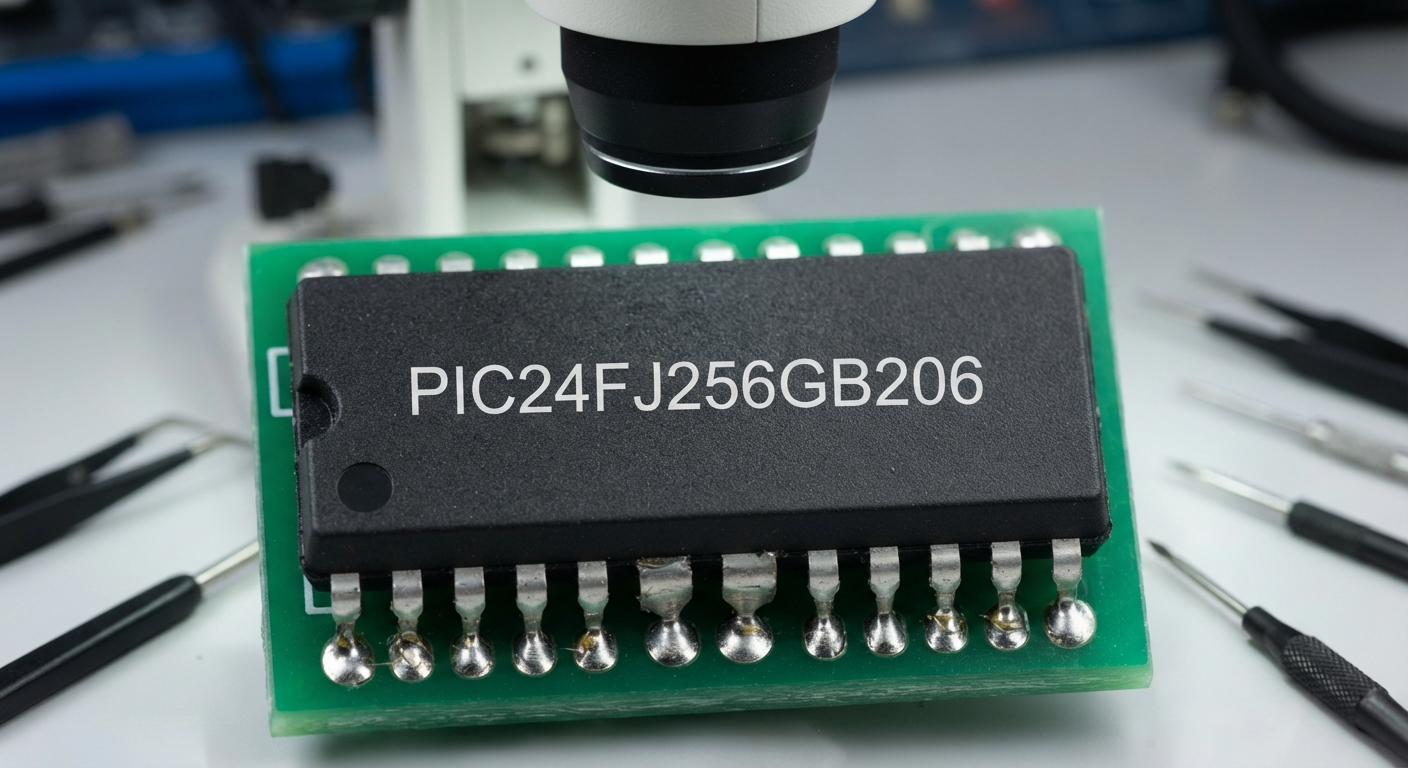
Recovering available firmware or memory data can help with product repair, replacement of obsolete components, hardware migration, production continuity, quality analysis, and long-term product maintenance. For authorized owners and manufacturers, obtaining a usable copy of the original firmware can also reduce the need to completely redevelop embedded software when the original source code has been lost. The feasibility of recovery depends on the exact PIC24FJ256GB206 configuration, protection settings, device condition, available interfaces, and the nature of the firmware stored in the chip.
with Flexible Addressing modes
· Linear Program Memory Addressing, up to
12 Mbytes
· Data Memory Addressing, up to 16 Mbytes:
– 2K SFR space
– 30K linear data memory
– 66K extended data memory
– Remaining (from 16 Mbytes) memory (external) can be accessed using extended data Memory (EDS) and EPMP (EDS is divided into 32-Kbyte pages)
· Two Address Generation Units for Separate Read and Write Addressing of Data Memory
Power Management:
· On-Chip Voltage Regulator of 1.8V
· Switch between Clock Sources in Real Time
· Idle, Sleep and Doze modes with Fast Wake-up and
Two-Speed Start-up
· Run Mode: 800 mA/MIPS, 3.3V Typical
· Sleep mode Current Down to 20 mA, 3.3V Typical
· Standby Current with 32 kHz Oscillator: 22 mA, 3.3V
The process of working with a protective, secured, encrypted, or locked microcontroller requires careful identification of the device, its memory architecture, protection configuration, and available programming or debugging interfaces. Depending on the specific device condition and authorization, specialists may evaluate whether it is possible to readout, dump, copy, replicate, decrypt, or recover usable information from the internal firmware, source code, data, software, memory, archive, flash, or eeprom. A professional recovery process normally starts with identifying the exact microcontroller, microprocessor, MCU, chip, or IC, checking its programming environment and protection status, and determining which memory areas may be accessible.
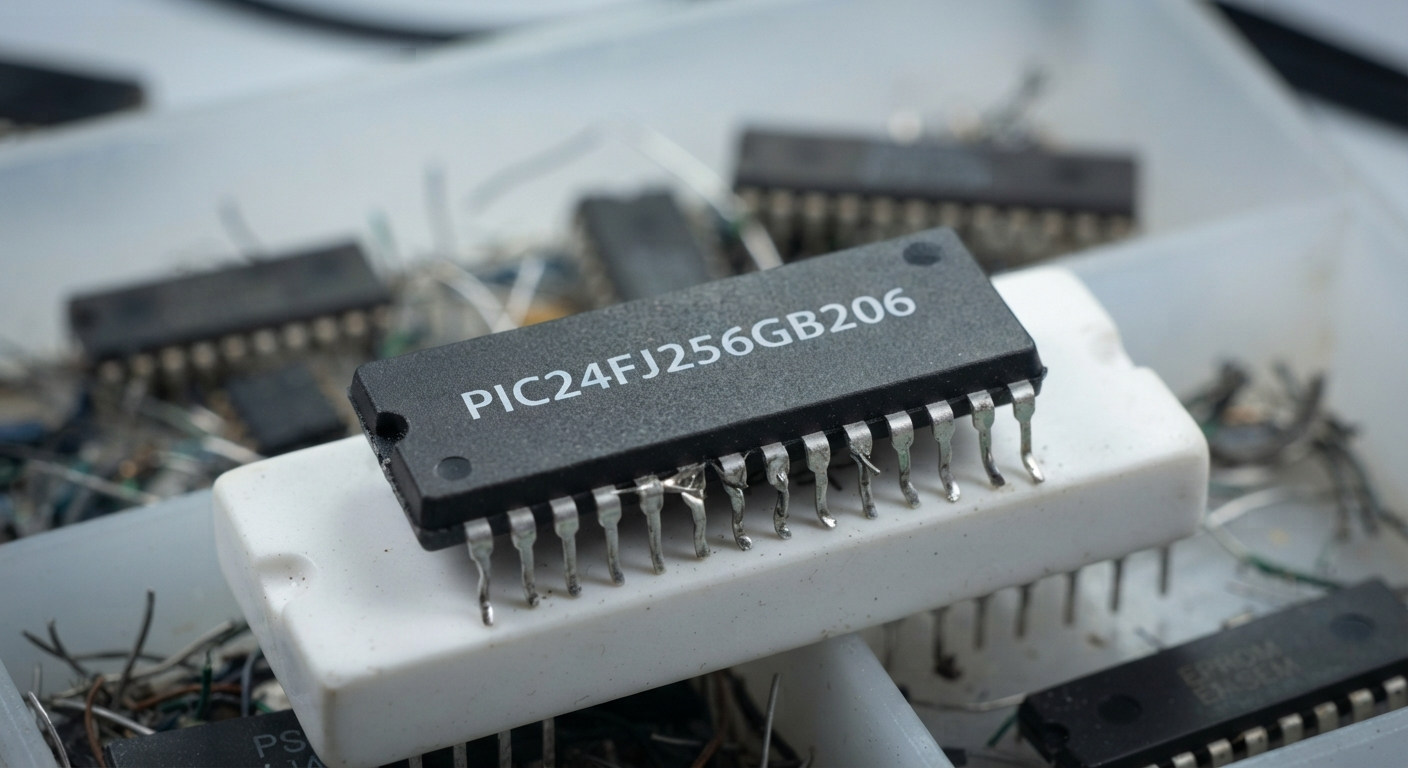
Specialized hardware and software tools can then be used for legitimate firmware analysis and recovery where technically possible. It is important to understand that recovering firmware from a locked MCU is not the same as simply reading an unprotected chip: protection mechanisms may prevent normal memory access, and some secured configurations may make complete recovery technically impossible. Therefore, professional evaluation is recommended before attempting any unlock or firmware recovery operation.
Peripheral Features (Continued):
· Peripheral Pin Select:
– Up to 44 available pins (100-pin devices)
· Three 3-Wire/4-Wire SPI modules (supports 4 Frame modes)
· Three I2C™ modules Supporting Multi-Master/Slave modes and 7-Bit/10-Bit Addressing
· Four UART modules:
– Supports RS-485, RS-232, LIN/J2602 protocols and IrDA®
· Five 16-Bit Timers/Counters with Programmable Prescaler
· Nine 16-Bit Capture Inputs, each with a Dedicated Time Base
· Nine 16-Bit Compare/PWM Outputs, each with a Dedicated Time Base
· Hardware Real-Time Clock and Calendar (RTCC)
· Enhanced Programmable Cyclic Redundancy Check (CRC) Generator
· Up to 5 External Interrupt Sources
Our team provides professional PIC24FJ256GB206 firmware recovery and microcontroller analysis services for authorized customers who need to recover important embedded codes from existing electronic equipment. We can assist with device identification, memory and protection analysis, firmware readout evaluation, firmware backup, data recovery, chip-to-chip migration, and related MCU programming requirements. Whether the original source code has been lost, an obsolete product needs to be repaired, or a manufacturer requires a backup of its existing firmware, our engineers can evaluate the chip and determine the most appropriate recovery approach.

We work with customers to assess the specific PIC24FJ256GB206 device, available programming information, hardware condition, and protection status before proceeding. If you have a PIC24FJ256GB206 chip or PCB containing important firmware that you need to preserve or recover, contact us with the MCU marking, PCB information, and any available programming files so that we can evaluate the recovery possibilities
C Compiler Optimized Instruction Set Architecture
· 10-Bit, up to 24-Channel Analog-to-Digital (A/D) Converter at 500 ksps:
– Operation is possible in Sleep mode
– Band gap reference input feature
· Three Analog Comparators with Programmable
Input/Output Configuration
· Charge Time Measurement Unit (CTMU): with Flexible Addressing modes
· Linear Program Memory Addressing, up to 12 Mbytes
· Data Memory Addressing, up to 16 Mbytes:
– 2K SFR space
– 30K linear data memory
– 66K extended data memory
· Two Address Generation Units for Separate Read and Write Addressing of Data Memory
Power Management:
· On-Chip Voltage Regulator of 1.8V
· Switch between Clock Sources in Real Time
· Idle, Sleep and Doze modes with Fast Wake-up and Two-Speed Start-up
· Run Mode: 800 mA/MIPS, 3.3V Typical
· Sleep mode Current Down to 20 mA, 3.3V Typical
· Standby Current with 32 kHz Oscillator: 22 mA, 3.3V
Universal Serial Bus Features:
· USB v2.0 On-The-Go (OTG) Compliant
· Dual Role Capable – Can act as either Host or Peripheral
· Low-Speed (1.5 Mbps) and Full-Speed (12 Mbps) USB Operation in Host mode
· Full-Speed USB Operation in Device mode
· High-Precision PLL for USB
· Supports up to 32 Endpoints (16 bidirectional):
– USB module can use the internal RAM location from 0x800 to 0xFFFF as USB endpoint buffers
· On-Chip USB Transceiver with Interface for Off-Chip Transceiver
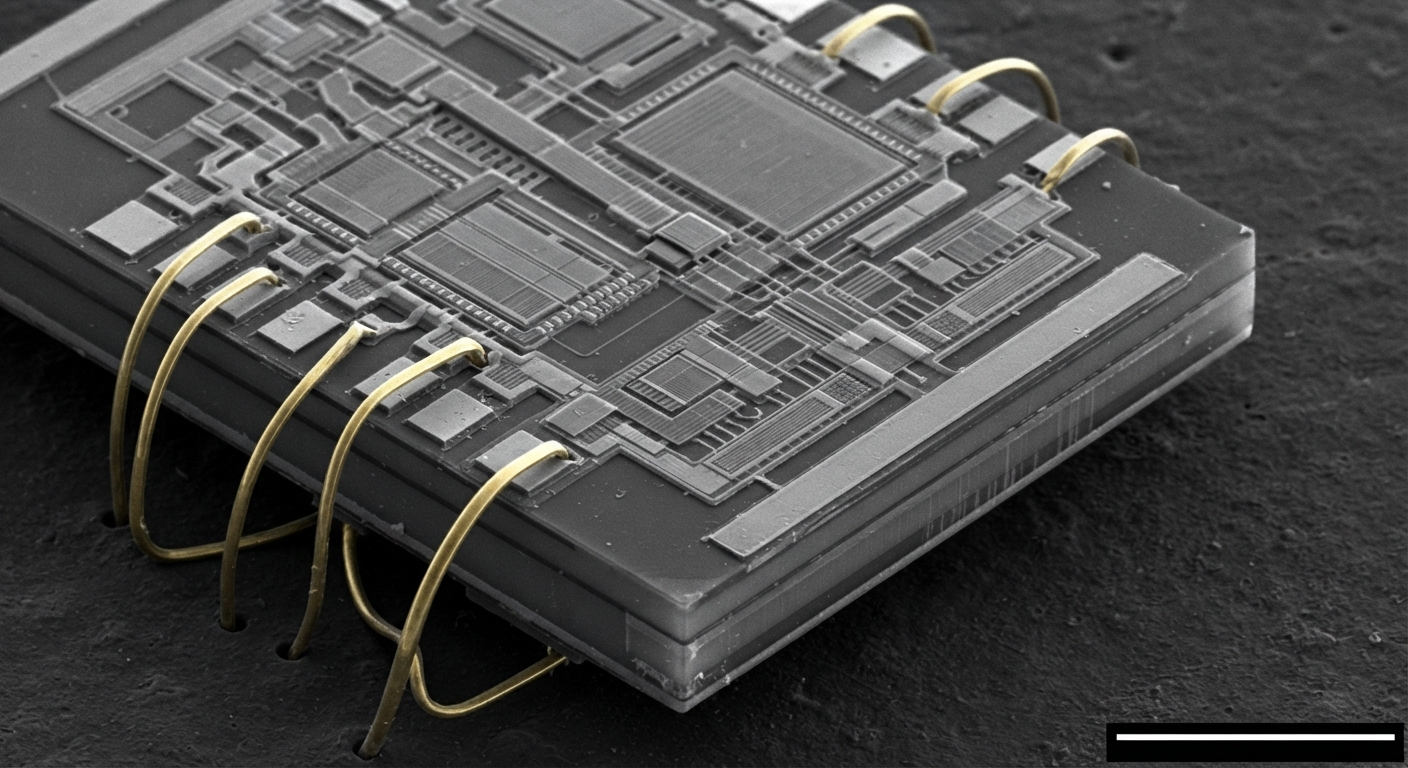
· Supports Control, Interrupt, Isochronous and Bulk Transfers
· On-Chip Pull-up and Pull-Down Resistors
Peripheral Features:
· Enhanced Parallel Master Port/Parallel Slave Port (EPMP/PSP):
– Direct access from CPU with an Extended Data Space (EDS) interface
– 4, 8 and 16-bit wide data bus
– Up to 23 programmable address lines
– Up to 2 chip select lines
– Up to 2 Acknowledgement lines (one per chip select)
– Programmable address/data multiplexing
– Programmable address and data Wait states
– Programmable polarity on control signals with Flexible Addressing modes
· Linear Program Memory Addressing, up to 12 Mbytes
· Data Memory Addressing, up to 16 Mbytes:
– 2K SFR space
– 30K linear data memory
– 66K extended data memory
– Remaining (from 16 Mbytes) memory (external can be accessed using extended data Memory (EDS) and EPMP (EDS is divided into 32-Kbyte pages)
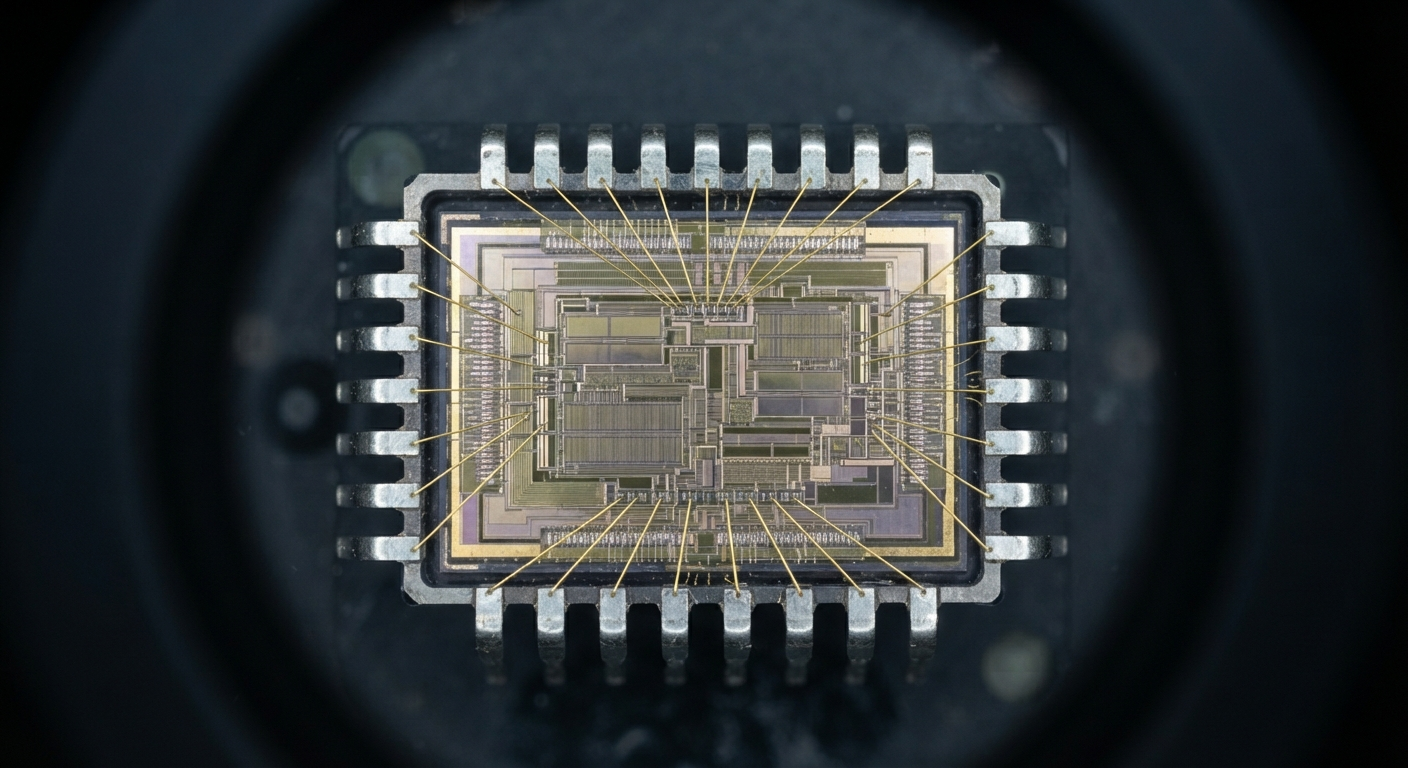
· Two Address Generation Units for Separate Read and Write Addressing of Data Memory
Power Management:
· On-Chip Voltage Regulator of 1.8V
· Switch between Clock Sources in Real Time
· Idle, Sleep and Doze modes with Fast Wake-up and Two-Speed Start-up
· Run Mode: 800 mA/MIPS, 3.3V Typical
· Sleep mode Current Down to 20 mA, 3.3V Typical
· Standby Current with 32 kHz Oscillator: 22 mA, 3.3V