
-
Product Categories
-
Live Support Chat


Restore AVR Microcontroller ATMEL ATMEGA169P
Restore AVR Microcontroller ATMEL ATMEGA169P is a specialized engineering service focused on recovering embedded firmware and rebuilding operational control systems based on the widely used ATmega169P. This AVR-based MCU integrates 16KB Flash program memory, 1KB SRAM, and 512B EEPROM, along with an embedded LCD controller, multiple timers, ADC channels, SPI and I²C communication interfaces, and a low-power architecture optimized for portable and battery-powered devices. Because of these capabilities, the ATmega169P microcontroller has been widely deployed in smart metering equipment, industrial monitoring panels, HVAC control systems, medical instruments, handheld measurement tools, and various display-oriented embedded products. Many of these devices remain in operation for years, making firmware restoration and MCU replication essential when the original firmware source code or development archive is no longer available.
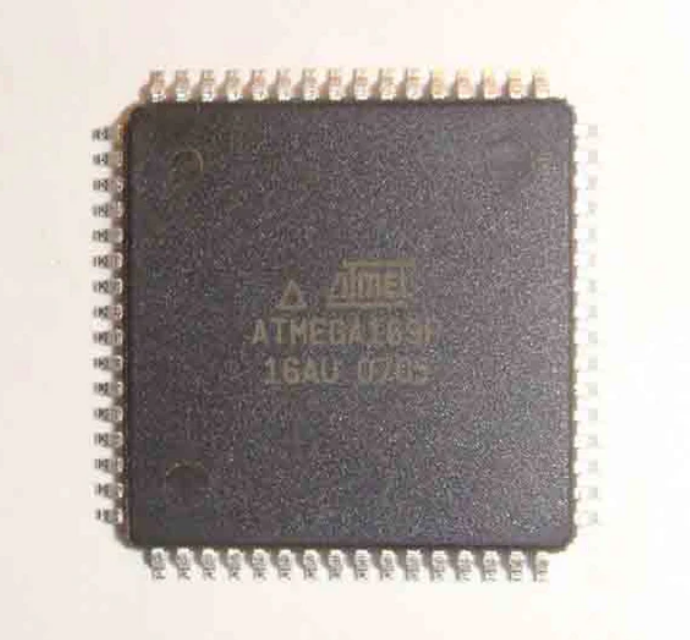
In practical engineering applications, restoring an ATmega169P MCU frequently involves extracting firmware from a secured or locked chip and reconstructing the binary archive required for reproduction. When protection fuses are activated, the Flash and EEPROM memory inside the microcontroller become protected or encrypted, preventing direct access through conventional programming tools. In such cases, specialized services are required to crack, unlock, decrypt, dump, and copy the firmware binary stored in the chip. The objective is to recover the entire program memory structure—including Flash firmware, EEPROM configuration data, and the original heximal program file—so that the microcontroller can be accurately replicated. By carefully reconstructing the firmware archive and validating the extracted data, engineers can rebuild the program file and generate a consistent MCU image suitable for programming into replacement chips.

We can Restore AVR Microcontroller ATMEL ATMEGA169P, please view the IC chip features for your reference:
Endurance: 100,000 Write/Erase Cycles
– 1K byte Internal SRAM
– Programming Lock for Software Security
JTAG (IEEE std. 1149.1 compliant) Interface
– Boundary-scan Capabilities According to the JTAG Standard
– Extensive On-chip Debug Support
– Programming of Flash, EEPROM, Fuses, and Lock Bits through the JTAG Interface
Peripheral Features
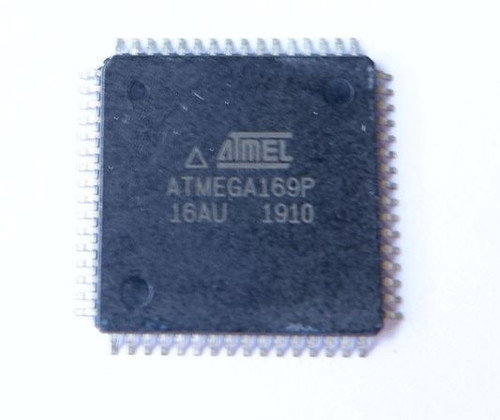
– 4 x 25 Segment LCD Driver
– Two 8-bit Timer/Counters with Separate Prescaler and Compare Mode
– One 16-bit Timer/Counter with Separate Prescaler, Compare Mode, and Capture
Mode
– Real Time Counter with Separate Oscillator
– Four PWM Channels
– 8-channel, 10-bit ADC
– Programmable Serial USART
– Master/Slave SPI Serial Interface
– Universal Serial Interface with Start Condition Detector
– Programmable Watchdog Timer with Separate On-chip Oscillator
– On-chip Analog Comparator
– Interrupt and Wake-up on Pin Change
Special Microcontroller Features
– Power-on Reset and Programmable Brown-out Detection
– Internal Calibrated Oscillator
– External and Internal Interrupt Sources
– Five Sleep Modes: Idle, ADC Noise Reduction, Power-save, Power-down, and Standby
I/O and Packages
– 64-lead TQFP and 64-pad QFN/MLF
Speed Grade:
– ATmega169PV: 0 – 4 MHz @ 1.8 – 5.5V, 0 – 8 MHz @ 2.7 – 5.5V
– ATmega169P: 0 – 8 MHz @ 2.7 – 5.5V, 0 – 16 MHz @ 4.5 – 5.5V
Temperature range:
– -40°C to 85°C Industrial
Ultra-Low Power Consumption
– Active Mode:
1 MHz, 1.8V: 330 µA
32 kHz, 1.8V: 10 µA (including Oscillator)
32 kHz, 1.8V: 25 µA (including Oscillator and LCD)
– Power-down Mode:
0.1 µA at 1.8V
– Power-save Mode:
0.6 µA at 1.8V(Including 32 kHz RTC)
The Restore AVR Microcontroller ATMEL ATMEGA169P process often requires controlled analysis of protected microcontrollers where firmware security mechanisms have been enabled. Many industrial devices rely on secured firmware archives to protect intellectual property, meaning that the firmware binary, program memory, and EEPROM data are encrypted or locked within the chip. During restoration, engineers may need to carefully dump the binary data archive, decrypt the secured memory segments, and replicate the firmware file without altering the original program structure. The goal is not only to copy the firmware but also to rebuild a reliable firmware archive that contains the complete source-independent binary program required for system operation. Once the binary dump has been validated, the recovered firmware file can be used to replicate and program new MCUs, ensuring compatibility with the original embedded hardware platform.
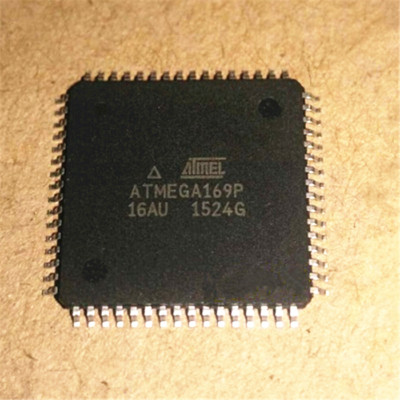
Breaking the protection of a locked ATmega169P chip introduces several technical difficulties. Security lock bits are designed to prevent unauthorized firmware extraction and may trigger automatic memory erase functions if incorrect read attempts occur. Additionally, long-term field deployment may cause aging effects in Flash memory cells or data inconsistencies within EEPROM segments, complicating the dump and recovery process. Encrypted bootloader regions, proprietary calibration data, and device-specific configuration parameters can further increase the complexity of decrypting and reconstructing the firmware archive. Because the program memory may contain essential control algorithms and operational parameters, preserving the integrity of the recovered binary file is critical for successful restoration.
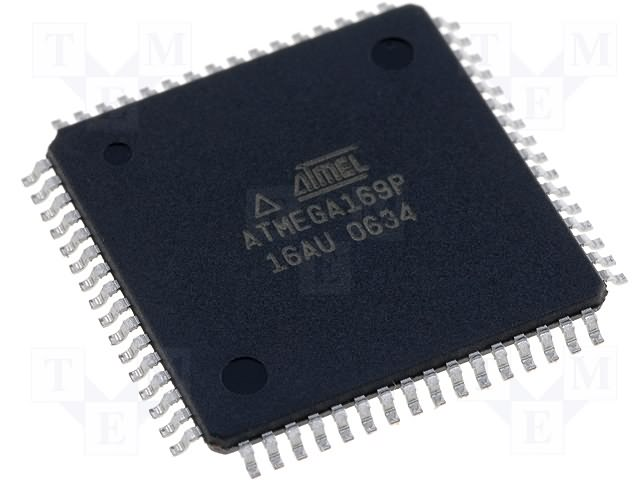
From a commercial and engineering perspective, restoring firmware from a secured ATmega169P microcontroller provides substantial benefits to equipment manufacturers and maintenance providers. Recovering the firmware binary and program archive enables clients to replicate discontinued products, repair legacy control boards, and maintain long-term availability of embedded systems. By unlocking and decrypting the protected MCU memory, companies can regain access to their firmware data and rebuild a functional heximal file archive for future production. This capability reduces costly hardware redesigns, shortens maintenance cycles, and ensures continuity of industrial equipment already deployed in the field. Ultimately, restoring and replicating the firmware of a locked ATmega169P transforms inaccessible program memory into a reusable engineering resource, supporting sustainable product lifecycle management and reliable system maintenance.