
-
Product Categories
-
Live Support Chat


Decrypt Encrypted PIC16F18326 Software and Clone the Device
The PIC16F18326 tops the PIC16F183 family with 28 KB of flash and 2 KB of SRAM on a 14-pin package, backed by a 256-byte data EEPROM and the full Core Independent Peripheral set. Its large memory often holds a complete application plus communication stacks, so a locked unit is a real obstacle. Our decrypt encrypted PIC16F18326 software service recovers that software from hardware you own and returns a verified, clone-ready image.
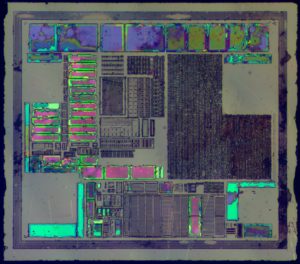
Microcomputer S3P9234 Memory Program Cloning
Protection at the top of the line
The PIC16F18326 keeps security in the configuration words. Enabling code protection blocks external reads of the flash, and Microchip’s documentation is clear that clearing it means a bulk erase. A disciplined decrypt encrypted PIC16F18326 software recovery reads the array while the data is present, preserving the confirmed-good firmware instead of wiping it through that erase route and losing months of application work.
Reading 28 KB safely
We identify the 14-pin package, power within 1.8 to 5.5 V, and use ICSP to learn the exact protect state before any read is attempted. A single pass pulls the 28 KB application, the 256-byte EEPROM and the configuration words, after which a checksum ties the image to the silicon so the delivered binary is bit-exact. The same discipline protects the dump secured PIC16F18325 heximal work and the unlock protected PIC16F18324 chip recovery beneath it, and the decode microcontroller PIC16F1454 flash code reference describes nearby behaviour on a comparable Enhanced Mid-Range device.
From software to clone
With a verified image we can reproduce the part or hand over hex and binary for archive. For the legal framing, our integrated circuit layout design copyright infringement case and fully microcontroller cloning references describe where legitimate cloning ends and infringement begins, so the recovery stays on the right side of the line. Practical duplication is our cloning pipeline.
Why this part is sent to us
A 28 KB application with communication stacks is painstaking to recreate from a blank sheet, so a lost source is effectively a dead product. The 14-pin layout also appears in sealed modules where no programming header is exposed, raising the value of a careful non-destructive read that leaves the original unharmed and the data extractable.
Communication stack recovery
Large applications on this part frequently embed a UART, SPI or I2C protocol stack, and recovering it means more than lifting the bytes. We preserve the configuration words and the EEPROM so the clone negotiates with the same external hosts the original did. That lets a replaced module drop back into an existing bus without re-learning every message. For products built around a proprietary protocol, a faithful image is often the only practical way to keep the system talking after the source is gone, because the handshake logic is buried in the 28 KB application rather than documented anywhere else.
Keeping the original intact
The 28 KB application is the asset, and the read is planned so it is never put at risk. We hold the device in specification, determine the protect state, and stream the memory out under observation rather than relying on a blind erase that would destroy it. The result is sealed with a checksum at the moment of capture, and the verification report is generated from that sealed data. This is why a recovery can be safely repeated: the original is never the thing being erased, and the clone is proven against the sealed capture before it leaves the bench.
Archiving the image for the long term
A 28 KB recovery is worth keeping safe, because the next failure may come years after this one. We deliver the sealed capture in both hex and binary form, together with the checksum and the protect-state notes, so the archive can be re-verified at any time with ordinary tools. Customers who maintain fleets of sealed modules typically store the image beside their hardware spares, treating it as part of the inventory. When the next module fails, the fix is a programming session rather than another recovery project.
Contact
Send the locked PIC16F18326 and we will confirm the package, quote a fixed fee, and return the software with integrity proof. The recovered image can then be cloned into fresh components through the same service we run across the PIC16F183 range.