
-
Product Categories
-
Live Support Chat


Copy Protected PIC16F15386 Binary and Reprogram Fresh Parts
The PIC16F15386 closes out the PIC16F153 family at the top end: 48 pins, 28 KB of flash, 2 KB of SRAM and the complete Core Independent Peripheral set with a 43-channel ADC. When that binary is locked, recovering it means both reading a large image and reproducing it faithfully. Our copy protected PIC16F15386 binary service does exactly that for hardware you own or are authorised to service.
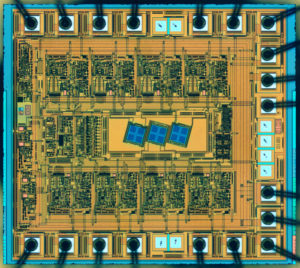
Samsung S3F9498 Microcontroller Heximal Cloning
Protection on the largest member
As with its siblings, security lives in the configuration words. Enabling code protection blocks external reads of the flash, and Microchip’s own guidance is that clearing it is a bulk-erase event. A well-run copy protected PIC16F15386 binary recovery reads the array first and preserves the data, so the owner keeps the confirmed-good firmware rather than losing it to an erase that cannot be undone.
Reading 28 KB without loss
We identify the package, power within the 1.8 to 5.5 V window, and use ICSP to learn the exact protect state before reading. The 28 KB flash and the configuration words are taken together, then checked with a checksum so the delivered binary is bit-exact. The same discipline protects the readout secured PIC16F15385 code work on the adjacent 14 KB device, and the dump encrypted PIC16F15375 memory method shares the archive format across the family.
Rebuilding the clone
With a verified image we can reproduce the part or hand over hex and binary for archival. For the legal framing, see our clone IC layout design and fully microcontroller cloning references, which describe legitimate cloning boundaries. The decrypt secured MCU PIC16F1719 flash binary guide covers nearby behaviour during a read, and the MCU flash EEPROM data cloning step turns the image into working parts.
Where the top-end part is used
The 48-pin, 28 KB combination appears in complex instruments, comms modules and multi-motor controllers where both pin count and code size are pushed. Those products are expensive to re-engineer, which is why a verified binary recovery is worth the care and why we treat the 28 KB image as a single integrity-checked object rather than a loose collection of bytes.
Reprogramming fresh parts at volume
Once the binary is verified, producing spares is straightforward: the image is written into blank parts using the same programming fixture, with the original configuration words restored so the clone inherits the intended protect setting. For production runs we can program a batch to match, which turns a one-off recovery into a stable supply of identical devices. Customers often pair this with an archived master copy so future shortages are solved by a reprogram rather than another recovery project, and the checksum we generated at capture time is reused to prove every cloned part is faithful.
Why the recovery is staged carefully
On a part this large the cost of a mistake is high, so the read is staged rather than rushed. We bring the device up under controlled conditions, confirm the protect state, and only then stream the array out while watching for the conditions that would otherwise force an erase. The captured block is sealed with a checksum immediately, so any later doubt about integrity is answered by the report instead of by repeating a risky operation. That discipline is what lets a 28 KB image be recovered and then cloned with confidence rather than hope.
Preserving data tables in a flash-only design
The PIC16F153 family carries no dedicated EEPROM, so designers store settings, device identity and wear-levelled counters in flash rows inside the application space. Those rows are easy to mistake for code and dangerous to rebuild by guesswork. Our capture keeps the entire 28 KB array byte-for-byte, which means the emulated data storage arrives in the clone exactly as the application expects to find it. For units that have been in the field for years, those rows also record the service history of the individual board, so a faithful recovery protects information that was never written down anywhere else.
Talking to us
Send the locked PIC16F15386 and we will confirm the package, quote a fixed price, and return the binary with proof of integrity. The recovered image can then be cloned into fresh components through our standard pipeline whenever production or service requires it.