-
Product Categories
-
Live Support Chat


Reverse Engineering Microprocessor IC Atmel AT90S2343
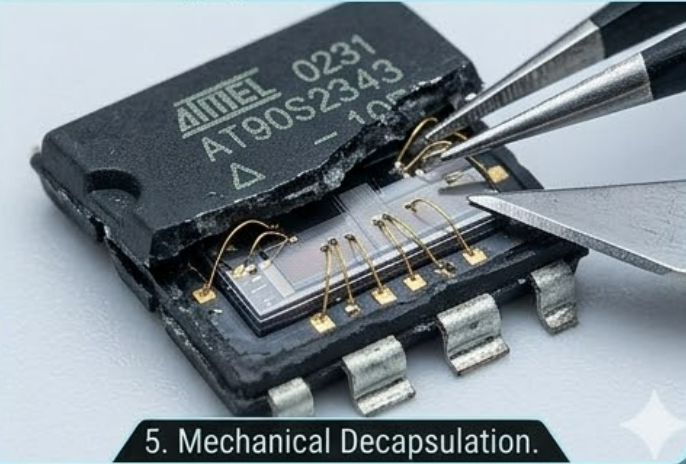
Reverse Engineering Microprocessor IC Atmel AT90S2343 is a specialized engineering service dedicated to firmware recovery, legacy system maintenance, and embedded product replication. The Atmel AT90S2343 belongs to the early AVR microcontroller family and was widely adopted in compact control applications due to its efficient RISC architecture, low power consumption, integrated Flash memory, EEPROM storage, timers, and versatile I/O resources. Although the AT90S2343 is now considered obsolete or outdate by modern standards, it remains active in numerous industrial controllers, security systems, instrumentation devices, automation modules, household appliances, and proprietary embedded products. To safeguard intellectual property and prevent unauthorized duplication, many manufacturers configured the MCU with protective security mechanisms, resulting in locked or encrypted memory areas that prevent direct access to firmware, software, and program data.
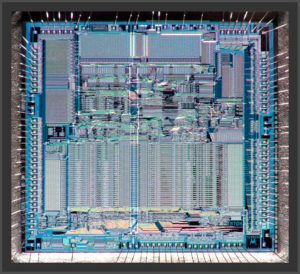
We can Reverse Engineering Microprocessor IC Atmel AT90S2343, please view below chip features for your reference:
Features
· Utilizes the AVR® RISC Architecture
· AVR – High-performance and Low-power RISC Architecture
– 118 Powerful Instructions – Most Single Clock Cycle Execution
– 32 x 8 General-purpose Working Registers
– Up to 10 MIPS Throughput at 10 MHz
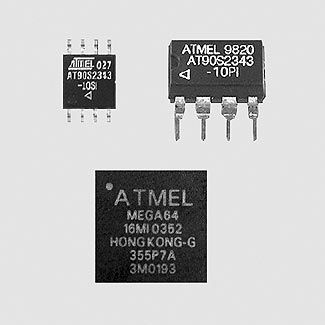
– 0 – 10 MHz for AT90S2323/AT90S2343-10
– 0 – 4 MHz for AT90LS2323/AT90LS2343-4
– 0 – 1 MHz for AT90LS2343-1
Reverse engineering a secured AT90S2343 microcontroller involves understanding and recovering the information stored within the chip when conventional programming tools cannot perform a normal readout. In many cases, organizations possess functioning hardware but no longer have access to the original source code, software archive, development environment, or engineering documentation. Under these circumstances, engineers may need to crack, unlock, decrypt, dump, copy, replicate, and readout the firmware contained in the MCU. The objective is to recover the complete firmware archive, including Flash memory contents, EEPROM data, binary program structures, heximal files, calibration information, and operational parameters. Through careful analysis and reconstruction of the firmware file, it becomes possible to restore valuable engineering assets that would otherwise remain inaccessible inside a protected microchip. The resulting binary archive can support system maintenance, hardware migration, manufacturing continuity, and long-term product support.
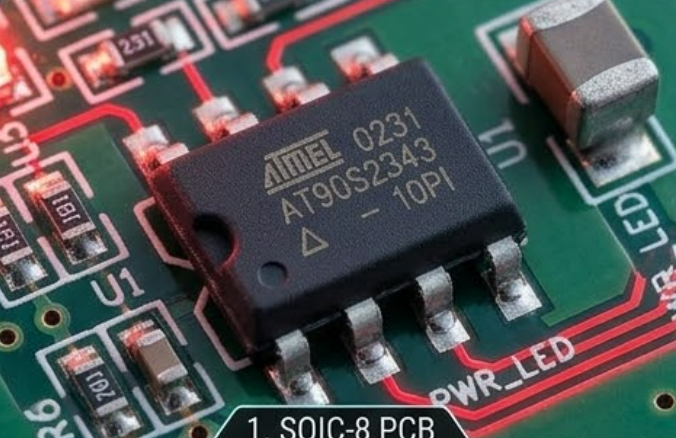
The demand for Reverse Engineering Microprocessor IC Atmel AT90S2343 services continues to increase because countless embedded systems remain in operation long after their original development lifecycle has ended. Industrial facilities, transportation systems, security infrastructure, and specialized machinery frequently depend on legacy MCU, ARM, DSP, or CPLD platforms that were designed decades ago. In many cases, the original supplier no longer exists, engineering records have been lost, or firmware archives have disappeared. As a result, companies often require the ability to dump firmware from a locked IC, decrypt encrypted memory, copy critical program data, and replicate the functionality of an existing microprocessor. Recovering firmware from a protected chip enables organizations to avoid expensive redesign projects, maintain compatibility with existing hardware, and preserve proven system performance. For mission-critical applications, firmware recovery is often the most practical and cost-effective solution available.
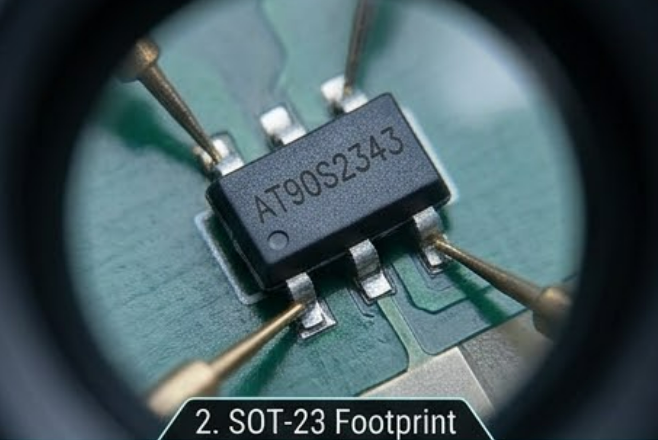
From a technical standpoint, unlocking a secured AT90S2343 presents significant challenges. The microcontroller may contain encrypted Flash memory, protected EEPROM regions, security fuse settings, and other mechanisms specifically designed to prevent unauthorized firmware extraction. Improper access attempts can potentially trigger memory erase operations or damage important data structures. Furthermore, aging electronic equipment may suffer from memory degradation, unstable EEPROM values, or incomplete firmware archives that complicate the recovery process. Successfully extracting and validating a firmware dump requires advanced diagnostic equipment, specialized laboratory procedures, and rigorous verification methods. Every binary file, program archive, and firmware image must be carefully analyzed to ensure that the recovered data accurately reflects the original software behavior and system functionality.
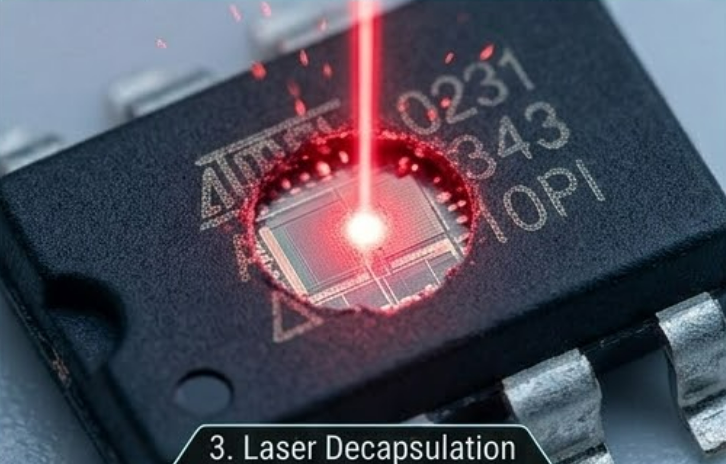
Our team provides professional firmware recovery and reverse engineering solutions for legacy AVR microcontrollers such as the AT90S2343. We specialize in working with locked, encrypted, and protected chips, helping clients recover firmware archives, reconstruct binary and heximal files, and generate reliable program images for maintenance and migration purposes. Whether the goal is to preserve obsolete equipment, restore missing software assets, recover EEPROM data, or replicate existing hardware platforms, our experience enables us to deliver practical solutions tailored to each application. By transforming inaccessible firmware stored within a secured MCU into a usable engineering resource, we help organizations reduce downtime, extend product lifecycles, protect previous development investments, and maintain critical embedded systems for years to come.