
-
Product Categories
-
Live Support Chat


Recover PLD IC LATTICE ISPLSI1016
The LATTICE ispLSI1016 is a highly reliable programmable logic IC that has been widely deployed in industrial automation, telecommunications, medical electronics, instrumentation, military equipment, communication infrastructure, and embedded control systems. Unlike a traditional microcontroller, this CPLD implements customized digital logic directly in programmable hardware, providing deterministic performance, fast signal processing, and long-term operational stability.
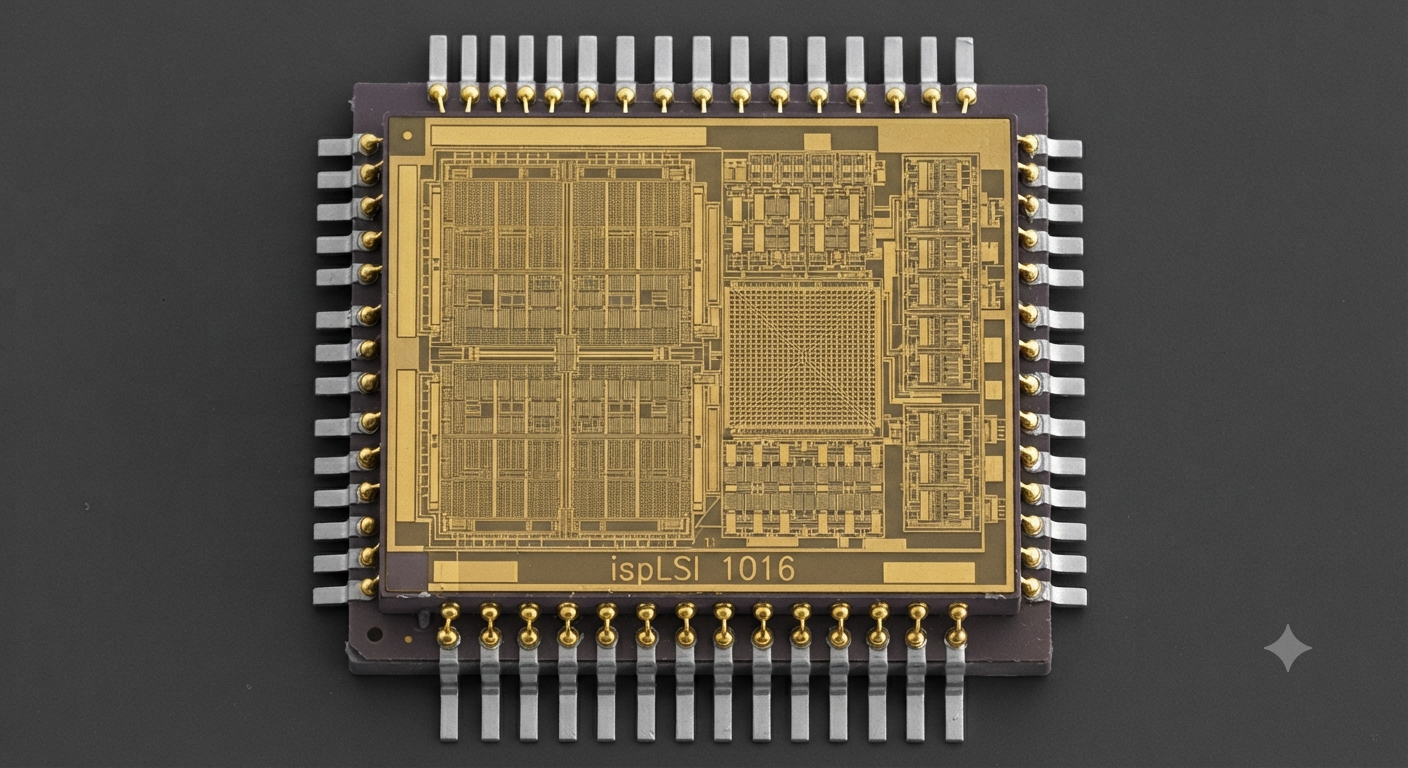
The device became popular because it offered flexible logic integration while reducing component count on complex circuit boards. To safeguard proprietary hardware designs, many manufacturers enabled protective, locked, or encrypted security features that prevent unauthorized access to the programmed logic configuration. As a result, valuable engineering resources remain securely stored within the device, making direct access to internal design information extremely difficult after deployment.
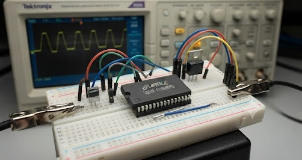
Recover PLD IC LATTICE ISPLSI1016 firmware needs to use the power glitch method to disable the protection mechanism:
HIGH-DENSITY PROGRAMMABLE LOGIC
— High-Speed Global Interconnect
— 2000 PLD Gates
— 32 I/O Pins, Four Dedicated Inputs
— 96 Registers
Functional Block Diagram
— Wide Input Gating for Fast Counters, State
Machines, Address Decoders, etc.As industrial equipment continues operating for decades, companies frequently encounter situations where the original development resources have disappeared while the hardware remains essential for production. In these cases, engineers often require professional services to unlock, crack, readout, dump, decrypt, copy, or replicate information stored within a protected IC.
Recovery projects may involve preserving programmable logic data, archived program files, binary configuration images, heximal programming files, embedded firmware, associated software, internal memory resources, or engineering documentation maintained alongside the original project. Similar engineering requirements are commonly found in projects involving ALTERA Chip devices, other CPLD platforms, and legacy programmable logic families. Recovering these valuable engineering assets allows organizations to preserve design continuity while supporting maintenance, product migration, and long-term lifecycle management of critical electronic systems.
The demand for programmable logic recovery continues to increase because many industrial installations still rely on obselete or outdate electronic platforms that remain operational despite discontinued component availability. Manufacturing equipment, transportation systems, laboratory instruments, communication infrastructure, and process automation controllers often cannot be replaced without significant financial investment.
When original source code, project file, production software, archived firmware, or configuration data are unavailable, organizations face extended downtime and costly redevelopment efforts. Recovering flash contents where applicable, preserving eeprom parameters, organizing binary archives, reconstructing heximal files, and maintaining engineering program documentation provide valuable support for equipment refurbishment and modernization. These engineering resources enable companies to replicate, duplicate, restore, modify, and maintain legacy hardware while minimizing production interruptions and preserving compatibility with existing installations.
Our engineering team specializes in the analysis and preservation of legacy programmable logic devices and embedded electronic systems. We have extensive experience working with protected IC, CPLD, FPGA, and programmable logic architectures used throughout industrial and commercial applications. Our technical capabilities include comprehensive device evaluation, secure readout procedures, engineering data preservation, binary archive reconstruction, heximal file management, firmware organization, and documentation support for long-term maintenance projects. Every project is carefully assessed to determine the most appropriate technical approach while protecting customer-owned intellectual property and confidential engineering information. Whether the objective is supporting continued production, replacing obsolete hardware, validating existing designs, or preparing for future system upgrades, we deliver customized technical solutions that help customers maximize the value of their electronic assets.
The LATTICE ispLSI1016 remains an important programmable logic device in countless legacy electronic systems worldwide. As industries continue extending equipment lifecycles, preserving embedded design knowledge becomes increasingly valuable. Through advanced engineering methodologies, extensive laboratory experience, and a commitment to protecting customer engineering resources, we help organizations maintain operational continuity, preserve critical firmware, safeguard valuable data, organize engineering software, and extend the service life of programmable logic platforms for many years to come.
— In-System Programmable™ (ISP™) 5-Volt Only
— Increased Manufacturing Yields, Reduced Time-to-Market, and Improved Product Quality
— Reprogram Soldered Devices for Faster Debugging
· COMBINES EASE OF USE AND THE FAST SYSTEM
SPEED OF PLDs WITH THE DENSITY AND FLEXIBILITY OF FIELD PROGRAMMABLE GATE ARRAYS
— Complete Programmable Device Can Combine Glue
Logic and Structured Designs
— Three Dedicated Clock Input Pins
— Synchronous and Asynchronous Clocks
— Flexible Pin Placement
— Optimized Global Routing Pool Provides Global
Interconnectivity
· ispDesignEXPERT™ – LOGIC COMPILER AND COM-
PLETE ISP DEVICE DESIGN SYSTEMS FROM HDL SYNTHESIS THROUGH IN-SYSTEM PROGRAMMING
— Superior Quality of Results
— Tightly Integrated with Leading CAE Vendor Tools
— Productivity Enhancing Timing Analyzer, Explore Tools, Timing Simulator and ispANALYZER™
— PC and UNIX Platforms
Description
The ispLSI 1016 is a High-Density Programmable Logic Device containing 96 Registers, 32 Universal I/O pins, four Dedicated Input pins, three Dedicated Clock Input pins and a Global Routing Pool (GRP). The GRP provides complete interconnectivity between all of these elements. The ispLSI 1016 features 5-Volt in-system programming and in-system diagnostic capabilities. It is the first device which offers non-volatile reprogrammability of the logic, as well as the interconnect to provide truly reconfigurable systems.
The basic unit of logic on the ispLSI 1016 device is the Generic Logic Block (GLB). The GLBs are labeled A0, A1 .. B7 (see figure 1). There are a total of 16 GLBs in the ispLSI 1016 device. Each GLB has 18 inputs, a programmable AND/OR/XOR array, and four outputs which can be configured to be either combinatorial or registered. Inputs to the GLB come from the GRP and dedicated inputs. All of the GLB outputs are brought back into the GRP so that they can be connected to the inputs of any other GLB on the device from BREAK IC.