
-
Product Categories
-
Live Support Chat


Pull AVR Chip ATmel AT90CAN128
The atmel AT90CAN128 is a high-performance 8-bit avr RISC microcontroller featuring an integrated CAN 2.0A/2.0B controller, 128KB of in-system programmable flash memory, 4KB of data eeprom, and 4KB of SRAM. Extensively deployed across automotive vehicle networks, industrial CAN bus automation systems, maritime telemetry, and avionics control units, this chip balances high MIPS throughput with low power requirements.
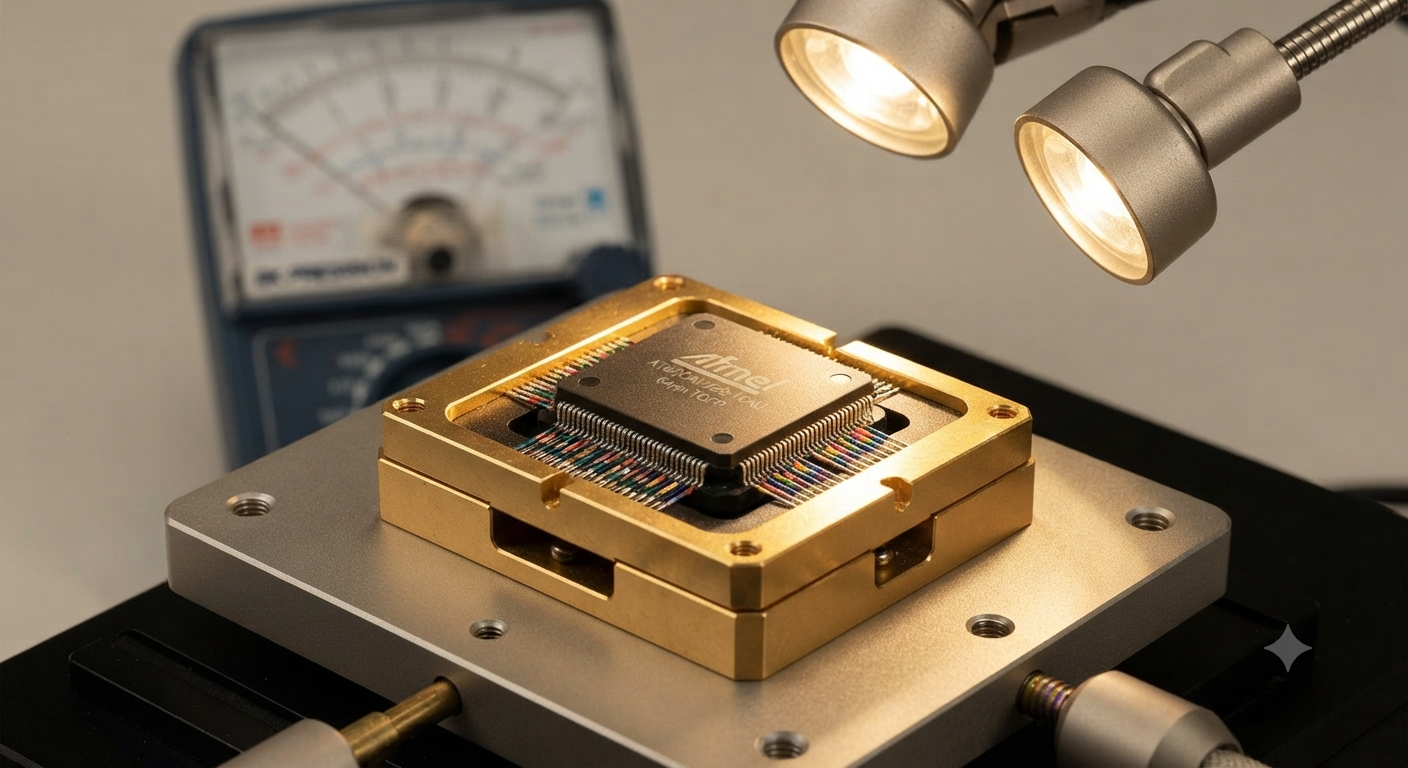
To protect complex communication protocols, proprietary motor control algorithms, and unique hardware calibration matrices from illicit duplication, engineers engage the device’s hardware security lock bits during mass manufacturing. This act of hardware protectionism creates a locked perimeter across the silicon substrate, establishing a protective electronic wall that restricts standard ISP tools, JTAG interfaces, and external debuggers from performing an unauthorized readout of the embedded software.
When an advanced engineering team is commissioned to pull avr chip atmel at90can128 software routines or extract protected data structures, the task moves beyond standard debugging into precision semiconductor analysis. To crack, unlock, decrypt, or execute a direct readout from a locked or encrypted mcu, specialists must bypass the chip’s internal security logic without damaging the underlying silicon core. Specialized microelectronics laboratories apply targeted physical circuit interventions—such as controlled voltage-glitching, precision thermal profiling, or micro-probing directly onto the exposed ic substrate.
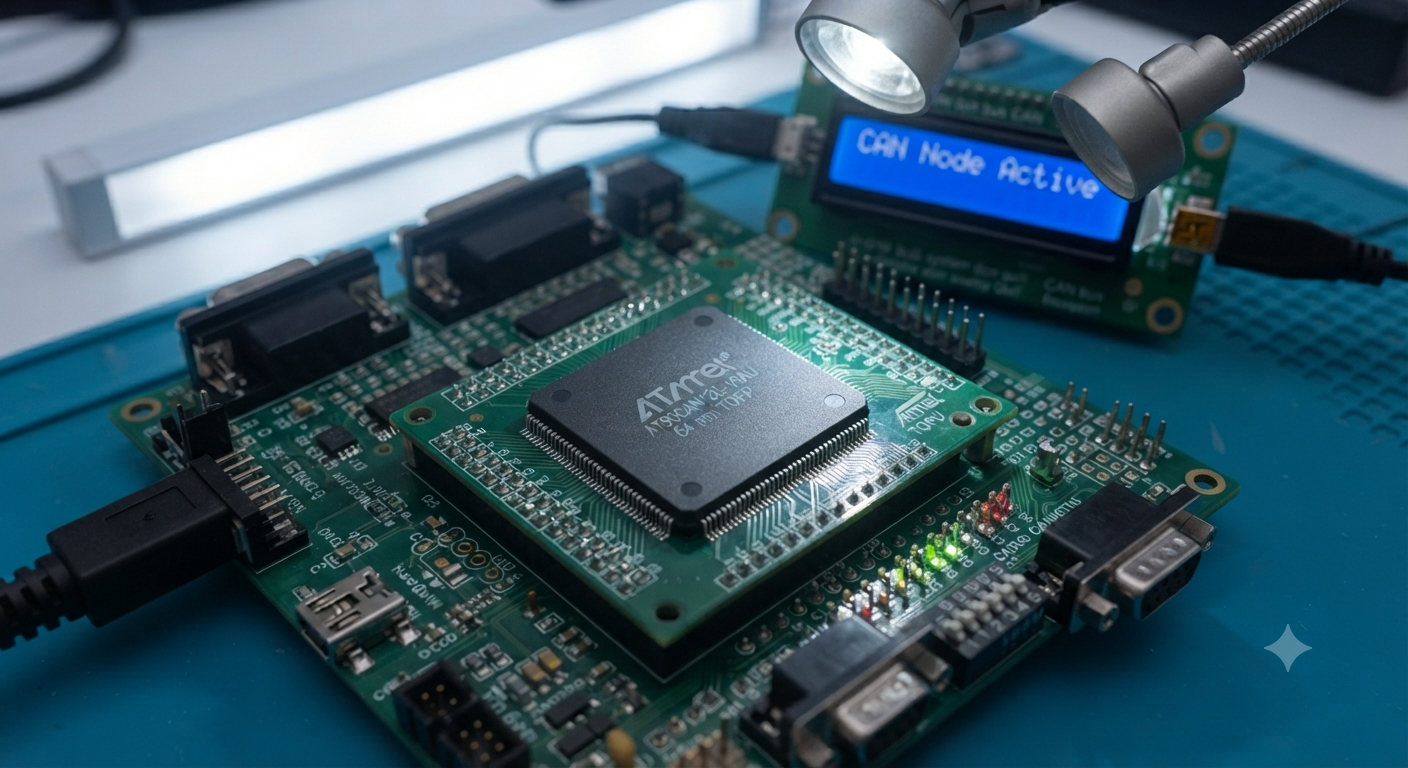
This non-destructive process temporarily disables the internal protective flags, granting technicians open channels to interface with the core flash array and eeprom blocks. Once these security gates are lowered, engineers can safely copy, dump, and extract the complete machine logic, capturing the application program and converting the raw machine data into an uncorrupted binary or heximal file for complete validation.
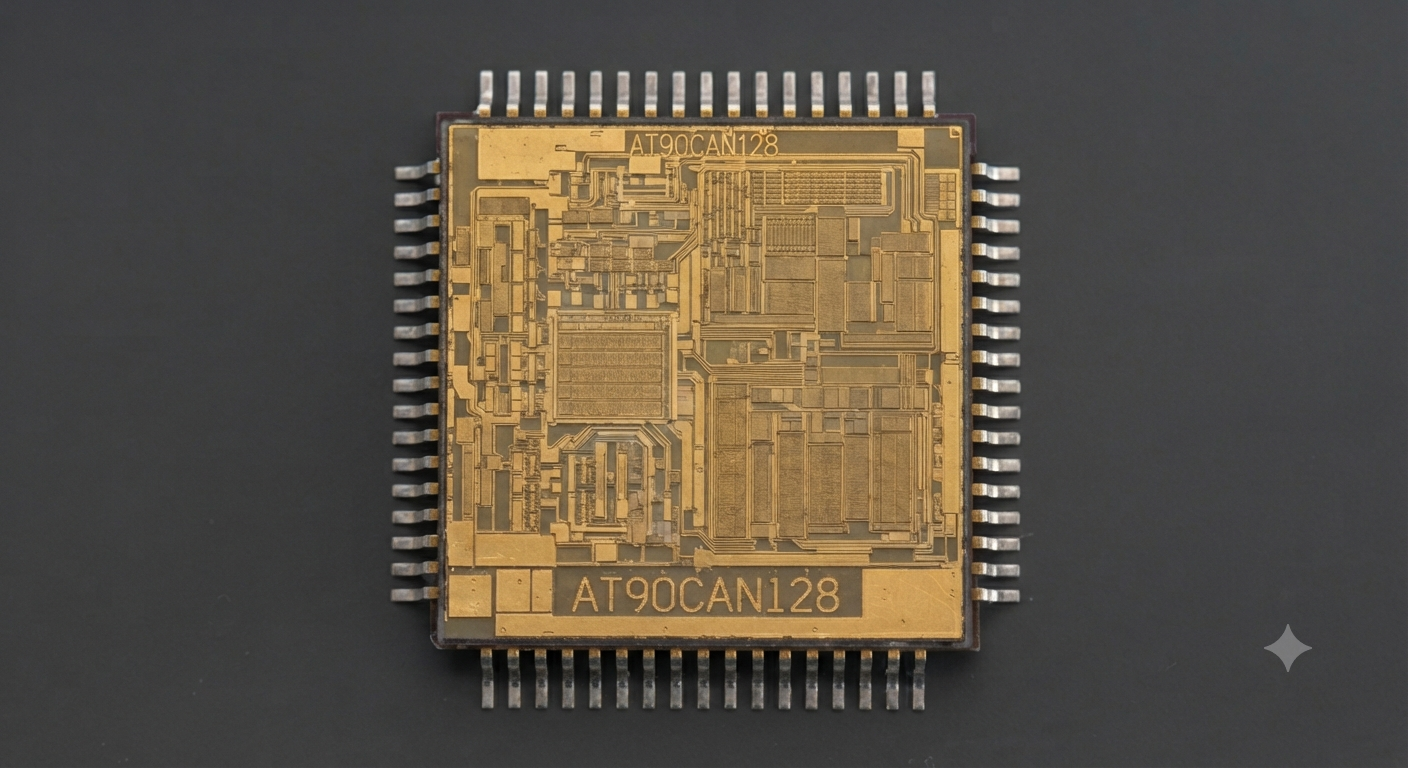
Pull AVR Chip ATmel AT90CAN128 embedded firmware out from its eeprom and flash memory, make a perfect clone unit which perform exactly the same functions as original AT90CAN128:
JTAG (IEEE std. 1149.1 Compliant) Interface
– Boundary-scan Capabilities According to the JTAG Standard
– Programming Flash (Hardware ISP), EEPROM, Lock & Fuse Bits
– Extensive On-chip Debug Support CAN Controller 2.0A & 2.0B
– 15 Full Message Objects with Separate Identifier Tags and Masks
– Transmit, Receive, Automatic Reply and Frame Buffer Receive Modes
– 1Mbits/s Maximum Transfer Rate at 8 MHz
– Time stamping, TTC & Listening Mode (Psying or Autobaud)
Peripheral Features
– Programmable Watchdog Timer with On-chip Oscillator
– 8-bit Synchronous Timer/Counter-0 10-bit Prescaler
External Event Counter
Output Compare or 8-bit PWM Output
– 8-bit Asynchronous Timer/Counter-2 10-bit Prescaler
External Event Counter
Output Compare or 8-Bit PWM Output
32Khz Oscillator for RTC Operation
– Dual 16-bit Synchronous Timer/Counters-1 & 3 10-bit Prescaler
Input Capture with Noise Canceler
External Event Counter
3-Output Compare or 16-Bit PWM Output
Output Compare Modulation
– 8-channel, 10-bit SAR ADC
8 Single-ended channels
7 Differential Channels
2 Differential Channels With Programmable Gain at 1x, 10x, or 200x
– On-chip Analog Comparator
– Byte-oriented Two-wire Serial Interface
– Dual Programmable Serial USART
– Master/Slave SPI Serial Interface
Programming Flash (Hardware ISP)
Special Microcontroller Features
– Power-on Reset and Programmable Brown-out Detection
– Internal Calibrated RC Oscillator
– 8 External Interrupt Sources
– 5 Sleep Modes: Idle, ADC Noise Reduction, Power-save, Power-down & Standby
– Software Selectable Clock Frequency
– Global Pull-up Disable
I/O and Packages
– 53 Programmable I/O Lines
– 64-lead TQFP and 64-lead QFN
Operating Voltages
– 2.7 – 5.5V
Operating temperature
– Industrial (-40°C to +85°C)
Maximum Frequency
– 8 MHz at 2.7V – Industrial range
– 16 MHz at 4.5V – Industrial range
The global commercial market experiences a continuous demand to replicate, copy, or dump critical firmware from an obsolete or completely outdate microchip architecture, primarily driven by supply chain volatility and asset preservation. Countless operational manufacturing lines, transit sub-stations, and medical systems depend on legacy circuit boards powered by an atmel or microchip processing core whose original build files no longer exist.
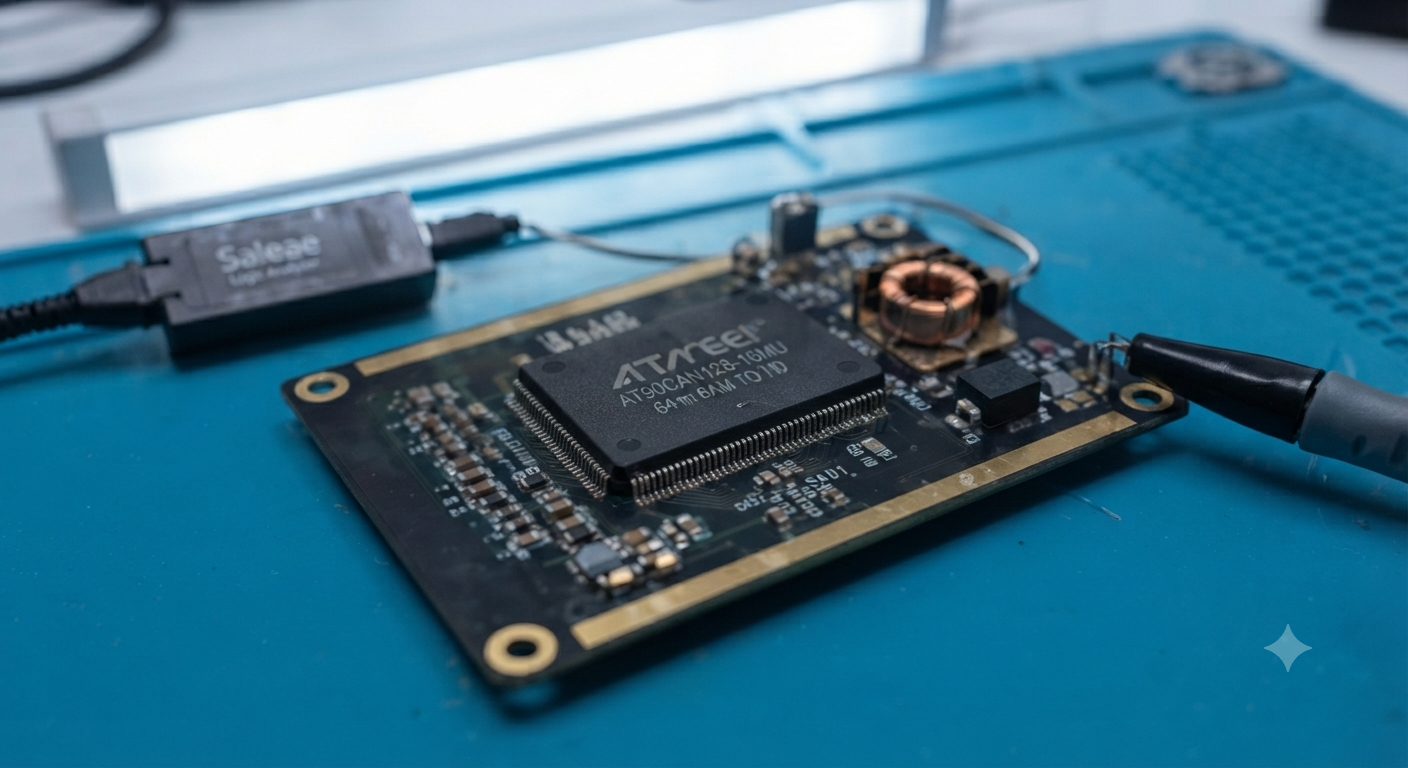
When an original design firm closes down, or the primary source code repository is permanently lost to drive corruption, a single hardware breakdown can halt an entire industrial enterprise indefinitely. Extracting the compiled executable program directly from a functional backup microprocessor module represents the only viable method to maintain business continuity. Reclaiming this vital operational data into an archival file format enables enterprise engineering departments to clone aging control boards, replace damaged ic components, and preserve irreplaceable software logic without incurring millions of dollars in redesign costs or waiting through years of redevelopment.
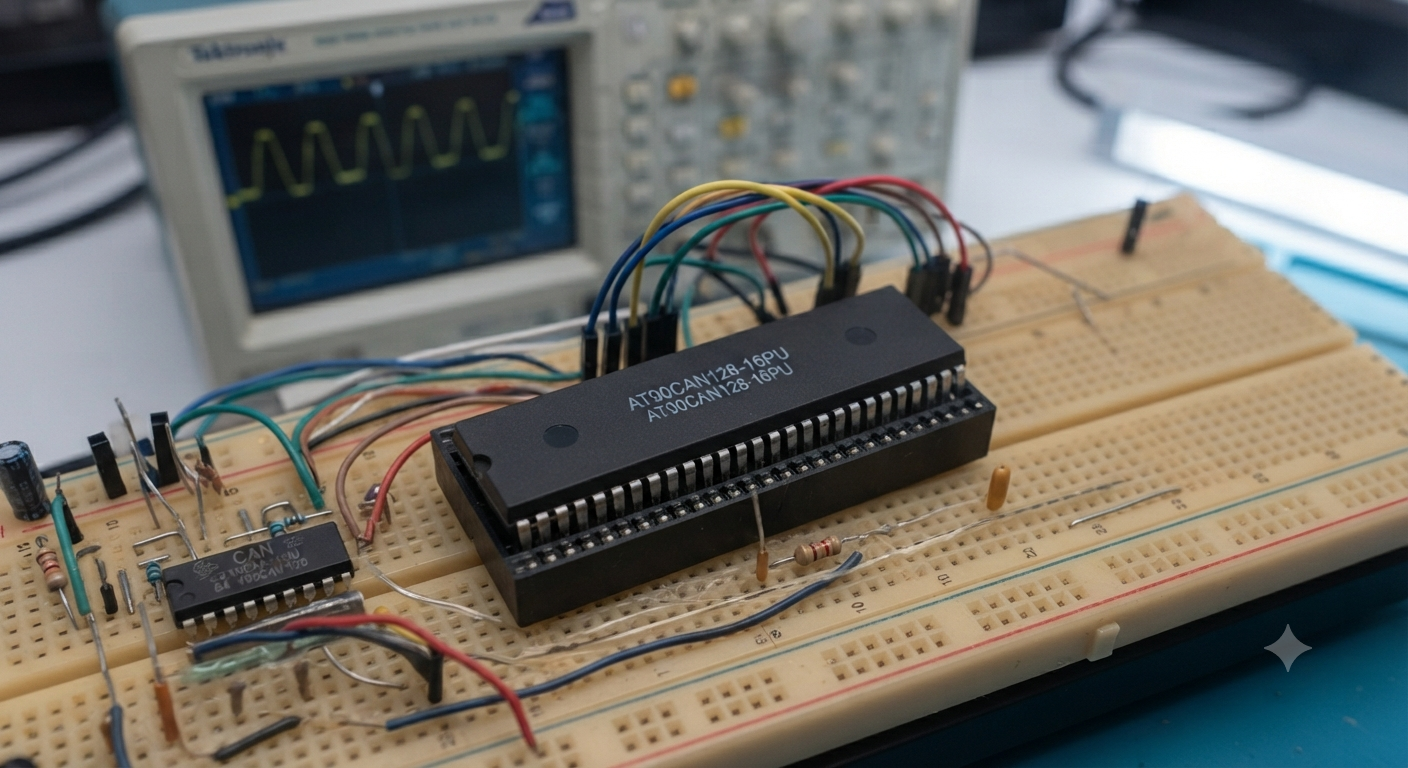
Our precision microelectronics laboratory provides comprehensive hardware analysis, security bypass workflows, and full-fidelity code recovery services for corporate end-users facing critical operational challenges. Our technical specialists possess extensive experience navigating complex multi-layer chip layouts across a wide spectrum of embedded architectures, including specialized microcontrollers, standalone eeprom modules, dense memory blocks, complex cpld arrays, and high-speed dsp processors.
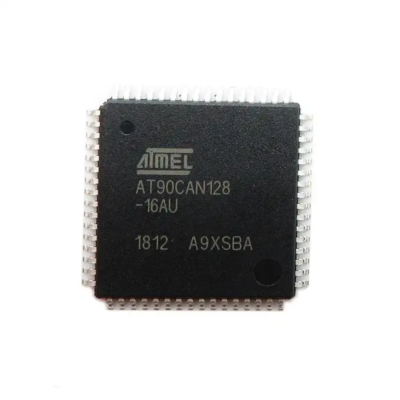
Utilizing cleanroom-grade analytical systems and high-precision signal diagnostics, we systematically navigate localized hardware security matrices to retrieve hidden device logic while protecting the structural integrity of your master processing unit. We transform raw hardware extractions into fully verified, production-ready firmware packages that can be written directly onto new replacement components. Partnering with our specialized lab eliminates the risks of expensive redevelopment projects, helps you rapidly reconstruct lost engineering histories, and keeps your critical legacy systems running smoothly. Contact our technical team today to schedule an evaluation for your hardware recovery project.