
-
Product Categories
-
Live Support Chat


Extract Microchip MCU PIC16F72 Code
Twenty-eight pins, 2K words of flash, 128 bytes of RAM, five channels of 8-bit ADC, one CCP module and a synchronous serial port. The PIC16F72 is the part an entire generation of appliance, pump and motor-control boards was built around, and it is still the part people need when those boards fail twenty years later.
Its most useful property today is not in the feature list. The 16F72 is pin-compatible with the PIC16C72 and PIC16C72A. Those C parts were OTP: programmed once at the factory, and if the firmware was wrong the chip was scrap. When a production line was still running C72A stock and the supply dried up, the F72 dropped straight in. That history explains why so many of these boards exist, and why so many of them are locked.
·
Why a locked 16F72 stops a repair dead
A code-protect bit in the configuration word makes the programming interface refuse to read program memory. The part still runs perfectly; it simply will not tell you what it is running. On a board where the microcontroller is the only place the control logic exists, that ends the repair unless the contents can be recovered.
There is no service mode, no back door and no factory default that gets around this. The protection is enforced in hardware, at the point where the array is accessed.
How the code is recovered
- Confirm what you have. The 16F72, the 16F872 and the older C72A share a footprint but not a memory technology. The top marking settles it, and on a board built before the changeover it is worth checking twice.
- Remove or access the die. If the chip is socketed, it comes out. If it is soldered, we prefer to work with the board rather than have you desolder it — lifted pads are a more common failure than anything we do.
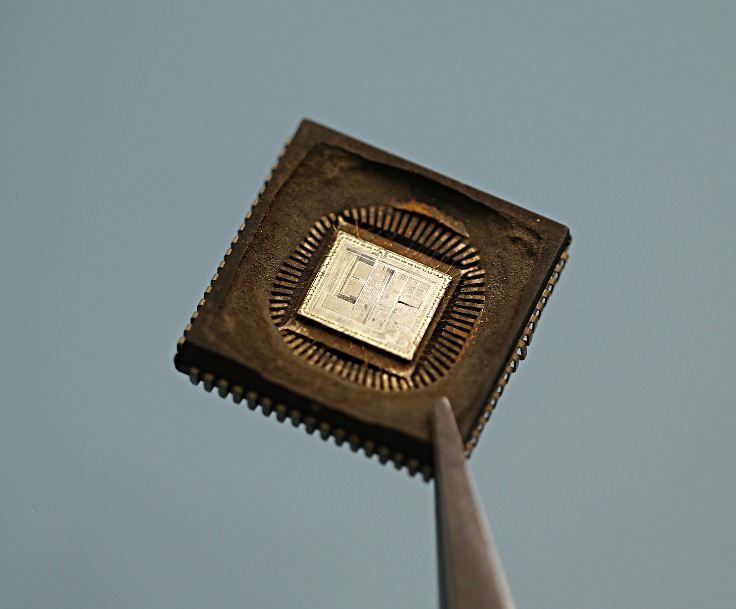
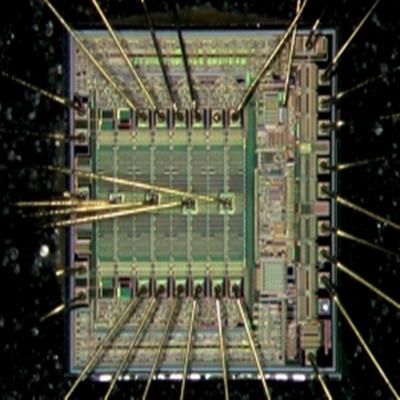
- Open the package. The 28-pin SOIC and SPDIP bodies both open predictably. The die is larger than the 14-pin parts in this family, which makes the array easier to work with and the reads more reliable.
- Read the array. Direct probing, bit by bit, with a second pass from a different position for cross-checking.
- Reconstruct. 14-bit words assembled into an image, configuration word kept separate, calibration and reset vectors checked for consistency.
- Verify. Two reads that agree, plus a structural check that the image contains a plausible program rather than a partially erased block.
What the file lets you do
Once you hold the image you can program a blank 16F72 and put the board back into service, or clone a small batch for spares. Both are covered under IC cloning. The deliverable itself — HEX, binary and memory map — is described under firmware extraction.
Three things to check before sending
No data EEPROM. The 16F72 has none. Settings that a newer design would keep in EEPROM — calibration, option flags, hour counters — are stored in flash on this part, which means they are in the image and must not be overwritten casually when you rebuild the board.
The ADC matters. Five channels of 8-bit conversion with no internal reference worth relying on. If the product measures anything, the conversion constants are part of what makes it accurate, and they are in the image too.
Package and temperature grade. An industrial part and an extended-temperature part behave the same in the read, but they are not interchangeable on the board.
Same family, different memory
The PIC16F73 doubles the flash and adds a USART on the same 28-pin footprint. The PIC16F74 is the 40-pin version of that part. If your marking is ambiguous, the PIC16F72A page walks through how to tell a 72 from a 72A, a C72A and a 16F722A — it is a more common confusion than you would expect.
Authorization
We work on hardware the customer owns or is authorised to repair, under a non-disclosed agreement. If the board belongs to a third party, say so up front and we will tell you what we need from you.