
-
Product Categories
-
Live Support Chat


Extract ATMEL ATmega328P Microcontroller
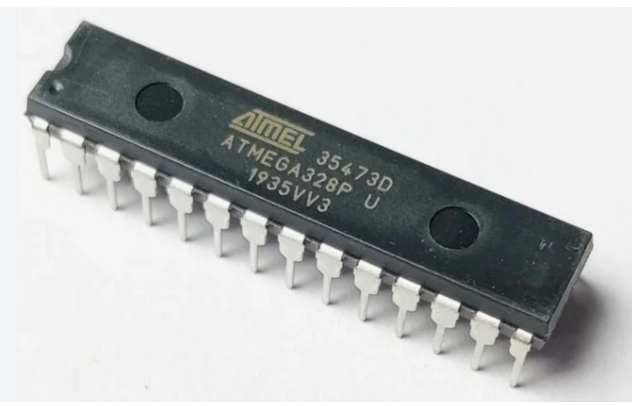
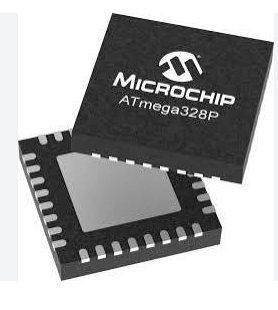
The ATMEL ATmega328P microcontroller is an 8-bit ic built on the AVR RISC architecture, a device that gained legendary status as the brain of the Arduino Uno. While celebrated for open-source creativity, its commercial deployments rely heavily on a less visible feature: its sophisticated protective lock bits. Once set, these bits render the internal flash memory and eeprom completely locked, preventing any attempt to readout the raw firmware from the chip using standard programming interfaces. This encrypted barrier is the primary defense against unauthorized copying. Beyond the maker space, this mcu is deeply embedded in industrial sensor nodes, automotive subsystems, agricultural drones, and smart home controllers. As many of these systems age, the ATmega328P often becomes an obsolete component on a production line, yet the locked memory remains the sole custodian of the controlling software.
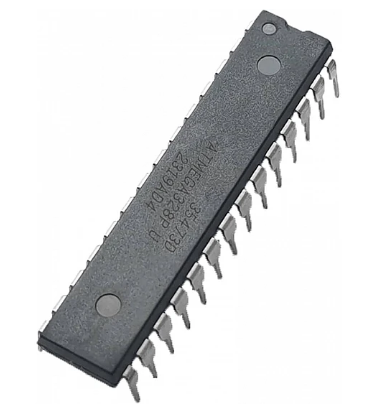
When engineers speak of the ability to unlock a secured microcontroller, they refer to a meticulous process of neutralizing the hardware protection fuses that prevent memory readout. For a locked ATmega328P, specialized methodologies are deployed to crack the security mechanism and gain low-level access to the on-chip storage. This is not a simple data transfer; it often involves fault injection or invasive microprobing to bypass the protective shields. Once the lock is broken, we can dump the complete firmware data from both the flash and the eeprom into a raw block. If the original developer encrypted the payload before flashing, we then apply further steps to decrypt the stream, reconstructing the contents into a complete and functional binary or heximal file. The ultimate goal is to replicate the original ic’s behavior perfectly, transforming a cryptic silicon block back into readable program data that can be archived or duplicated.
Features
· High Performance, Low Power AVR® 8-Bit Microcontroller
· Advanced RISC Architecture
– 131 Powerful Instructions – Most Single Clock Cycle Execution
– 32 x 8 General Purpose Working Registers
– Fully Static Operation
– Up to 20 MIPS Throughput at 20 MHz
– On-chip 2-cycle Multiplier
High Endurance Non-volatile Memory Segments
– 4/8/16/32K Bytes of In-System Self-Programmable Flash progam memory
(ATmega48P/88P/168P/328P)
– 256/512/512/1K Bytes EEPROM (ATmega48P/88P/168P/328P)
– 512/1K/1K/2K Bytes Internal SRAM (ATmega48P/88P/168P/328P)
– Write/Erase Cycles: 10,000 Flash/100,000 EEPROM
– Data retention: 20 years at 85°C/100 years at 25°C(1)
– Optional Boot Code Section with Independent Lock Bits
In-System Programming by On-chip Boot Program
True Read-While-Write Operation
– Programming Lock for Software Security Peripheral Features
– Two 8-bit Timer/Counters with Separate Prescaler and Compare Mode
– One 16-bit Timer/Counter with Separate Prescaler, Compare Mode, and Capture Mode
– Real Time Counter with Separate Oscillator
– Six PWM Channels
– 8-channel 10-bit ADC in TQFP and QFN/MLF
package Temperature Measurement
– 6-channel 10-bit ADC in PDIP Package Temperature Measurement
– Programmable Serial USART
– Master/Slave SPI Serial Interface
– Byte-oriented 2-wire Serial Interface (Philips I2C compatible)
– Programmable Watchdog Timer with Separate On-chip Oscillator
– On-chip Analog Comparator
– Interrupt and Wake-up on Pin Change
Special Microcontroller Features
– Power-on Reset and Programmable Brown-out Detection to prevent the MCU READING
– Internal Calibrated Oscillator
– External and Internal Interrupt Sources
– Six Sleep Modes: Idle, ADC Noise Reduction, Power-save, Power-down, Standby, and Extended Standby I/O and Packages
– 23 Programmable I/O Lines
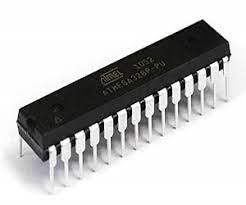
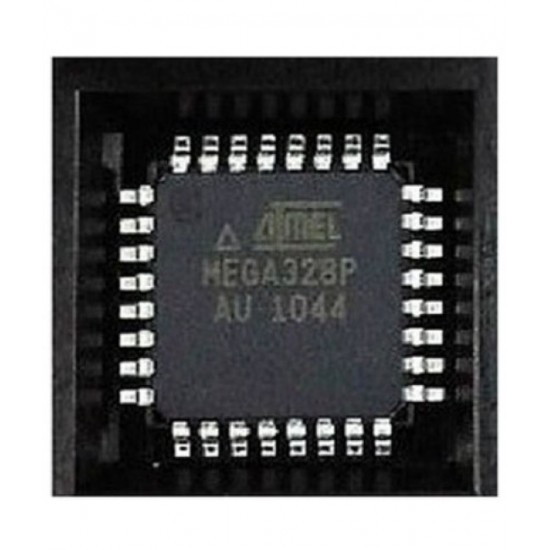
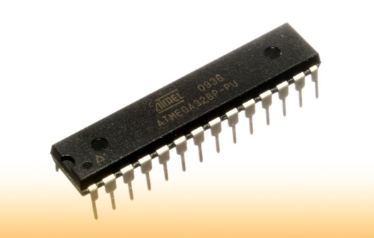
– 28-pin PDIP, 32-lead TQFP, 28-pad QFN/MLF and 32-pad QFN/MLF
Operating Voltage:
– 1.8 – 5.5V for ATmega48P/88P/168PV
– 2.7 – 5.5V for ATmega48P/88P/168P
– 1.8 – 5.5V for ATmega328P
Temperature Range:
– -40°C to 85°C
Speed Grade:
– ATmega48P/88P/168PV: 0 – 4 MHz @ 1.8 – 5.5V, 0 – 10 MHz @ 2.7 – 5.5V
– ATmega48P/88P/168P: 0 – 10 MHz @ 2.7 – 5.5V, 0 – 20 MHz @ 4.5 – 5.5V
– ATmega328P: 0 – 4 MHz @ 1.8 – 5.5V, 0 – 10 MHz @ 2.7 – 5.5V, 0 – 20 MHz @ 4.5 – 5.5V Low Power Consumption at 1 MHz, 1.8V, 25°C for ATmega48P/88P/168P:
– Active Mode: 0.3 mA
The market demand to unlock and extract an atmega328p often arises when the source code has been lost to time, yet the hardware must live on. Many companies face a crisis when a production tool or a critical field device containing a locked mcu fails, and the original software repository is nowhere to be found. In these scenarios, the importance of being able to dump and decrypt the embedded software cannot be overstated. This need extends across the electronics spectrum: an obsolete altera chip in a motor drive, a protected cpld managing a power sequencer, or a locked flash memory holding calibration tables are all ticking time bombs. Without a trusted recovery path to crack the protection and readout the binary data, the only alternative is a costly, time-consuming reverse engineering of the entire product. The service bridges the gap between a physical obsolete part and the digital continuity of the software.
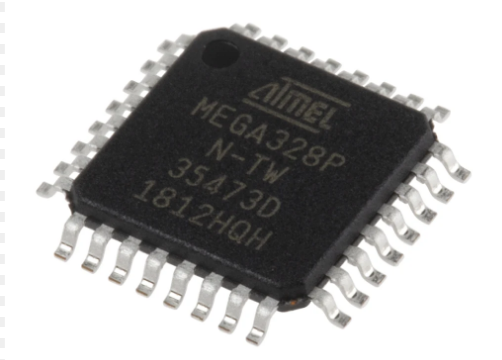
Our laboratory offers a definitive capability to extract atmega328p microcontroller data, delivering a complete solution for locked and outdated devices. We deploy a mix of advanced glitching hardware and proprietary software to systematically unlock the protective fuses without destroying the die. Once the chip is unsecured, we perform a full dump of the embedded flash and eeprom, delivering a perfect image of your locked software. The output is provided as a clean heximal file and a binary file ready for immediate replication onto new, functionally identical ics. This capability extends far beyond just the ATmega series; we routinely unlock and copy protected memory from any microcontroller, crack an encrypted altera chip or cpld, and reconstruct firmware into high-level source code representations when deeper analysis is required.
When an outdated device carries an encrypted and locked microcontroller at its heart, the failure of that component can halt a manufacturing line or disable critical infrastructure. Our secure services to crack, unlock, and copy the atmel atmega328p provide the fastest path to restoring functionality by resurrecting the hidden data. Whether you need to replicate a legacy design or simply secure a backup firmware file, we ensure your locked chips surrender their secrets with integrity and precision. Contact us to discuss how we can help you dump, decrypt, and replicate your protected software today.