Decrypt AVR MCU ATMEL ATMEGA64L
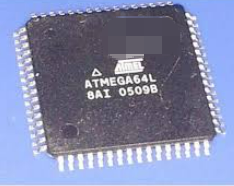
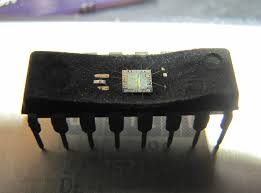
Decrypt AVR MCU ATMEL ATMEGA64L is a critical capability in modern embedded system reverse engineering, particularly when legacy or protected designs must be analyzed, maintained, or reproduced. The ATMEGA64L is a widely deployed 8-bit AVR microcontroller known for its low-power consumption, stable architecture, and flexible memory structure.
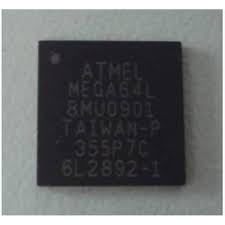
It integrates flash program memory, EEPROM, and SRAM, making it suitable for storing firmware, configuration data, and runtime logic in a compact MCU package. As many deployed systems rely on secured or locked microcontroller designs, the ability to decrypt, unlock, and readout protected data from an ATMEGA64L chip has become increasingly important across multiple industries.
– Programming Lock for Software Security
– SPI Interface for In-System Programming
JTAG (IEEE std. 1149.1 Compliant) Interface
– Boundary-scan Capabilities According to the JTAG Standard
– Extensive On-chip Debug Support
– Programming of Flash, EEPROM, Fuses, and Lock Bits through the JTAG Interface
Peripheral Features
– Two 8-bit Timer/Counters with Separate Prescalers and Compare Modes
– Two Expanded 16-bit Timer/Counters with Separate Prescaler, Compare Mode, and Capture Mode
– Real Time Counter with Separate Oscillator
– Two 8-bit PWM Channels
– 6 PWM Channels with Programmable Resolution from 1 to 16 Bits
– 8-channel, 10-bit ADC
8 Single-ended Channels
7 Differential Channels
2 Differential Channels with Programmable Gain (1x, 10x, 200x)
– Byte-oriented Two-wire Serial Interface
– Dual Programmable Serial USARTs
– Master/Slave SPI Serial Interface after Decrypt AVR MCU ATMEL ATMEGA64L
– Programmable Watchdog Timer with On-chip Oscillator
– On-chip Analog Comparator
Special Microcontroller Features
– Power-on Reset and Programmable Brown-out Detection
– Internal Calibrated RC Oscillator
– External and Internal Interrupt Sources
– Six Sleep Modes: Idle, ADC Noise Reduction, Power-save, Power-down, Standby
and Extended Standby
– Software Selectable Clock Frequency
– ATmega103 Compatibility Mode Selected by a Fuse
– Global Pull-up Disable
I/O and Packages
– 53 Programmable I/O Lines
– 64-lead TQFP and 64-pad QFN/MLF
Operating Voltages
– 2.7 – 5.5V for ATmega64L
– 4.5 – 5.5V for ATmega64
In practical applications, the ATMEGA64L microcontroller is commonly found in industrial automation equipment, elevator controllers, medical devices, consumer electronics, access control systems, and embedded control modules. Manufacturers often enable readout protection to secure firmware, source code, binary, or heximal program files against unauthorized access. Over time, however, these protections can become obstacles when original documentation is lost, suppliers discontinue support, or system upgrades are required. In such scenarios, engineers may need to copy, replicate, or dump firmware data from a protected or encrypted MCU in order to restore functionality, ensure compatibility, or enable system redesign.
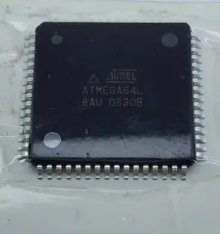
Despite its maturity, the ATMEGA64L remains challenging to work with once protection mechanisms are enabled. Encrypted or locked memory regions prevent straightforward access to flash, EEPROM, and internal program memory, making data extraction complex and time-consuming. Additional difficulties may arise from undocumented configurations, aging hardware, or partially damaged chips. These factors complicate efforts to crack, decrypt, or unlock the microcontroller while preserving data integrity. As a result, successful recovery of firmware or embedded data requires extensive experience with AVR architecture, memory protection schemes, and controlled extraction workflows.
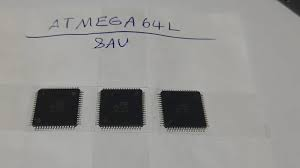
Our services are designed to address these challenges at a professional level. We provide reliable solutions to securely readout, decrypt, and extract binary or firmware files from protected ATMEGA64L microcontrollers without exposing unnecessary technical details. Whether the objective is firmware recovery, system duplication, product refurbishment, or long-term maintenance, our team focuses on delivering accurate data archives and usable program files. By combining industry expertise with proven workflows, we help clients regain access to critical MCU data and move forward with confidence, even when dealing with secured, encrypted, or locked AVR devices.