-
Product Categories
-
Live Support Chat


Crack Microchip MCU PIC16F76 Heximal
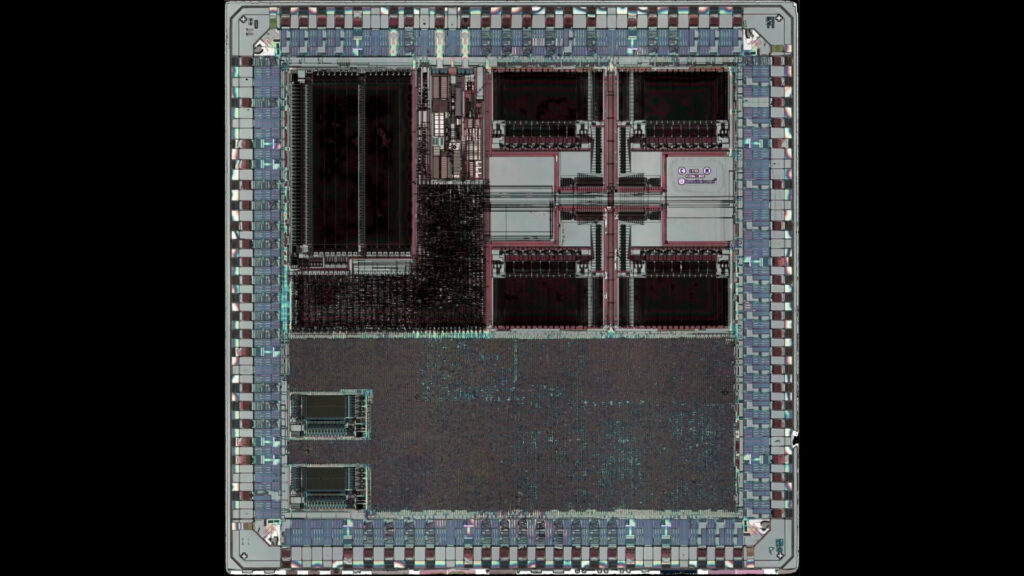
Same 28-pin footprint as the PIC16F73, twice the flash, nearly twice the RAM: 8K words and 368 bytes against 4K and 192. The 16F76 exists for a simple reason. Firmware grows. A product that started life on a 73 outgrows 4K words after a few feature requests, and rather than redesign the board the manufacturer fits the part with more memory.
That history is useful when you are trying to work out what you are dealing with. A board carrying a 16F76 is usually a late revision of a design that has been in production for a long time — which is exactly the situation where the source archive has been lost, the original engineer has moved on, and the only surviving copy of the firmware is the one inside the chip.
Why the pin compatibility matters for a repair
Because the 73 and 76 share a pinout, a board designed for one can generally accept the other, and the surrounding circuit does not change. That makes replacement practical: read the locked 16F76, program a blank device, and the board runs again. It also means a mistake in identification is survivable — but it is better to identify correctly, because the memory map and the size of the image differ.
What lives in 368 bytes
More than you would expect, and less than a modern design would want. There is no data EEPROM on this part, so every persistent value — calibration, accumulated run hours, user settings, fault history — is stored either in the flash image itself or in an external serial EEPROM on the board. If the product remembers anything across a power cycle, one of those two places holds it. Knowing which changes what you have to recover.
How the contents are recovered
- Identify the variant. 28-pin and 8K words puts it in a narrow group: the 16F76 itself, or a 16F767 from the later family, which is a different core with a different register map. Marking and device ID settle it.
- Decide on removal. Socketed parts come out cleanly. Soldered parts are better left on the board — the risk of lifting a pad exceeds the inconvenience of working around the board.
- Open the package. The larger die of the 8K parts is easier to work with than the 14-pin baseline devices: more area, more margin, and probe positions that can be verified visually.
- Read the array. Direct probing with a repeat pass from a second position, and disagreements flagged rather than smoothed over.
- Reconstruct the image. 14-bit words, configuration word separated, reset and interrupt vectors checked.
- Verify against behaviour. Where a replacement device is available, programming it and running the board is the strongest confirmation there is — stronger than any checksum.
What you receive
Intel HEX and raw binary with a memory map, plus a report of the die marking, revision and any anomalies. The format is the same as any other job in this family, described under firmware extraction. If you want the image programmed into blank devices rather than handed over as a file, that is a different scope and worth stating at the start — see IC cloning.
One caution about “copying”
An image read from a protected part is a faithful copy of that part, including any calibration offset that was tuned for that specific board. Dropping it into a different unit usually works, but if the product measures anything analogue, expect to check the readings against a reference before trusting them. This is the single most common surprise after a successful recovery.
Neighbouring parts
The PIC16F73 is the 4K version on the same footprint. The PIC16F77 is the 40-pin member with the same memory and a parallel slave port. Both are read the same way, and the microcontroller unlock page covers the cases where the device can stay on the board.
Authorization
We accept hardware the customer owns or is authorised to repair, and handle everything under a non-disclosed agreement. If the application is one we should not take on, we will say so directly.