-
Product Categories
-
Live Support Chat


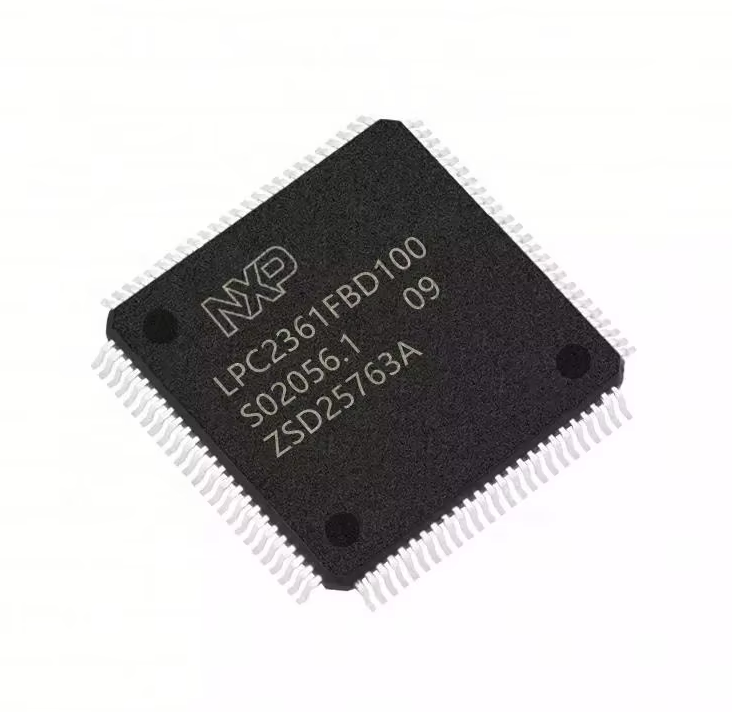
Crack MCU IC NXP LPC2361FBD100 Flash
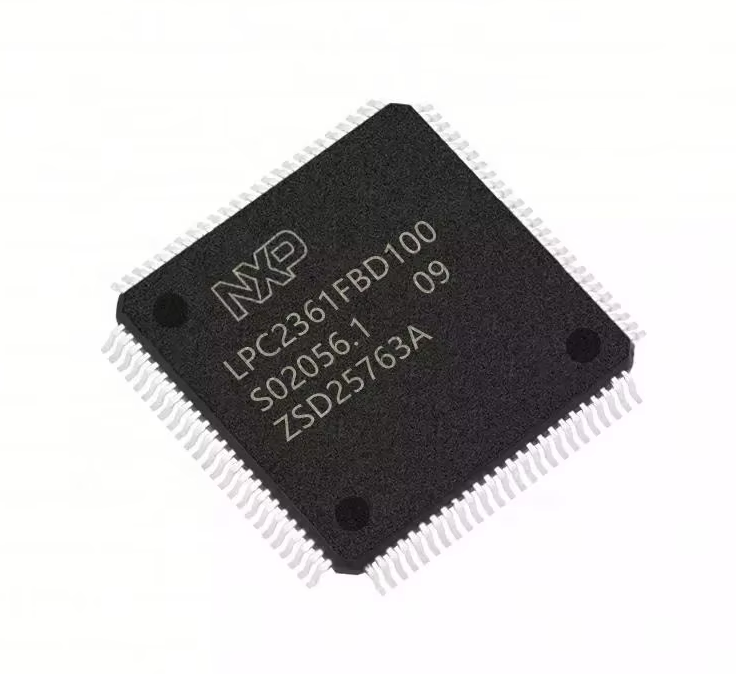
Crack MCU IC NXP LPC2361FBD100 is a specialized firmware recovery and embedded system replication service dedicated to the powerful ARM-based NXP LPC2361FBD100 microcontroller platform. The LPC2361FBD100 belongs to the NXP LPC2000 series and integrates an ARM7TDMI-S core, high-speed Flash memory, SRAM resources, communication peripherals, timers, ADC modules, PWM controllers, and multiple industrial interfaces. Due to its reliable architecture and extensive peripheral integration, this MCU has been widely deployed in industrial automation equipment, communication systems, transportation controllers, medical electronics, intelligent monitoring systems, and embedded control applications. In many of these products, the firmware stored inside the chip represents critical intellectual property and operational logic. To prevent unauthorized duplication, manufacturers frequently activate protective security mechanisms that create a locked or encrypted environment, blocking direct access to firmware, EEPROM data, Flash memory, and program archives.
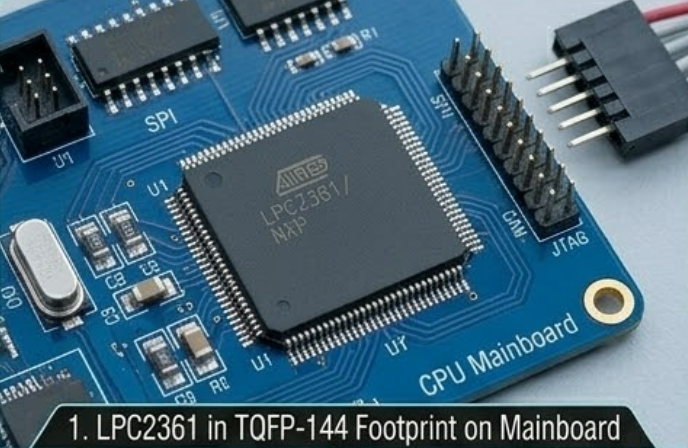
The LPC2361/62 microcontrollers are based on a 16-bit/32-bit ARM7TDMI-S CPU with real-time emulation that combines the microcontroller with up to 128 kB of embedded high-speed flash memory. A 128-bit wide memory interface and a unique accelerator architecture enable 32-bit code execution at the maximum clock rate. For critical performance in interrupt service routines and DSP algorithms, this increases performance up to 30 % over Thumb mode. For critical code size applications, the alternative 16-bit Thumb mode reduces code by more than 30 % with minimal performance penalty.
The LPC2361/62 are ideal for multi-purpose serial communication applications. They incorporate a 10/100 Ethernet Media Access Controller (MAC) (LPC2362 only), USB full speed device with 4 kB of endpoint RAM, four UARTs, two CAN channels, an SPI interface, two Synchronous Serial Ports (SSP), three I2C interfaces, and an I2S interface. This blend of serial communications interfaces combined with an on-chip 4 MHz internal oscillator, SRAM of up to 32 kB, 16 kB SRAM for Ethernet (available as general purpose SRAM for the LPC2361), 8 kB SRAM for USB and general purpose use, together with 2 kB battery powered SRAM make these devices very well suited for communication gateways and protocol converters.
Unlocking a secured LPC2361FBD100 microcontroller involves recovering firmware and operational data from a protected chip where standard programming interfaces cannot perform a normal readout. Security protection within the MCU may disable debugging interfaces, restrict memory access, and encrypt internal program structures. Under these conditions, engineers may need to crack, unlock, decrypt, dump, copy, replicate, and readout the firmware stored inside the microprocessor. The objective is to recover complete binary and heximal firmware archives, including Flash memory data, EEPROM configuration values, software resources, calibration information, and embedded program files. Through advanced firmware reconstruction and validation procedures, it becomes possible to rebuild a reliable binary firmware image that accurately reflects the original software behavior. This recovered firmware archive can then be used for maintenance, hardware migration, product lifecycle extension, and continued operational support when the original source code or development documentation is no longer available.
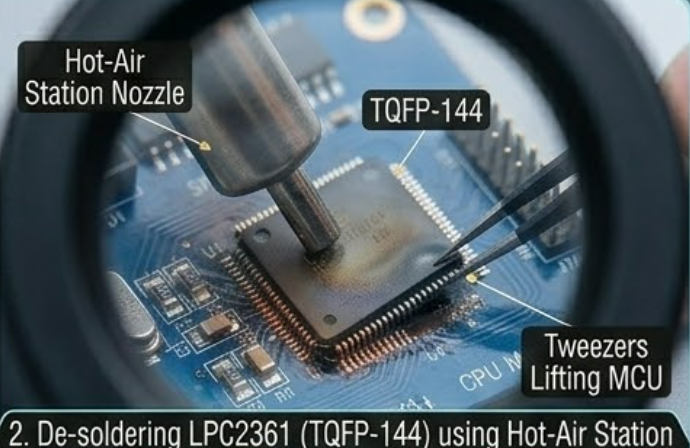
The market demand for Crack MCU IC NXP LPC2361FBD100 services continues to grow rapidly because many industrial and commercial systems remain operational long after their original development cycle has ended. Manufacturing facilities, automation systems, communication infrastructure, transportation equipment, and specialized machinery often rely on embedded platforms that were developed years or even decades ago. In many situations, the original engineering team has disappeared, the source code has been lost, or the firmware archive is incomplete. As a result, organizations require the ability to dump firmware from a locked microchip, decrypt protected memory, replicate MCU functionality, and rebuild software archives from existing hardware. Recovering firmware from a secured ARM microcontroller enables companies to maintain compatibility with deployed systems, continue manufacturing spare parts, and avoid costly redesign projects. For many businesses, firmware recovery represents the most practical solution for preserving critical engineering investments while minimizing downtime and operational disruption.
From a technical perspective, working with a secured LPC2361FBD100 presents substantial engineering challenges. The chip may contain encrypted Flash memory regions, protected debugging interfaces, locked EEPROM structures, and advanced security configurations specifically designed to prevent unauthorized firmware extraction. Incorrect handling may trigger memory erase functions, damage internal data structures, or permanently destroy critical firmware information. Additionally, older electronic devices may exhibit degraded memory cells, unstable EEPROM retention, corrupted binary archives, or incomplete firmware data caused by environmental stress and aging components. Successfully extracting a stable firmware dump therefore requires specialized laboratory equipment, advanced analysis procedures, and extensive validation methods. Every binary file, memory block, and firmware archive must be carefully reconstructed and verified to ensure that the recovered software maintains the same functionality and operational characteristics as the original embedded system.
Our engineering team provides professional firmware recovery and microcontroller analysis services for NXP LPC2361FBD100 devices and other secured MCU architectures. We specialize in recovering firmware from locked, encrypted, and protected microcontrollers including ARM, DSP, CPLD, and industrial embedded platforms. Our services include firmware extraction, Flash and EEPROM recovery, binary and heximal file reconstruction, software archive restoration, and embedded program replication. By helping customers unlock secured memory, recover critical firmware data, and rebuild operational software resources, we support continued manufacturing, legacy equipment maintenance, and long-term embedded system support. Whether the objective is preserving obsolete industrial hardware, restoring missing firmware archives, or replicating existing program functionality, our expertise transforms inaccessible chip memory into a practical engineering asset. Through precise recovery and validation procedures, we help organizations reduce redevelopment costs, extend product lifecycles, and maintain stable operation of critical embedded systems.