
-
Product Categories
-
Live Support Chat


Copy Microcontroller ATMEL AT89C51CC03CA-7CTUM
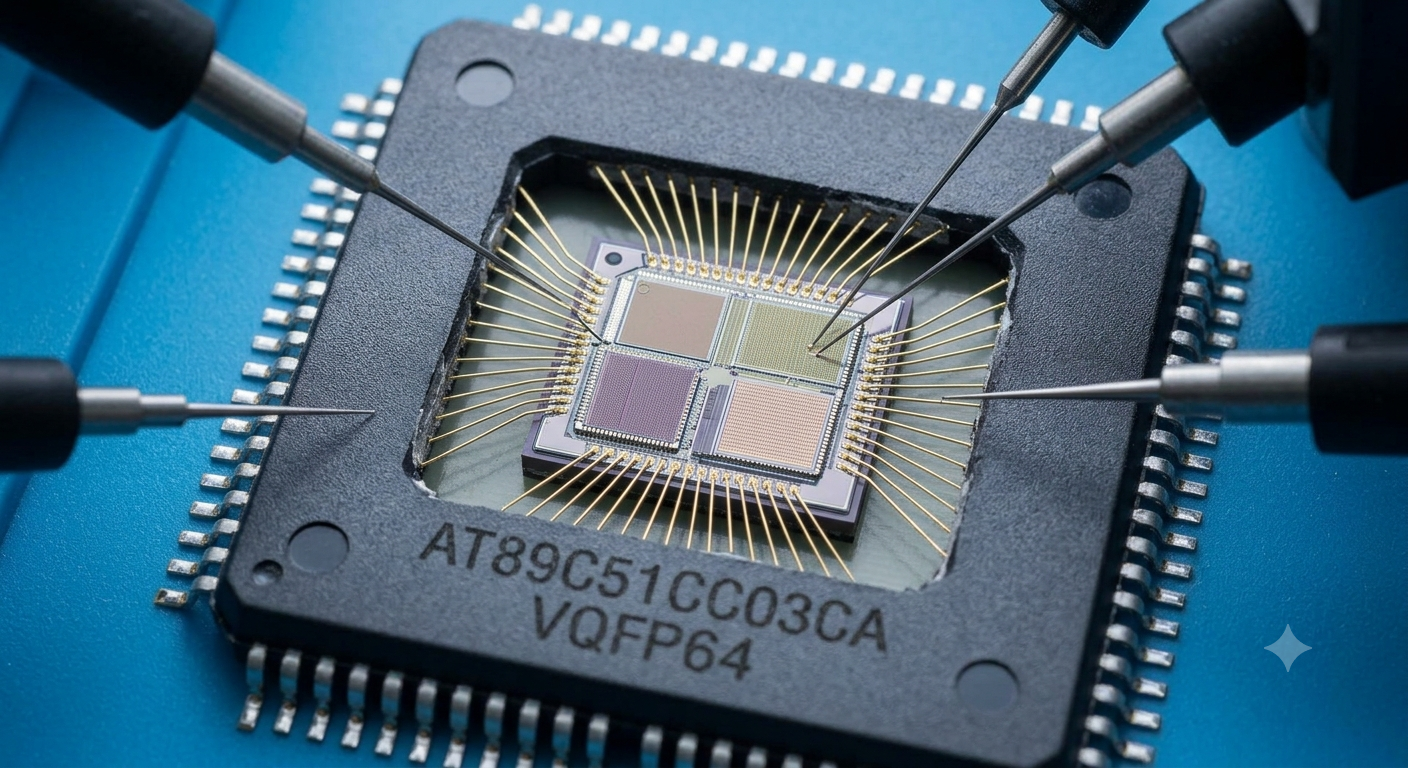
For engineers maintaining legacy systems, the need to copy microcontroller atmel at89c51cc03ca is a recurring challenge. This 8-bit mcu combines a 8051 core with 64 kb of on-chip flash memory, 2 kb of eeprom, and a can interface, making it a favorite for automotive and industrial control. To shield intellectual property, atmel integrated a set of protective lock bits that leave the internal memory encrypted and fully locked against ordinary readout. Once secured, the firmware remains hidden. These devices were widely deployed in engine management units, plc modules, and medical analyzers, many of which are now obsolete. When the original design files have vanished and the at89c51cc03ca is the only repository of the application logic, extracting the locked data becomes essential.
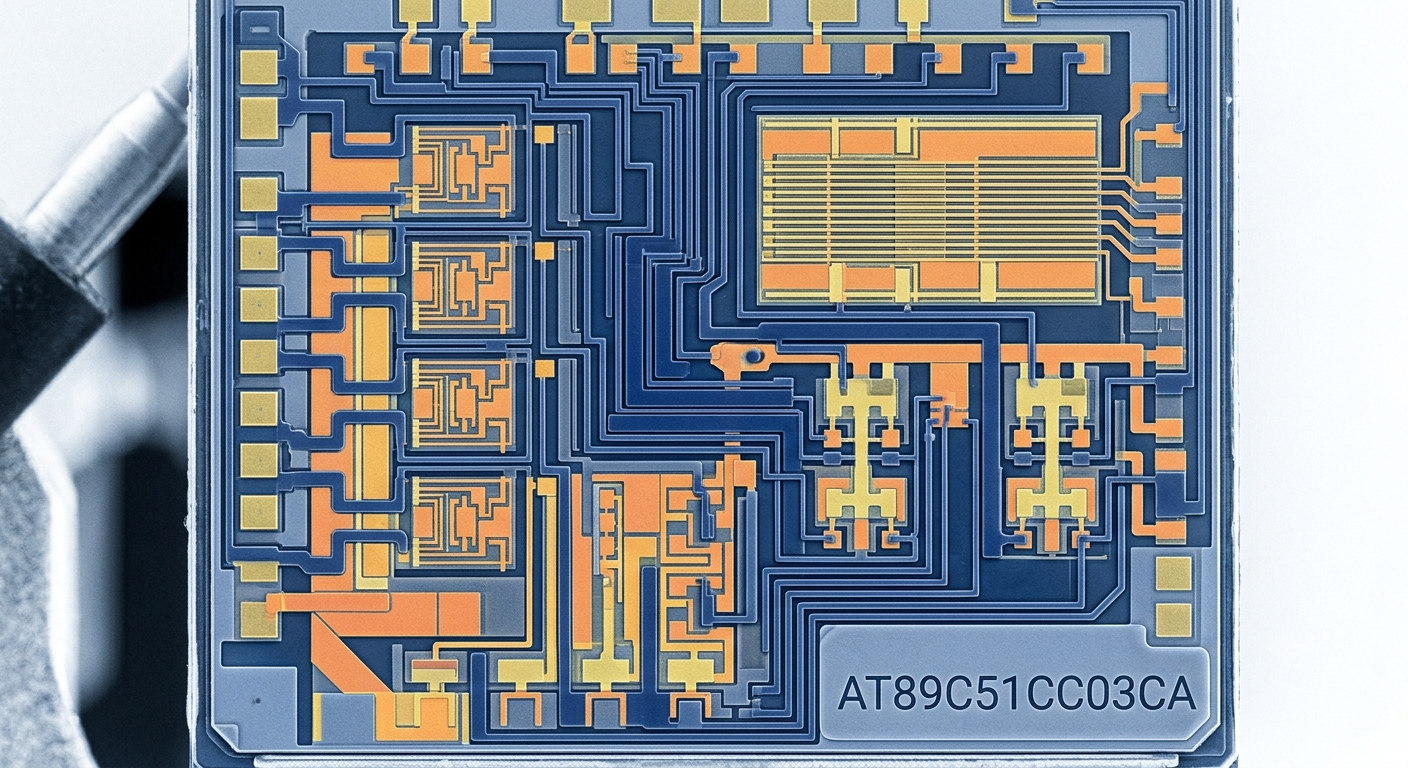
Nếu nhà sản xuất lưu trữ dữ liệu ở dạng mã hóa, bước tiếp theo là giải mã dữ liệu đã thu được để tạo ra tệp hexadecimal (hex) sạch cùng với tệp binary tương ứng. Bộ tệp của microchip at89c51cc03ca microprocessor đại diện cho toàn bộ firmware, cho phép sao chép hoặc tái tạo microchip at89c51cc03ca microcontroller bằng cách lập trình một vi mạch trống. Trên thực tế, việc mở khóa, trích xuất dữ liệu, đọc nội dung và giải mã một vi điều khiển bị khóa nhằm mục đích khôi phục đầy đủ phần mềm nhúng ban đầu.
Unlocking a secured microcontroller such as the at89c51cc03ca means systematically defeating its hardware protection to recover the embedded program. The process begins with fault injection or microprobing to crack the security lock bits and disable the readout protection. Once the mcu is unlocked, we can dump the entire contents of the flash and eeprom memory into a raw data stream. If the manufacturer stored the information in an encrypted form, we then decrypt the captured data to produce a clean hexadecimal or heximal file and a matching binary image. This file set represents the complete firmware, enabling you to copy or replicate the original device by programming a blank chip. In practice, to unlock, crack, dump, readout, and decrypt a locked microcontroller is to faithfully resurrect its hidden software.
We can Copy Microcontroller ATMEL AT89C51CC03CA-7CTUM, please view the IC chip features for your reference:
· Integrated Power Monitor (POR: PFD) To Supervise Internal Power Supply
· 14-sources 4-level Interrupts
· Three 16-bit Timers/Counters
· Full Duplex UART Compatible 80C51
· High-speed Architecture
– In Standard Mode:
40 MHz (Vcc 3V to 5.5V, both Internal and external code execution)
60 MHz (Vcc 4.5V to 5.5V and Internal Code execution only)
– In X2 mode (6 Clocks/machine cycle)
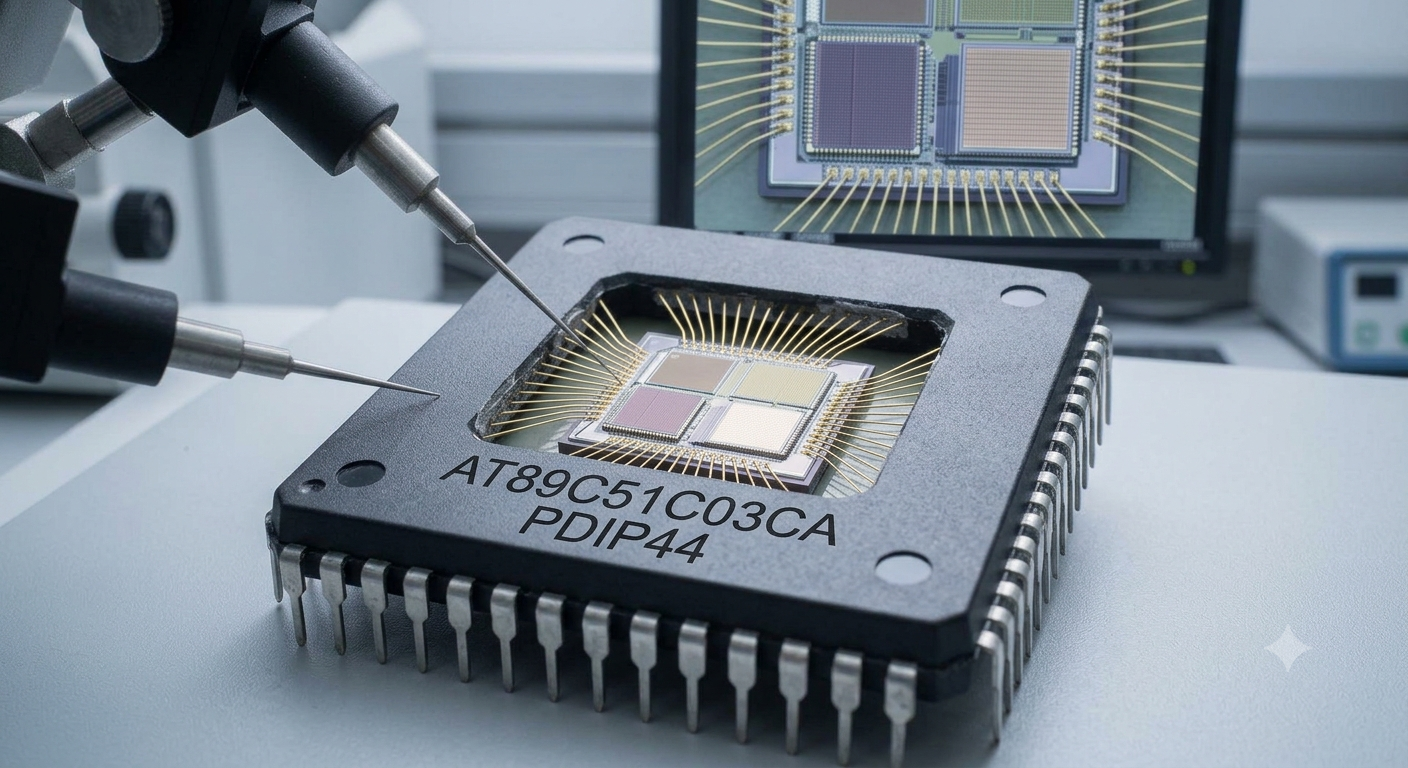
اگر اطلاعات توسط سازنده بهصورت رمزگذاریشده ذخیره شده باشد، دادههای بهدستآمده رمزگشایی میشوند تا یک فایل hexadecimal (hex) و تصویر binary متناظر تولید گردد. مجموعه فایلهای microchip at89c51cc03ca microprocessor نمایانگر firmware کامل دستگاه است و امکان برنامهریزی یک تراشه خام برای بازتولید microchip at89c51cc03ca microcontroller را فراهم میکند. در عمل، بازیابی دادههای یک میکروکنترلر قفلشده با هدف بازسازی کامل نرمافزار تعبیهشده انجام میشود.
20 MHz (Vcc 3V to 5.5V, both Internal and external code execution)
30 MHz (Vcc 4.5V to 5.5V and Internal Code execution only)
· Five Ports: 32 + 4 Digital I/O Lines
· Five-channel 16-bit PCA with
– PWM (8-bit)
– High-speed Output
– Timer and Edge Capture
· Double Data Pointer
· 21-bit WatchDog Timer (7 Programmable Bits)
· A 10-bit Resolution Analog to Digital Converter (ADC) with 8 Multiplexed Inputs
· SPI Interface, (PLCC52, VPFP64 and CABGA 64 packages only)
· Full CAN Controller
– Fully Compliant with CAN Rev 2.0A and 2.0B
– Optimized Structure for Communication Management (Via SFR)
– 15 Independent Message Objects
– Each Message Object Programmable on Transmission or Reception
– Individual Tag and Mask Filters up to 29-bit Identifier/Channel
– 8-byte Cyclic Data Register (FIFO)/Message Object
– 16-bit Status and Control Register/Message Object
– 16-bit Time-Stamping Register/Message Object
– CAN Specification 2.0 Part A or 2.0 Part B Programmable for Each Message Object
– Access to Message Object Control and Data Registers Via SFR
– Programmable Reception Buffer Length Up To 15 Message Objects
– Priority Management of Reception of Hits on Several Message Objects at the
Same Time (Basic CAN Feature)
– Priority Management for Transmission
– Message Object Overrun Interrupt
– Supports
– Time Triggered Communication
– Autobaud and Listening Mode
– Programmable Automatic Reply Mode
– 1-Mbit/s Maximum Transfer Rate at 8 MHz (1) Crystal Frequency in X2 Mode
– Readable Error Counters
– Programmable Link to On-chip Timer for Time Stamping and Network
Synchronization
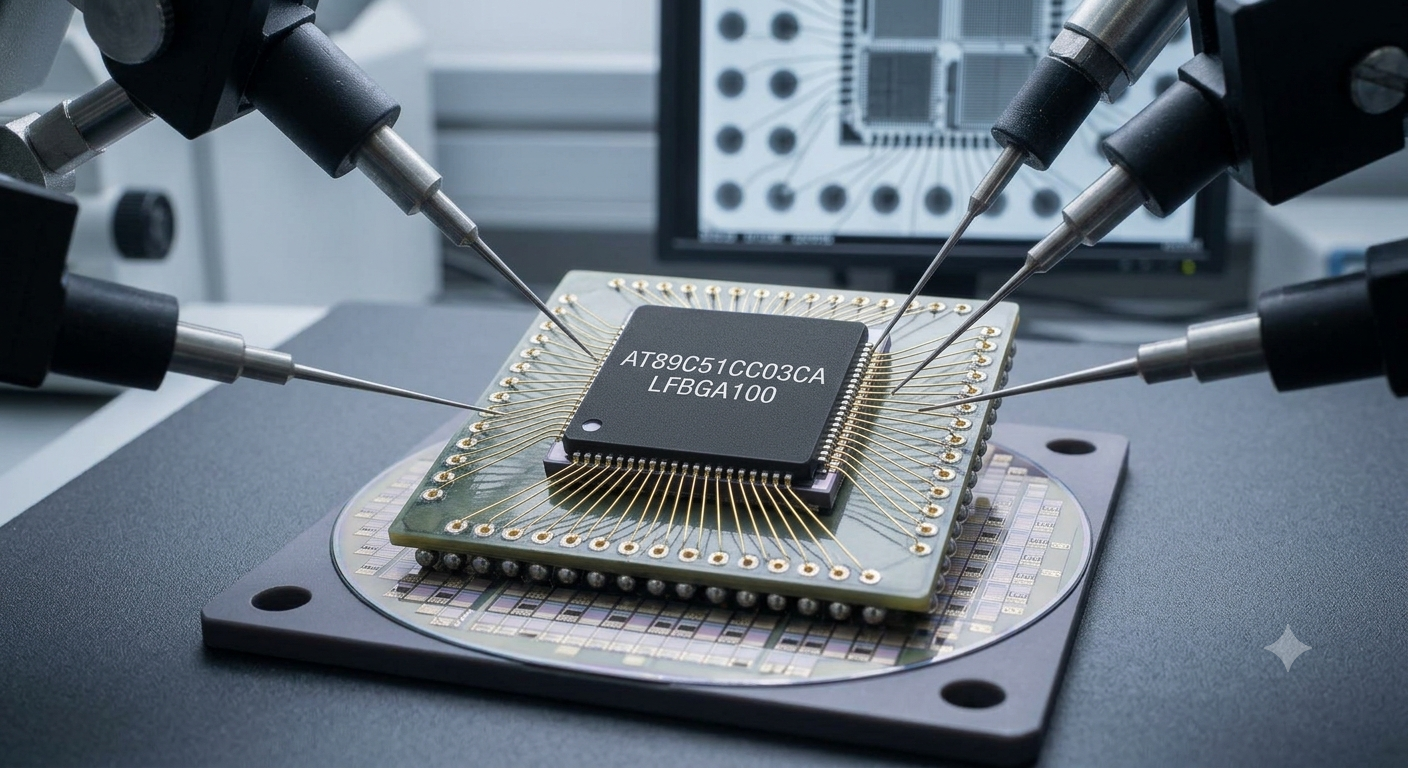
यदि निर्माता ने जानकारी को एन्क्रिप्टेड रूप में संग्रहीत किया है, तो प्राप्त डेटा को डिक्रिप्ट करके एक स्वच्छ hexadecimal (hex) फ़ाइल तथा उससे मेल खाती binary इमेज तैयार की जाती है। microchip at89c51cc03ca microprocessor का यह फ़ाइल-समूह संपूर्ण firmware का प्रतिनिधित्व करता है और उपयुक्त परिस्थितियों में एक रिक्त चिप पर प्रोग्राम करके microchip at89c51cc03ca microcontroller का पुनर्निर्माण किया जा सकता है। व्यवहार में, इस प्रकार की प्रक्रिया का उद्देश्य मूल एम्बेडेड सॉफ़्टवेयर को पुनर्स्थापित करना होता है।
– Independent Baud Rate Prescaler
The market demand for services that can replicate a locked and obsolete mcu stems from the long lifecycles of industrial equipment. When a protective controller goes out of production, the original source code and software are typically missing, yet the hardware must be maintained. Without the ability to copy the encrypted firmware, companies cannot produce spare boards or fix failing systems. By engaging specialists to unlock and readout the chip, they obtain a program file that captures the original behavior. This requirement extends far beyond the atmel at89c51cc03ca: an altera chip, a locked cpld, or a protected eeprom from an outdated design may hold the only surviving configuration data. The importance of such recovery lies in preserving functionality and avoiding a full redesign when the locked memory is the sole keeper of critical logic. In these situations, the capability to dump the data, decrypt it, and turn it into a ready-to-use binary file transforms an obsolete obstacle into a renewable asset.
Если производитель сохранил информацию в зашифрованном виде, полученные данные расшифровываются для формирования корректного файла hexadecimal (hex) и соответствующего образа binary. Набор файлов microchip at89c51cc03ca microprocessor представляет собой полный комплект firmware, что позволяет воспроизвести microchip at89c51cc03ca microcontroller путём программирования новой микросхемы при наличии необходимых прав и условий. На практике подобная процедура направлена на восстановление встроенного программного обеспечения.
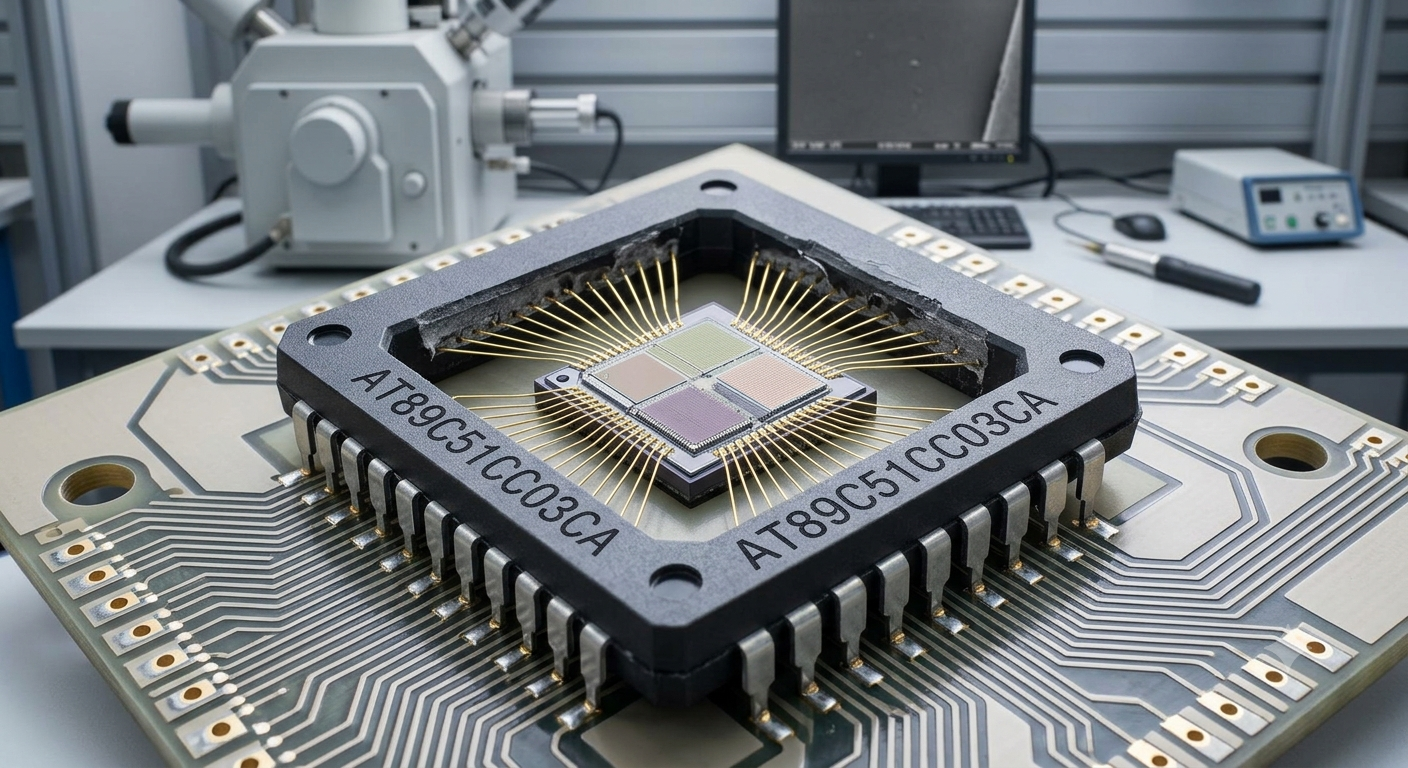
Our laboratory provides a professional copy microcontroller atmel at89c51cc03ca service that handles every stage of firmware extraction. Using advanced semiconductor test gear and proprietary software, we crack the security fuse, unlock the flash, and dump all internal memory, including the eeprom area. The recovered data is delivered as a verified hexadecimal (or heximal) file and a binary image, ready for immediate device replication. When required, we can disassemble the firmware and reconstruct a logic-level source code representation to help you understand the software flow. Our expertise covers any protected ic: we regularly unlock and copy locked mcus, readout an encrypted altera chip, clone a secured cpld, or dump the contents of a protected flash. Each engagement ends with a validated program file, giving you the confidence to produce new units with identical functionality.
제조사가 데이터를 암호화된 형태로 저장한 경우에는 확보된 데이터를 복호화하여 깨끗한 hexadecimal (hex) 파일과 이에 대응하는 binary 이미지를 생성합니다. microchip at89c51cc03ca microprocessor의 파일 세트는 전체 firmware를 구성하며, 적절한 조건에서는 이를 이용하여 새로운 칩에 프로그램함으로써 microchip at89c51cc03ca microcontroller를 재현할 수 있습니다. 실제로 이러한 절차의 목적은 원래의 임베디드 소프트웨어를 충실하게 복원하는 것입니다.
When a locked and encrypted microcontroller becomes the sole witness of a system’s operational intelligence, the capacity to crack, unlock, and copy it is not a luxury—it is a necessity. Our readout and replication services for the atmel at89c51cc03ca and similar ics restore access to vital firmware from obsolete and outdated components. Contact us to discuss your project and learn how we can help you dump, decrypt, and replicate your protected microcontroller data with speed and confidentiality.