Retrieve AVR MCU ATmega162V

Retrieve AVR MCU ATmega162V is a specialized engineering service focused on firmware recovery and embedded system restoration for devices built around the efficient ATmega162V. This AVR microcontroller integrates 16KB Flash memory, 1KB SRAM, and 512 bytes EEPROM, along with dual USART communication interfaces, SPI support, timers, and flexible I/O capabilities. Its low-voltage operation and reliable performance make it widely deployed in industrial control systems, communication modules, automotive subsystems, and embedded monitoring equipment. Although many of these systems are now considered obsolete or outdated, they continue to operate in critical environments. To protect firmware and proprietary software, manufacturers often configure the MCU with protective fuse settings, resulting in a locked or encrypted chip where program memory, firmware data, and EEPROM content are secured against direct readout.
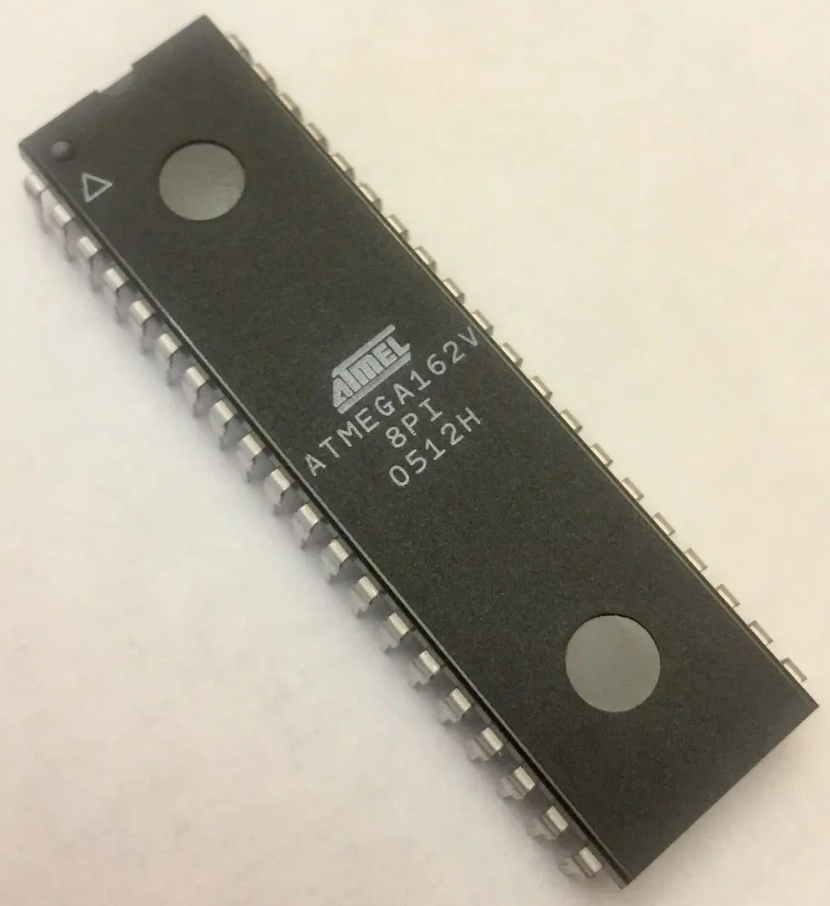
Извлечение прошивки из защищенного микроконтроллера ATMEL ATmega162V включает в себя извлечение файла встроенной программы, двоичного архива и данных памяти из защищенного микроконтроллера ATMEL ATmega162V, где стандартные инструменты программирования не могут выполнить прямое считывание. В таких сценариях инженерам приходится применять передовые методы для взлома, разблокировки, расшифровки, дампа, копирования и считывания прошивки, хранящейся в микроконтроллере ATMEL ATmega162V. Цель состоит в восстановлении всего архива прошивки, включая программную память Flash, данные конфигурации EEPROM и двоичные или шестнадцатеричные структуры файлов системного уровня. Путем восстановления файла прошивки и проверки целостности извлеченных данных становится возможным воспроизвести программу заблокированного микропроцессора ATMEL ATmega162V и восстановить его исходную работоспособность. Этот процесс необходим, когда отсутствует исходный код, архив программного обеспечения или документация по разработке, что гарантирует возможность дальнейшей работы встроенной системы без необходимости ее перепроектирования.

Retrieving firmware from a secured ATmega162V microcontroller involves extracting the embedded program file, binary archive, and memory data from a protected MCU where standard programming tools cannot perform a direct readout. In such scenarios, engineers must apply advanced techniques to crack, unlock, decrypt, dump, copy, and readout the firmware stored within the microchip. The objective is to recover the entire firmware archive, including Flash program memory, EEPROM configuration data, and system-level binary or heximal file structures. By reconstructing the firmware file and validating the integrity of the extracted data, it becomes possible to replicate the MCU program and restore its original operational functionality. This process is essential when the source code, software archive, or development documentation is missing, ensuring that the embedded system can continue to operate without requiring redesign.
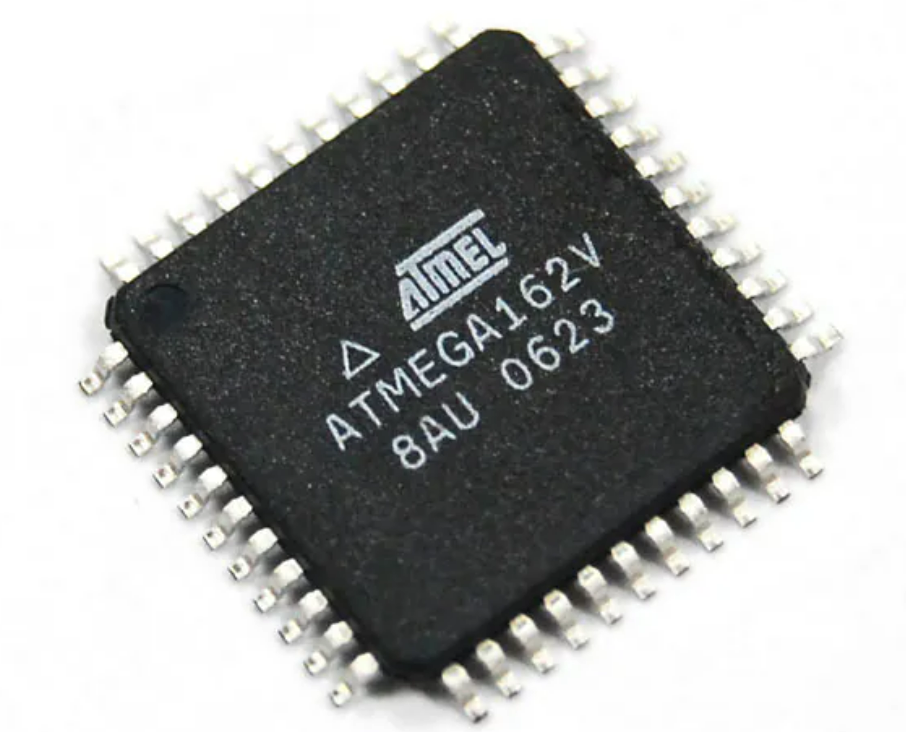
Das Auslesen der Firmware eines geschützten ATMEL ATmega162V-Mikrocontrollers erfordert die Extraktion der eingebetteten Programmdatei, des Binärarchivs und der Speicherdaten. Standard-Programmierwerkzeuge können diese Daten nicht direkt auslesen. In solchen Fällen müssen Entwickler fortgeschrittene Techniken anwenden, um die im Mikrocontroller gespeicherte Firmware zu knacken, zu entsperren, zu entschlüsseln, zu extrahieren, zu kopieren und auszulesen. Ziel ist die Wiederherstellung des gesamten Firmware-Archivs, einschließlich Flash-Programmspeicher, EEPROM-Konfigurationsdaten und binärer oder hexadezimaler Systemdateistrukturen. Durch die Rekonstruktion der Firmware-Datei und die Überprüfung der Integrität der extrahierten Daten lässt sich das Programm des gesperrten ATMEL ATmega162V-Mikroprozessors replizieren und seine ursprüngliche Funktionsfähigkeit wiederherstellen. Dieser Prozess ist unerlässlich, wenn Quellcode, Softwarearchiv oder Entwicklungsdokumentation fehlen, und gewährleistet den Weiterbetrieb des eingebetteten Systems ohne Neuentwicklung.

The AVR core combines a rich instruction set with 32 general purpose working registers. All the 32 registers are directly connected to the Arithmetic Logic Unit (ALU), allowing two independent registers to be accessed in one single instruction executed in one clock cycle through which can manipulate the process of Retrieve AVR MCU ATmega162V. The resulting architecture is more code efficient while achieving throughputs up to ten times faster than conventional CISC microcontrollers.
Retrieve AVR MCU ATmega162V

In Standby mode, the crystal/resonator Oscillator is running while the rest of the device is sleeping. This allows very fast start-up combined with low-power consumption. In Extended Standby mode, both the main Oscillator and the Asynchronous Timer continue to run.
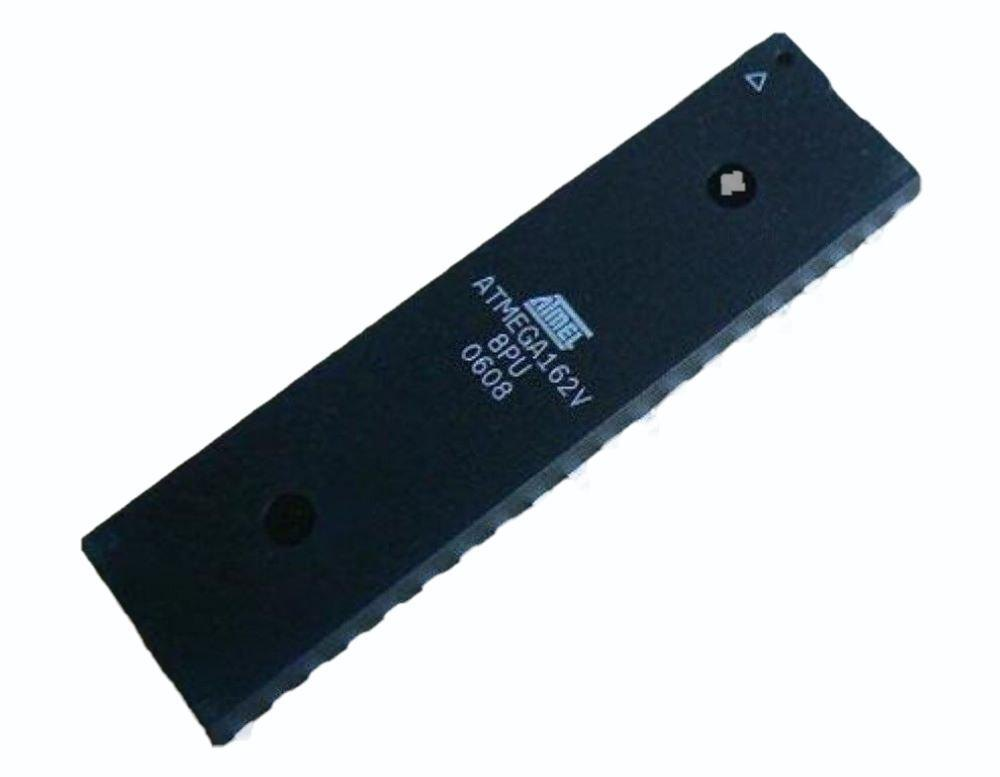
La récupération du firmware d'un microcontrôleur ATMEL ATmega162V sécurisé implique l'extraction du fichier programme embarqué, de l'archive binaire et des données mémoire. En effet, les outils de programmation standard ne permettent pas une lecture directe. Dans ce cas, les ingénieurs doivent recourir à des techniques avancées pour déverrouiller, décrypter, extraire, copier et lire le firmware stocké dans le microcontrôleur ATMEL ATmega162V. L'objectif est de récupérer l'intégralité de l'archive du firmware, incluant la mémoire Flash, les données de configuration EEPROM et les structures de fichiers binaires ou hexadécimaux au niveau système. La reconstruction du fichier firmware et la validation de l'intégrité des données extraites permettent de répliquer le programme du microprocesseur ATMEL ATmega162V verrouillé et de restaurer son fonctionnement initial. Ce processus est essentiel lorsque le code source, l'archive logicielle ou la documentation de développement sont manquants, garantissant ainsi la continuité de fonctionnement du système embarqué sans nécessiter de refonte.
La récupération du firmware d’un microcontrôleur ATMEL ATmega162V sécurisé implique l’extraction du fichier programme embarqué, de l’archive binaire et des données mémoire. En effet, les outils de programmation standard ne permettent pas une lecture directe. Dans ce cas, les ingénieurs doivent recourir à des techniques avancées pour déverrouiller, décrypter, extraire, copier et lire le firmware stocké dans le microcontrôleur ATMEL ATmega162V. L’objectif est de récupérer l’intégralité de l’archive du firmware, incluant la mémoire Flash, les données de configuration EEPROM et les structures de fichiers binaires ou hexadécimaux au niveau système. La reconstruction du fichier firmware et la validation de l’intégrité des données extraites permettent de répliquer le programme du microprocesseur ATMEL ATmega162V verrouillé et de restaurer son fonctionnement initial. Ce processus est essentiel lorsque le code source, l’archive logicielle ou la documentation de développement sont manquants, garantissant ainsi la continuité de fonctionnement du système embarqué sans nécessiter de refonte.

The device is manufactured using Atmel’s high density non-volatile memory technology.

The On-chip ISP Flash allows the program memory to be reprogrammed In-System through an SPI serial interface, by a conventional non-volatile memory programmer, or by an On-chip Boot Program running on the AVR core. The Boot Program can use any interface to download the Application Program in the Application Flash memory. Software in the Boot Flash section will continue to run while the Application Flash section is updated, providing true Read-While-Write operation. By combining an 8-bit RISC CPU with In-System Self-Programmable Flash on a monolithic chip, the Atmel ATmega162 is a powerful microcontroller that provides a highly flexible and cost effective solution to many embedded control applications.

The ATmega162 AVR is supported with a full suite of program and system development tools including: C compilers, macro assemblers, program debugger/simulators, In-Circuit Emulators, and evaluation kits.

 The ATmega162 is a highly complex microcontroller where the number of I/O locations supersedes the 64 I/O locations reserved in the AVR instruction set. To ensure backward compatibility with the ATmega161, all I/O locations present in ATmega161 have the same locations in ATmega162. Some additional I/O locations are added in an Extended I/O space starting from 0x60 to 0xFF, (i.e., in the ATmega162 internal RAM space). These locations can be reached by using LD/LDS/LDD and ST/STS/STD instructions only, not by using IN and OUT instructions. The relocation of the internal RAM space may still be a problem for ATmega161 users. Also, the increased number of Interrupt Vectors might be a problem if the code uses absolute addresses to extract IC firmware. To solve these problems, an ATmega161 compatibility mode can be selected by programming the fuse M161C. In this mode, none of the functions in the Extended I/O space are in use, so the internal RAM is located as in ATmega161. Also, the Extended Interrupt Vectors are removed. The ATmega162 is 100% pin compatible with ATmega161, and can replace the ATmega161 on current Printed Circuit Boards. However, the location of Fuse bits and the electrical characteristics differs between the two devices.
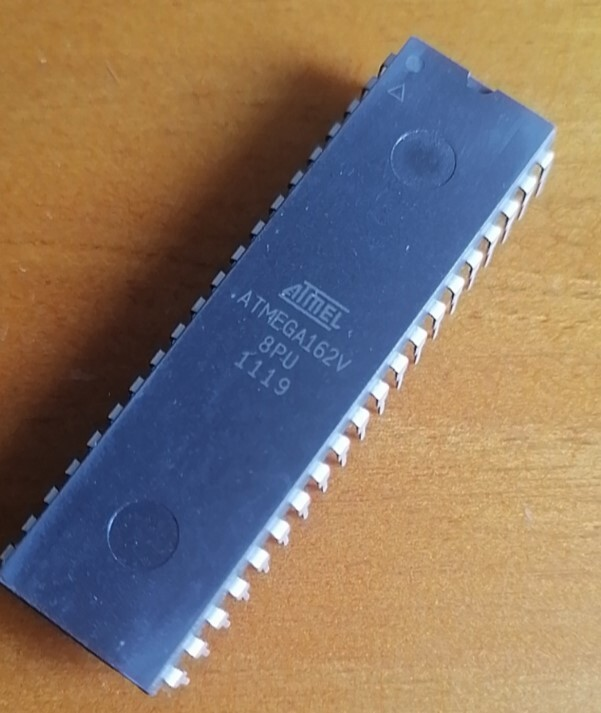
Il recupero del firmware da un microcontrollore ATMEL ATmega162V protetto implica l'estrazione del file di programma incorporato, dell'archivio binario e dei dati di memoria da un MCU ATMEL ATmega162V protetto, dove gli strumenti di programmazione standard non possono eseguire una lettura diretta. In tali scenari, gli ingegneri devono applicare tecniche avanzate per decifrare, sbloccare, decrittografare, estrarre, copiare e leggere il firmware memorizzato all'interno del microcontrollore ATMEL ATmega162V. L'obiettivo è recuperare l'intero archivio del firmware, inclusa la memoria Flash del programma, i dati di configurazione EEPROM e le strutture dei file binari o esadecimali a livello di sistema. Ricostruendo il file del firmware e convalidando l'integrità dei dati estratti, diventa possibile replicare il programma del microprocessore ATMEL ATmega162V bloccato e ripristinarne la funzionalità operativa originale. Questo processo è essenziale quando il codice sorgente, l'archivio software o la documentazione di sviluppo sono mancanti, garantendo che il sistema embedded possa continuare a funzionare senza richiedere una riprogettazione.
Il recupero del firmware da un microcontrollore ATMEL ATmega162V protetto implica l’estrazione del file di programma incorporato, dell’archivio binario e dei dati di memoria da un MCU ATMEL ATmega162V protetto, dove gli strumenti di programmazione standard non possono eseguire una lettura diretta. In tali scenari, gli ingegneri devono applicare tecniche avanzate per decifrare, sbloccare, decrittografare, estrarre, copiare e leggere il firmware memorizzato all’interno del microcontrollore ATMEL ATmega162V. L’obiettivo è recuperare l’intero archivio del firmware, inclusa la memoria Flash del programma, i dati di configurazione EEPROM e le strutture dei file binari o esadecimali a livello di sistema. Ricostruendo il file del firmware e convalidando l’integrità dei dati estratti, diventa possibile replicare il programma del microprocessore ATMEL ATmega162V bloccato e ripristinarne la funzionalità operativa originale. Questo processo è essenziale quando il codice sorgente, l’archivio software o la documentazione di sviluppo sono mancanti, garantendo che il sistema embedded possa continuare a funzionare senza richiedere una riprogettazione.

The Retrieve AVR MCU ATmega162V service addresses a critical need across industries that depend on legacy MCU, ARM, DSP, or CPLD-based platforms. Many companies still rely on long-life equipment where firmware files, source code, and software documentation have been lost or are no longer accessible. In these cases, the ability to dump, decrypt, replicate, and copy firmware from a locked microprocessor becomes essential for maintaining production and supporting field operations. Engineers may need to crack protected IC memory, unlock encrypted firmware data, and rebuild binary program archives to ensure compatibility with existing hardware. This capability is particularly valuable in industrial automation, communication systems, transportation infrastructure, and specialized machinery, where replacing the original microcontroller would involve significant cost and downtime. Firmware retrieval ensures continuity and extends the lifecycle of embedded systems.

From a technical perspective, unlocking a locked ATmega162V chip presents multiple challenges. The MCU may include encrypted Flash memory, protected EEPROM regions, and fuse configurations that disable firmware readout entirely. Improper attempts to access the chip can trigger automatic erase mechanisms, permanently destroying the firmware data stored within the IC. Additionally, long-term deployment in harsh environments may result in degraded memory cells, unstable EEPROM data, or partial corruption of the firmware archive. Extracting a reliable binary file therefore requires precise control, advanced diagnostic tools, and strict validation procedures to ensure the completeness and accuracy of the recovered program data. Even minor inconsistencies in the firmware dump can impact system performance after replication.
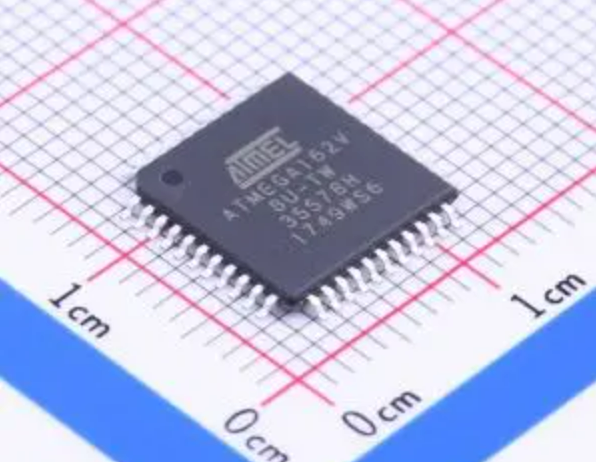
La recuperación del firmware de un microcontrolador ATMEL ATmega162V protegido implica extraer el archivo de programa integrado, el archivo binario y los datos de memoria de un MCU ATMEL ATmega162V protegido, donde las herramientas de programación estándar no permiten una lectura directa. En estos casos, los ingenieros deben aplicar técnicas avanzadas para descifrar, desbloquear, extraer, copiar y leer el firmware almacenado en el microcontrolador ATMEL ATmega162V. El objetivo es recuperar el archivo completo del firmware, incluyendo la memoria Flash, los datos de configuración de la EEPROM y las estructuras de archivos binarios o hexadecimales del sistema. Al reconstruir el archivo de firmware y validar la integridad de los datos extraídos, es posible replicar el programa del microprocesador ATMEL ATmega162V bloqueado y restaurar su funcionalidad operativa original. Este proceso es esencial cuando falta el código fuente, el archivo de software o la documentación de desarrollo, lo que garantiza que el sistema integrado pueda seguir funcionando sin necesidad de rediseño.

Our expertise in retrieving firmware from AVR microcontrollers such as the ATmega162V enables us to deliver reliable and professional solutions for end users. We specialize in working with secured, encrypted, and locked chips, providing services to recover firmware, reconstruct binary and heximal archives, and generate ready-to-use program files for MCU replication. By helping clients unlock protected microcontroller memory, recover critical firmware data, and rebuild complete software archives, we support continued production, efficient system maintenance, and extended lifecycle of embedded products. This service minimizes redevelopment costs, reduces downtime, and protects valuable intellectual property embedded within the firmware. Ultimately, retrieving and restoring firmware from a secured ATmega162V transforms inaccessible chip memory into a reusable engineering asset, ensuring long-term stability and sustainable operation.