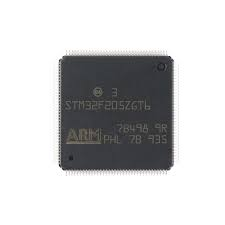
Read MCU ARM STMicroelectronics STM32F205ZGT6
The STM32F205ZGT6 from STMicroelectronics represents a high-performance 32-bit ARM Cortex-M3 MCU operating at frequencies up to 120 MHz. This microcontroller features substantial memory resources including 1 MB of Flash program memory and 128 KB of SRAM, making it suitable for complex embedded applications. A key security aspect of this MCU is its built-in protective mechanisms including readout protection (RDP) that prevents unauthorized access to the stored firmware. The device incorporates multiple security layers including option bytes that can configure the memory protection level, and when activated, these security features effectively lock the device against external reading attempts, making reverse engineering challenging without proper techniques and tools.
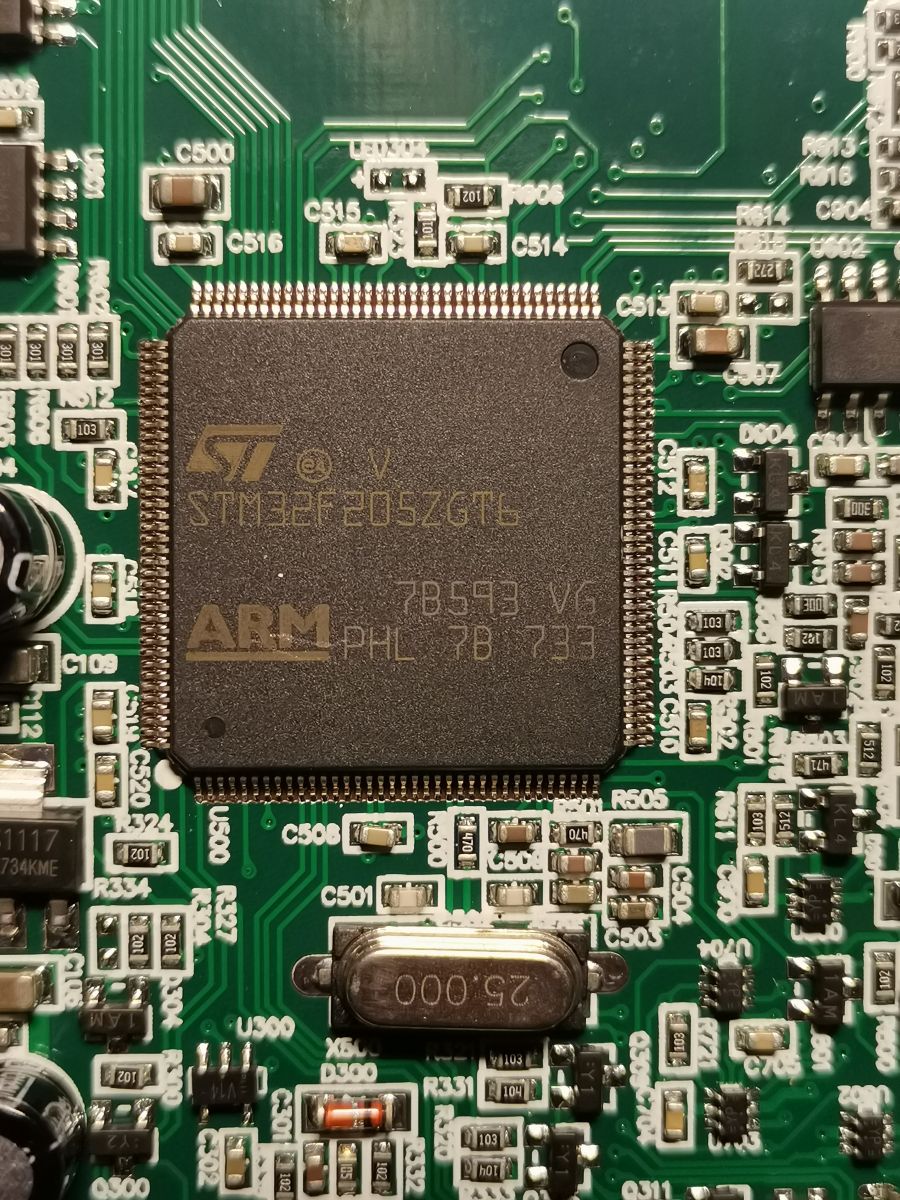
The STM32F205ZGT6 microcontroller finds applications across diverse industries due to its advanced connectivity options and processing capabilities. In the medical device industry, it powers critical equipment where firmware integrity is paramount for patient safety. For industrial applications, this MCU enables motor control systems, alarm systems, and automation controllers where the heximal code often contains proprietary algorithms. The consumer electronics sector utilizes this microprocessor in products like home audio systems and video intercoms, where protecting program intellectual property is crucial. Additionally, the automotive sector employs these chips in vehicle control systems where data security directly impacts operational safety and reliability.
Table: Common Applications of STM32F205ZGT6 by Industry
| Industry Sector | Typical Applications | Security Concerns |
|---|---|---|
| Medical Devices | Patient monitoring, Diagnostic equipment | High – firmware protection critical for safety |
| Industrial Control | Motor drives, Alarm systems, Process automation | Medium-High – protection of proprietary algorithms |
| Consumer Electronics | HVAC systems, Audio equipment, Video intercoms | Medium – prevention of unauthorized copying |
| Automotive Systems | Control modules, Infotainment systems | High – safety-critical operation |
Read MCU ARM STMicroelectronics STM32F205ZGT6
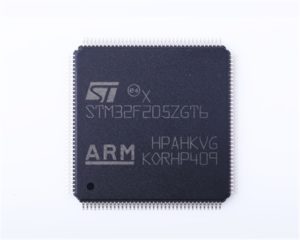
We can Read MCU ARM STMicroelectronics STM32F205ZGT6, please view below chip features for your reference:
Low power
– Sleep, Stop and Standby modes
– VBAT supply for RTC, 20 × 32 bit backup registers, and optional 4 KB backup SRAM 3 × 12-bit, 0.5 µs ADCs with up to 24 channels and up to 6 MSPS in triple interleaved mode to achieve audio class accuracy via audio after Read MCU ARM STMicroelectronics STM32F205ZGT6
PLL or external PLL
– 2 × CAN interfaces (2.0B Active)
– SDIO interface
Advanced connectivity
– USB 2.0 full-speed device/host/OTG controller with on-chip PHY
– USB 2.0 high-speed/full-speed device/host/OTG controller with dedicated DMA, on-chip full-speed PHY and ULPI
– 10/100 Ethernet MAC with dedicated DMA: supports IEEE 1588v2 hardware, MII/RMII 8- to 14-bit parallel camera interface (48 Mbyte/s max) Analog true random number generator 2 × 12-bit D/A converters
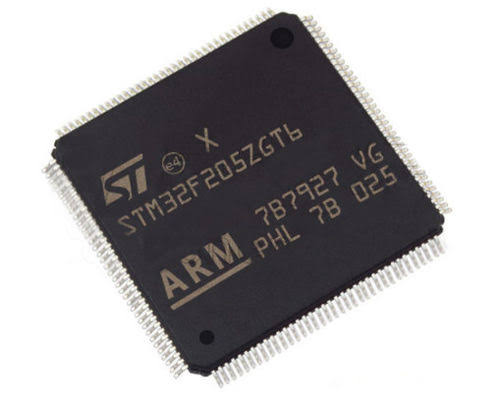
Attempting to recover or read the secured firmware from an STM32F205ZGT6 microcontroller requires sophisticated approaches that often combine hardware and software techniques. The process typically begins with reverse engineering the protection scheme by analyzing the option bytes configuration, which controls the readout protection level. Common methods include using ST-LINK Utility software or other programmer interfaces to decrypt the protection scheme by manipulating the RDP levels. For locked devices, technicians might employ bootloader manipulation techniques by setting BOOT0 pins to specific voltages to force the MCU into system memory mode, potentially bypassing some protective measures. Advanced attack vectors may involve microprobing of the chip internals or using laser fault injection techniques to break the security, though these methods require specialized equipment and expertise.
Technical Challenges in Firmware Extraction
Several significant difficulties emerge when attempting to hack or decode the memory contents of STM32F205ZGT6 microcontrollers. The primary challenge stems from the hierarchical readout protection system that implements secured access to the flash and EEPROM areas. When protected, the MCU typically returns blank data or meaningless values when read via standard debugging interfaces like SWD or JTAG. Additional difficulties include potential hardware-based protections such as encrypted firmware sections that require deciphering even if the binary is successfully extracted. Physical obstacles include the LQFP-144 package which makes accessing chip internals challenging without professional decapsulation equipment. Furthermore, protective measures like secure bootloaders can detect tampering attempts and permanently lock or erase the memory contents as a countermeasure against copying attempts.
Success Rate Assessment for Firmware Recovery
The success rate for reading protected firmware from STM32F205ZGT6 microcontrollers varies significantly based on multiple factors including the RDP level configuration and the tools available. For devices with RDP level 0 (no protection) or level 1 (reversible protection), the recovery success approaches 100% using standard debugging tools like ST-LINK or J-Link programmers. For RDP level 2 devices, which feature permanent protection, the success rate drops dramatically to near 0% without destructive methods, as this level physically fuses security mechanisms within the chip. Intermediate success rates (approximately 30-60%) apply to cases where protective measures have been partially implemented or where vulnerabilities in specific firmware implementations can be exploited to decrypt the memory contents. Statistical analysis suggests that overall recovery attempts for partially secured devices succeed in approximately 40-50% of cases when conducted by experienced professionals with proper equipment.
Potential Risks of Unauthorized Firmware Extraction
Attempting to break or copy the firmware from STM32F205ZGT6 microcontrollers carries substantial technical and legal risks. From a technical perspective, aggressive attack methods can permanently damage the microcontroller, rendering it unusable. This is particularly true when employing physical attacks such as decapsulation or voltage glitching which might physically destroy the chip. Additionally, protective countermeasures within the MCU can trigger auto-destruct mechanisms that erase the flash and EEPROM contents when tampering is detected, resulting in complete data loss. From a legal standpoint, reverse engineering proprietary firmware without authorization violates intellectual property laws in most jurisdictions, potentially leading to severe legal consequences. Ethical risks also exist, particularly when hacking devices used in safety-critical applications like medical equipment or automotive systems where compromised firmware could create life-threatening situations.
The process of attempting to read, recover, or clone the program from secured STM32F205ZGT6 microcontrollers involves navigating complex technical challenges while considering significant ethical and legal implications. While various methods exist to decrypt or break the protective measures, including using ST-LINK Utility software or exploiting interface vulnerabilities, these approaches face diminishing success rates as security measures advance. The risks associated with unauthorized reverse engineering attempts remain substantial, including permanent device damage and legal repercussions. For legitimate firmware recovery needs, such as restore operations for devices with corrupted memory, working with authorized programming services that understand the microcontroller’s security architecture remains the most advisable approach. As protection technologies continue to evolve, the balance between secured intellectual property and legitimate recovery needs will continue to present challenges for embedded systems engineers and security professionals alike.