Extract MCU IC NXP P89LPC925FDH
The NXP LPC2119FBD64 is a high-performance 32-bit microcontroller (MCU) based on the ARM7TDMI-S core, offering excellent processing capability, low power consumption, and versatile peripheral integration. It is widely used in industrial control, automotive systems, communication equipment, medical devices, and consumer electronics. This chip features on-chip flash memory, EEPROM, and various communication interfaces, making it a preferred choice for applications requiring reliability and flexibility.
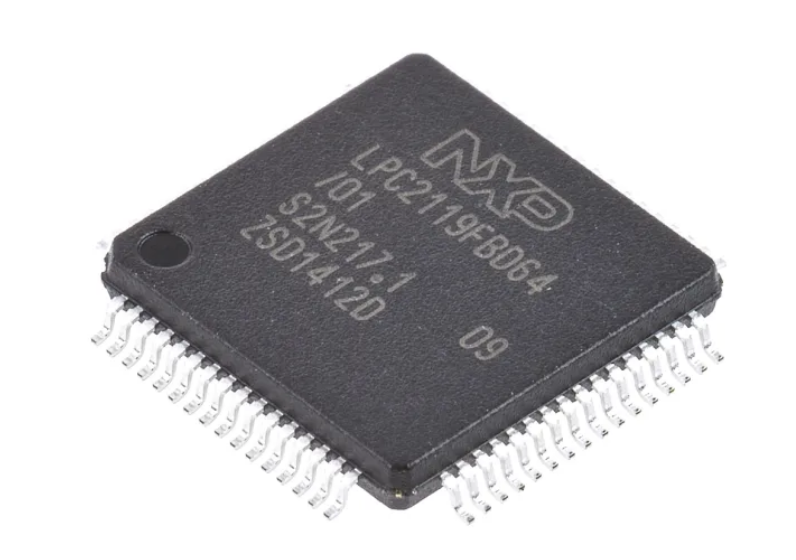
In many scenarios, engineers or system owners may face the challenge of retrieving or restoring the firmware stored inside this MCU. When the secured memory becomes inaccessible due to locked settings, accidental data loss, or hardware failures, a Recovery Microcontroller IC NXP LPC2119FBD64 service becomes essential.
Security Features and Protection Challenges
The LPC2119FBD64 implements multiple protected memory functions, including readout protection, encrypted program storage, and debug interface locking. These features are designed to protect the embedded source code, binary files, and system configuration data against unauthorized duplication or modification. While these safeguards are crucial for intellectual property protection, they make any attempt to extract, readout, or dump the embedded program highly complex.
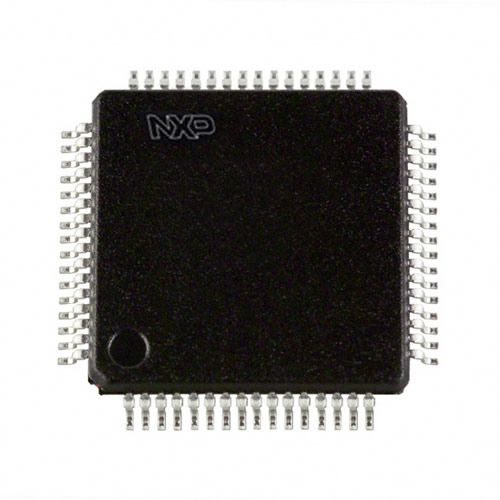
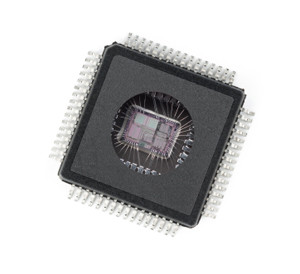
Bypassing the readout protection of the LPC2119FBD64 requires deep technical understanding of its memory architecture, bootloader security, and hardware design. Even if attack or decapsulation techniques are used, success depends on precision and advanced equipment. The process must ensure that the retrieved heximal file or data archive remains complete and undamaged, allowing for exact replication or duplication of the original firmware.
Applications Across Industries
The NXP LPC2119FBD64 is deployed in various sectors:
- Industrial Automation – controlling programmable logic controllers (PLCs), motor drivers, and factory automation systems.
- Automotive Systems – used in dashboard controllers, engine monitoring units, and onboard communication networks.
- Medical Equipment – powering diagnostic devices, monitoring systems, and portable medical instruments.
- Telecommunication Systems – supporting network interface controllers, VoIP systems, and signal processing units.
- Consumer Electronics – embedded in smart appliances, security systems, and high-end hobbyist projects.
When any of these applications require urgent recovery of a locked MCU, downtime can result in costly delays.
Our Professional Recovery Service
We specialize in Recovery Microcontroller IC NXP LPC2119FBD64 projects, offering comprehensive solutions to unlock, extract, and restore embedded programs. Our service covers:
- Firmware and Data Retrieval from secured and locked devices.
- Reverse Engineering for functional analysis and program duplication.
- Non-destructive Extraction Methods to protect both the chip and the retrieved file.
- Full Confidentiality and Compliance with legal requirements.
With advanced tools, specialized knowledge, and years of experience handling protected microcontrollers, we provide the capability to recover embedded firmware efficiently and reliably. Whether your goal is to restore a lost program, copy it for backup, or replicate it to another system, we ensure the process is accurate, safe, and tailored to your specific needs.
The NXP P89LPC925FDH is a powerful 8-bit microcontroller (MCU) belonging to the LPC900 series, designed for high-performance, low-power applications. Equipped with flash memory, integrated peripherals, and efficient processing capabilities, this chip is widely adopted in consumer electronics, industrial controllers, automotive systems, and secure communication devices. Due to its reliability and cost-effectiveness, it has become a popular choice in embedded designs where compact form factor and durability are essential.
We can Extract MCU IC NXP P89LPC925FDH, please view the chip features for your reference:
4 kB/8 kB Flash code memory with 1 kB erasable sectors, 64-byte erasable page size, and single byte erase.
256-byte RAM data memory.
Two 16-bit counter/timers. Each timer may be configured to toggle a port output upon timer overflow or to become a PWM output.
Real-Time clock that can also be used as a system timer.
4-input 8-bit multiplexed A/D converter/single DAC output. Two analog comparators with selectable inputs and reference source.
Enhanced UART with fractional baud rate generator, break detect, framing error detection, automatic address detection and versatile interrupt capabilities.
400 kHz byte-wide I2C-bus communication port.
Configurable on-chip oscillator with frequency range and RC oscillator options (selected by user programmed Flash configuration bits). The RC oscillator (factory calibrated to ±1 %) option allows operation without external oscillator components. Oscillator options support frequencies from 20 kHz to the maximum operating frequency of 18 MHz. The RC oscillator option is selectable and fine tunable.
2.4 V to 3.6 V VDD operating range. I/O pins are 5 V tolerant (may be pulled up or driven to 5.5 V).
15 I/O pins minimum. Up to 18 I/O pins while using on-chip oscillator and reset options.
In many real-world cases, engineers and developers encounter situations where they must extract MCU IC NXP P89LPC925FDH firmware. This may be required for recovering lost source code, performing system upgrades, or maintaining legacy equipment when the original development files are no longer available. The challenge arises when the device is secured, protected, encrypted, or locked by its on-chip readout protection mechanisms.
Security and Readout Protection
The P89LPC925FDH employs advanced readout protection to prevent unauthorized duplication of its firmware, binary files, and EEPROM data. Once protection bits are enabled, normal programming and debugging tools cannot directly readout the internal memory. This mechanism safeguards intellectual property by making it difficult to copy, clone, or replicate the embedded program without proper authorization.
However, when legitimate recovery or restoration is required—such as replacing damaged units in industrial control systems, restoring production equipment configurations, or ensuring compatibility with new hardware—specialized techniques must be applied to unlock and dump the data without damaging the chip.
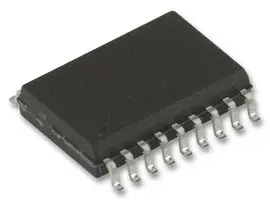
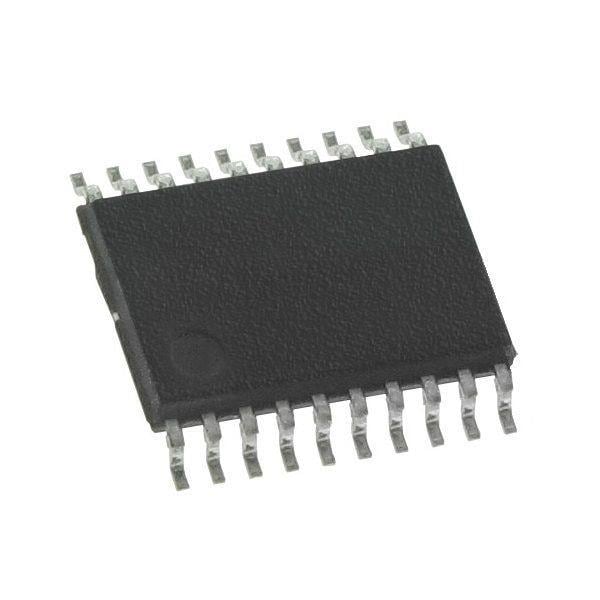
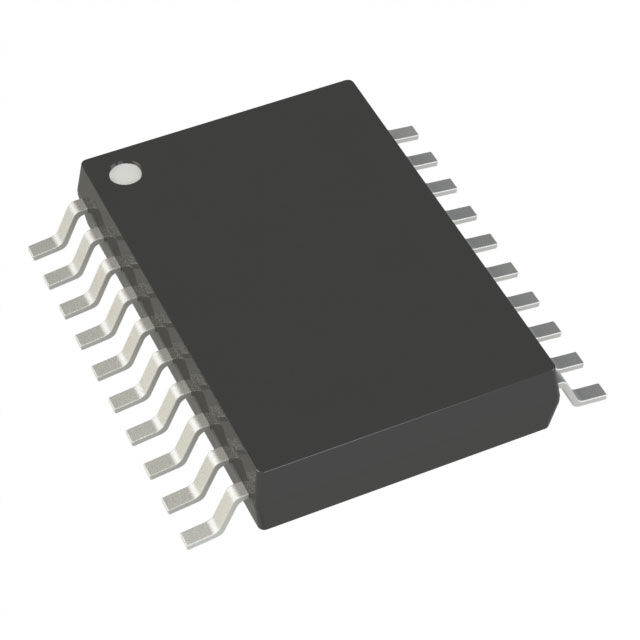
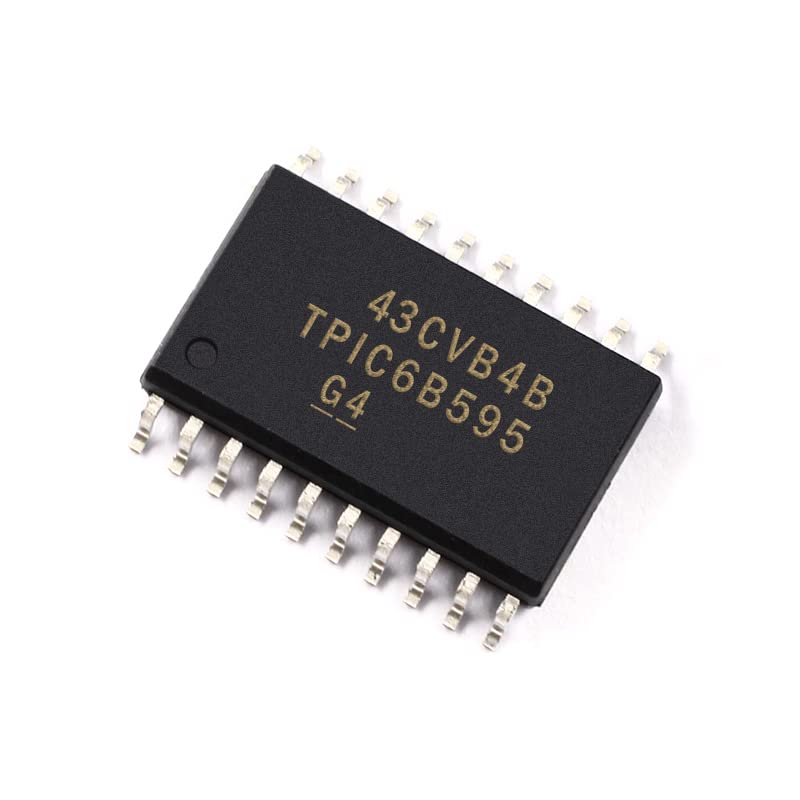
20-pin TSSOP package.
A high performance 80C51 CPU provides instruction cycle times of 111 ns to 222 ns for all instructions except multiply and divide when executing at 18 MHz.
This is six times the performance of the standard 80C51 running at the same clock frequency. A lower clock frequency for the same performance results in power savings and reduced EMI.
In-Application Programming of the Flash code memory. This allows changing the code in a running application.
Serial Flash programming allows simple in-circuit production coding. Flash security bits prevent reading of sensitive application programs by STMicroelectronics ST62T28 Memory Program Unlocking.
Watchdog timer with separate on-chip oscillator, requiring no external components. The watchdog prescaler is selectable from eight values.
Low voltage reset (Brownout detect) allows a graceful system shutdown when power fails. May optionally be configured as an interrupt.
Idle and two different Power-down reduced power modes. Improved wake-up from Power-down mode (a low interrupt input starts execution). Typical Power-down current is 1 µA (total Power-down with voltage comparators disabled).
Active-LOW reset. On-chip power-on reset allows operation without external reset components. A reset counter and reset glitch suppression circuitry prevent spurious and incomplete resets. A software reset function is also available.
Oscillator Fail Detect. The watchdog timer has a separate fully on-chip oscillator allowing it to perform an oscillator fail detect function.
Programmable port output configuration options:
x quasi-bidirectional,
x open drain,
x push-pull,
x input-only.
Port ‘input pattern match’ detect. Port 0 may generate an interrupt when the value of the pins match or do not match a programmable pattern.
LED drive capability (20 mA) on all port pins. A maximum limit is specified for the entire chip.
Controlled slew rate port outputs to reduce EMI. Outputs have approximately 10 ns minimum ramp times.
Only power and ground connections are required to operate the P89LPC924/925 when internal reset option is selected.
s Four interrupt priority levels.
Eight keypad interrupt inputs, plus two additional external interrupt inputs.
Second data pointer.
Schmitt trigger port inputs.
Emulation support.
Challenges in Extraction
The difficulty in bypassing the security of the P89LPC925FDH lies in its robust flash protection and anti-tamper features.
- Secured Memory Access – Protected code space blocks standard reading operations.
- Encrypted or Obfuscated Firmware – Even if data is partially retrieved, it may require decrypt or decode operations to be usable.
- Hardware-Level Barriers – Direct memory interfaces are disabled when the chip is in a locked state, requiring non-standard approaches.
- Complex Firmware Structure – Extracted heximal or binary dumps must be analyzed and reconstructed before they can be deployed or modified.
Industry Applications
The NXP P89LPC925FDH is commonly used in:
- Industrial Automation – PLC controllers, motor drivers, and monitoring devices.
- Automotive Systems – Sensor modules, dashboard electronics, and ECU subsystems.
- Consumer Electronics – Smart appliances, security systems, and handheld devices.
- Communication Devices – Secure transceivers and interface controllers.
Its presence in critical equipment means that recovering, restoring, and duplicating its embedded firmware is essential for maintaining operational continuity in these sectors.
Our Professional Extraction Service
We offer a complete and reliable solution to extract MCU IC NXP P89LPC925FDH firmware. Our expertise includes safe readout, retrieval, and replication of secured MCU contents while preserving device integrity. Whether you need to restore a lost program file, duplicate a working unit for spare parts, or recover encrypted firmware for legitimate upgrades, we provide the perfect service.
Our process respects confidentiality, operates within legal boundaries, and leverages advanced tools to open access, bypass readout protection, and dump embedded data efficiently. With extensive experience in reverse engineering and embedded system recovery, we ensure you get the results you need—accurately, securely, and professionally.