
-
Product Categories
-
Live Support Chat


Decrypt Microcontroller MCU Microchip PIC16F676
Decrypt Microcontroller MCU Microchip PIC16F676 is a specialized engineering service dedicated to recovering embedded firmware and rebuilding functional program archives from legacy systems based on the compact Microchip PIC16F676. This 8-bit microcontroller integrates 3.5KB of Flash program memory, 128 bytes of EEPROM, 64 bytes of RAM, an internal oscillator, ADC module, comparators, timers, and flexible GPIO functions. Due to its simplicity, reliability, and low cost, the PIC16F676 MCU has been widely deployed in consumer electronics, small industrial controllers, power management circuits, sensor interfaces, home appliances, and battery-operated devices. These applications often rely on stable firmware operation over long product lifecycles, making firmware recovery essential when original source code or design files are lost.
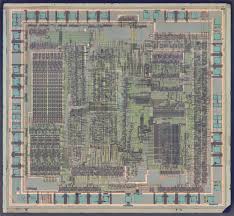
We can Decrypt Microcontroller MCU Microchip PIC16F676, please view below IC chip features for your reference:
In real-world scenarios, the firmware stored inside a PIC16F676 microcontroller is often secured, protected, encrypted, or locked to prevent unauthorized access. Once code protection bits are enabled, the internal Flash memory cannot be read directly, and attempts to access the program may return empty or invalid data. Under such conditions, specialized techniques are required to crack, unlock, decrypt, dump, copy, and replicate the firmware binary stored within the chip. The objective is to recover the complete program archive—including Flash program memory, EEPROM configuration data, and embedded firmware file structures—from a protected MCU. By performing a controlled binary dump and reconstructing the firmware archive, engineers can rebuild a valid heximal file that accurately represents the original program. This allows the firmware to be copied and replicated into new microcontrollers, ensuring that the functional behavior of the original system is preserved even when the chip is locked or encrypted.
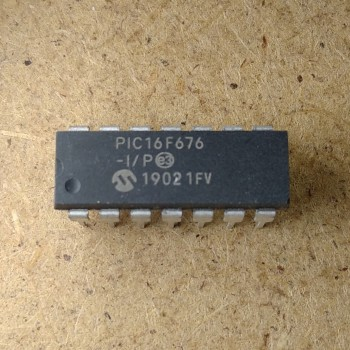
High Performance RISC CPU:
· Only 35 instructions to learn
– All single cycle instructions except branches
· Operating speed:
– DC – 20 MHz oscillator/clock input
– DC – 200 ns instruction cycle
· Interrupt capability
· 8-level deep hardware stack
· Direct, Indirect, and Relative Addressing modes
Special Microcontroller Features:
· Internal and external oscillator options
– Precision Internal 4 MHz oscillator factory calibrated to ±1%
– External Oscillator support for crystals and resonators
– 5 µs wake-up from SLEEP, 3.0V, typical
· Power saving SLEEP mode
· Wide operating voltage range – 2.0V to 5.5V
· Industrial and Extended temperature range
· Low power Power-on Reset (POR)
· Power-up Timer (PWRT) and Oscillator Start-up Timer (OST)
· Brown-out Detect (BOD)
· Watchdog Timer (WDT) with independent oscillator for reliable operation
· Multiplexed MCLR/Input-pin
· Interrupt-on-pin change
· Individual programmable weak pull-ups
· Programmable code protection
· High Endurance FLASH/EEPROM Cell
– 100,000 write FLASH endurance
– 1,000,000 write EEPROM endurance
– FLASH/Data EEPROM Retention: > 40 years
Low Power Features:
· Standby Current:
– 1 nA @ 2.0V, typical
· Operating Current:
– 8.5 µA @ 32 kHz, 2.0V, typical
– 100 µA @ 1 MHz, 2.0V, typical
· Watchdog Timer Current
– 300 nA @ 2.0V, typical
· Timer1 oscillator current:
– 4 µA @ 32 kHz, 2.0V, typical
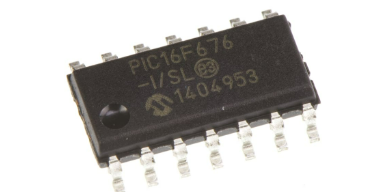
Peripheral Features:
· 12 I/O pins with individual direction control
· High current sink/source for direct LED drive
· Analog comparator module with:
– One analog comparator
– Programmable on-chip comparator voltage reference (CVREF) module
– Programmable input multiplexing from device inputs
– Comparator output is externally accessible
· Analog-to-Digital Converter module (PIC16F676):
– 10-bit resolution
– Programmable 8-channel input
– Voltage reference input
· Timer0: 8-bit timer/counter with 8-bit programmable prescaler
· Enhanced Timer1:
– 16-bit timer/counter with prescaler
– External Gate Input mode
– Option to use OSC1 and OSC2 in LP mode as Timer1 oscillator, if INTOSC mode selected
· In-Circuit Serial ProgrammingTM (ICSPTM) via two pins
The Decrypt Microcontroller MCU Microchip PIC16F676 process focuses on extracting usable firmware data from secured memory environments where conventional programming tools cannot operate. Engineers must carefully analyze the microprocessor, identify protected memory regions, and apply controlled methods to decrypt or bypass the embedded security mechanisms. The recovered binary file typically includes all necessary program instructions, calibration data, and EEPROM parameters required for system operation.
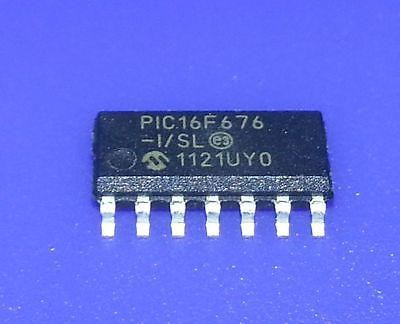
Once the firmware dump is validated, it can be converted into a deployable heximal archive and used to replicate the MCU across multiple replacement chips. This ensures compatibility with existing hardware and allows seamless integration into legacy systems. Concentrating on firmware extraction, data recovery, and secure memory reconstruction ensures that the cloned MCU maintains identical operational characteristics.
However, decrypting a locked PIC16F676 chip presents several technical challenges. The built-in code protection mechanism is specifically designed to block firmware readout, and improper attempts to unlock the chip may trigger automatic erase of the Flash memory, permanently destroying the firmware data. Additionally, long-term usage in industrial or consumer environments may lead to memory degradation, unstable EEPROM storage, or partial corruption of the firmware archive. Because the MCU has limited memory resources, even minor data inconsistencies in the binary file can result in system malfunction after replication. Encrypted or protected program segments, configuration words, and oscillator calibration values further increase the complexity of accurately recovering the firmware dump.
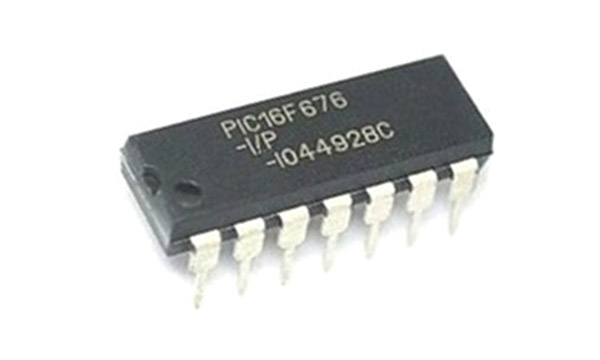
From a business and engineering standpoint, the ability to decrypt and recover firmware from a secured PIC16F676 microcontroller offers significant value. Clients can regain access to their firmware archive, replicate discontinued products, and maintain long-term support for existing systems without redesigning hardware. By unlocking protected memory and reconstructing the program binary, companies can copy and program new MCU devices, ensuring continuous production and reliable repair capabilities. This approach minimizes downtime, reduces redevelopment costs, and preserves critical intellectual property embedded within the firmware. Ultimately, decrypting and replicating a locked PIC16F676 transforms inaccessible chip memory into a reusable engineering asset, enabling sustainable lifecycle management and consistent product performance.