Decrypt Microcontroller MCU Microchip PIC16F676

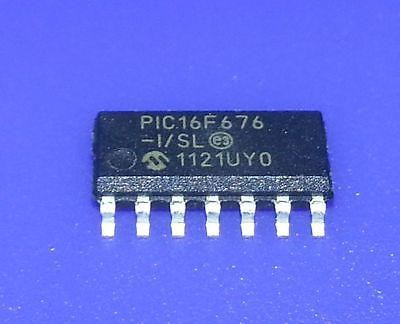
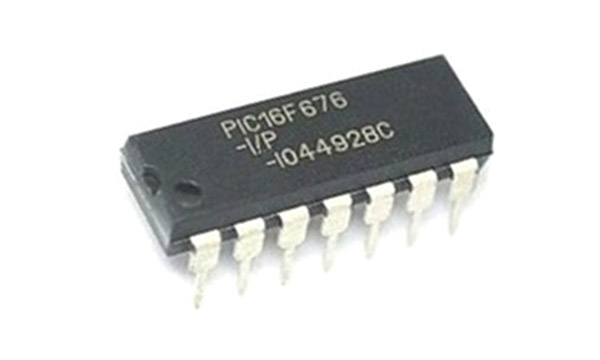
Decrypt Microcontroller MCU Microchip PIC16F676 is a specialized engineering service dedicated to recovering embedded firmware and rebuilding functional program archives from legacy systems based on the compact Microchip PIC16F676. This 8-bit microcontroller integrates 3.5KB of Flash program memory, 128 bytes of EEPROM, 64 bytes of RAM, an internal oscillator, ADC module, comparators, timers, and flexible GPIO functions. Due to its simplicity, reliability, and low cost, the PIC16F676 MCU has been widely deployed in consumer electronics, small industrial controllers, power management circuits, sensor interfaces, home appliances, and battery-operated devices. These applications often rely on stable firmware operation over long product lifecycles, making firmware recovery essential when original source code or design files are lost.
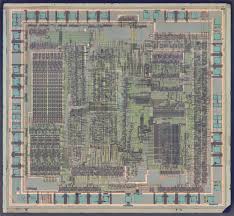
Decrypt Microcontroller MCU Microchip PIC16F676

We can Decrypt Microcontroller MCU Microchip PIC16F676, please view below IC chip features for your reference:

 In real-world scenarios, the firmware stored inside a PIC16F676 microcontroller is often secured, protected, encrypted, or locked to prevent unauthorized access. Once code protection bits are enabled, the internal Flash memory cannot be read directly, and attempts to access the program may return empty or invalid data. Under such conditions, specialized techniques are required to crack, unlock, decrypt, dump, copy, and replicate the firmware binary stored within the chip. The objective is to recover the complete program archive—including Flash program memory, EEPROM configuration data, and embedded firmware file structures—from a protected MCU. By performing a controlled binary dump and reconstructing the firmware archive, engineers can rebuild a valid heximal file that accurately represents the original program. This allows the firmware to be copied and replicated into new microcontrollers, ensuring that the functional behavior of the original system is preserved even when the chip is locked or encrypted.
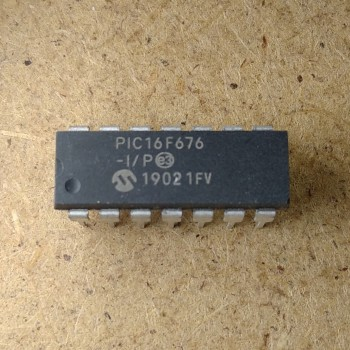
La decrittazione di un microcontrollore Microchip PIC16F676 bloccato presenta diverse sfide tecniche. Il meccanismo di protezione del codice integrato è specificamente progettato per bloccare la lettura del firmware e tentativi impropri di sbloccare il microcontrollore protetto Microchip PIC16F676 possono attivare la cancellazione automatica della memoria Flash, distruggendo in modo permanente i dati del firmware. La capacità di decrittare e recuperare il firmware da un microcontrollore Microchip PIC16F676 protetto offre un valore significativo. I clienti possono riottenere l'accesso al proprio archivio firmware, replicare prodotti fuori produzione e mantenere il supporto a lungo termine per i sistemi esistenti senza riprogettare l'hardware. Sbloccando la memoria protetta e ricostruendo il binario del programma, le aziende possono copiare e programmare nuovi dispositivi microprocessore Microchip PIC16F676, garantendo la produzione continua e capacità di riparazione affidabili. In definitiva, la decrittazione e la replica di un microprocessore Microchip PIC16F676 bloccato trasforma la memoria del chip inaccessibile in una risorsa ingegneristica riutilizzabile, consentendo una gestione sostenibile del ciclo di vita e prestazioni del prodotto costanti.
La decrittazione di un microcontrollore Microchip PIC16F676 bloccato presenta diverse sfide tecniche. Il meccanismo di protezione del codice integrato è specificamente progettato per bloccare la lettura del firmware e tentativi impropri di sbloccare il microcontrollore protetto Microchip PIC16F676 possono attivare la cancellazione automatica della memoria Flash, distruggendo in modo permanente i dati del firmware. La capacità di decrittare e recuperare il firmware da un microcontrollore Microchip PIC16F676 protetto offre un valore significativo. I clienti possono riottenere l’accesso al proprio archivio firmware, replicare prodotti fuori produzione e mantenere il supporto a lungo termine per i sistemi esistenti senza riprogettare l’hardware. Sbloccando la memoria protetta e ricostruendo il binario del programma, le aziende possono copiare e programmare nuovi dispositivi microprocessore Microchip PIC16F676, garantendo la produzione continua e capacità di riparazione affidabili. In definitiva, la decrittazione e la replica di un microprocessore Microchip PIC16F676 bloccato trasforma la memoria del chip inaccessibile in una risorsa ingegneristica riutilizzabile, consentendo una gestione sostenibile del ciclo di vita e prestazioni del prodotto costanti.

High Performance RISC CPU:

· Only 35 instructions to learn

– All single cycle instructions except branches

· Operating speed:

– DC – 20 MHz oscillator/clock input

– DC – 200 ns instruction cycle

· Interrupt capability

· 8-level deep hardware stack

· Direct, Indirect, and Relative Addressing modes

Special Microcontroller Features:

· Internal and external oscillator options

– Precision Internal 4 MHz oscillator factory calibrated to ±1%

– External Oscillator support for crystals and resonators

– 5 µs wake-up from SLEEP, 3.0V, typical

· Power saving SLEEP mode

· Wide operating voltage range – 2.0V to 5.5V

· Industrial and Extended temperature range

· Low power Power-on Reset (POR)

· Power-up Timer (PWRT) and Oscillator Start-up Timer (OST)

· Brown-out Detect (BOD)
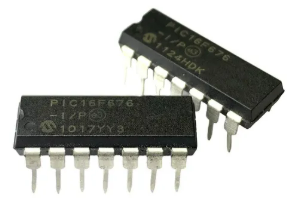
Descifrar un microcontrolador Microchip PIC16F676 bloqueado presenta varios desafíos técnicos. El mecanismo de protección de código integrado está diseñado específicamente para bloquear la lectura del firmware, y los intentos incorrectos de desbloquear el microcontrolador Microchip PIC16F676 pueden provocar el borrado automático de la memoria Flash, destruyendo permanentemente los datos del firmware. La capacidad de descifrar y recuperar el firmware de un microcontrolador Microchip PIC16F676 protegido ofrece un valor significativo. Los clientes pueden recuperar el acceso a su archivo de firmware, replicar productos descontinuados y mantener el soporte a largo plazo para los sistemas existentes sin rediseñar el hardware. Al desbloquear la memoria protegida y reconstruir el binario del programa, las empresas pueden copiar y programar nuevos dispositivos microprocesadores Microchip PIC16F676, lo que garantiza la producción continua y capacidades de reparación confiables. En definitiva, descifrar y replicar un microprocesador Microchip PIC16F676 bloqueado transforma la memoria del chip inaccesible en un activo de ingeniería reutilizable, lo que permite una gestión sostenible del ciclo de vida y un rendimiento constante del producto.

· Watchdog Timer (WDT) with independent oscillator for reliable operation

· Multiplexed MCLR/Input-pin

· Interrupt-on-pin change

· Individual programmable weak pull-ups

· Programmable code protection

· High Endurance FLASH/EEPROM Cell

– 100,000 write FLASH endurance

– 1,000,000 write EEPROM endurance

– FLASH/Data EEPROM Retention: > 40 years

Low Power Features:

· Standby Current:

– 1 nA @ 2.0V, typical

· Operating Current:

– 8.5 µA @ 32 kHz, 2.0V, typical

– 100 µA @ 1 MHz, 2.0V, typical

· Watchdog Timer Current

– 300 nA @ 2.0V, typical

· Timer1 oscillator current:

– 4 µA @ 32 kHz, 2.0V, typical
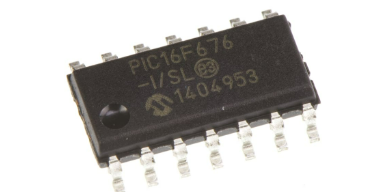
Die Entschlüsselung eines gesperrten Microchip PIC16F676-Mikrocontrollers stellt mehrere technische Herausforderungen dar. Der integrierte Codeschutzmechanismus ist speziell dafür ausgelegt, das Auslesen der Firmware zu verhindern. Unsachgemäße Versuche, den Schutzmechanismus des Microchip PIC16F676-Mikrocontrollers zu entsperren, können die automatische Löschung des Flash-Speichers auslösen und die Firmware-Daten unwiderruflich zerstören. Die Möglichkeit, die Firmware eines gesicherten Microchip PIC16F676-Mikrocontrollers zu entschlüsseln und wiederherzustellen, bietet daher einen erheblichen Mehrwert. Kunden können so wieder Zugriff auf ihr Firmware-Archiv erhalten, nicht mehr produzierte Produkte replizieren und die langfristige Unterstützung bestehender Systeme sicherstellen, ohne die Hardware neu entwickeln zu müssen. Durch das Entsperren des geschützten Speichers und die Rekonstruktion der Programmdatei können Unternehmen neue Microchip PIC16F676-Mikroprozessoren kopieren und programmieren und so eine kontinuierliche Produktion und zuverlässige Reparaturmöglichkeiten gewährleisten. Letztendlich verwandelt die Entschlüsselung und Replikation eines gesperrten Microchip PIC16F676-Mikroprozessors den unzugänglichen Chip-Speicher in ein wiederverwendbares Engineering-Asset und ermöglicht so ein nachhaltiges Lebenszyklusmanagement und eine konsistente Produktleistung.

Peripheral Features:

· 12 I/O pins with individual direction control

· High current sink/source for direct LED drive

· Analog comparator module with:

– One analog comparator

– Programmable on-chip comparator voltage reference (CVREF) module

– Programmable input multiplexing from device inputs

– Comparator output is externally accessible

· Analog-to-Digital Converter module (PIC16F676):

– 10-bit resolution

– Programmable 8-channel input

– Voltage reference input

· Timer0: 8-bit timer/counter with 8-bit programmable prescaler

· Enhanced Timer1:

– 16-bit timer/counter with prescaler

– External Gate Input mode

– Option to use OSC1 and OSC2 in LP mode as Timer1 oscillator, if INTOSC mode selected

· In-Circuit Serial ProgrammingTM (ICSPTM) via two pins

The Decrypt Microcontroller MCU Microchip PIC16F676 process focuses on extracting usable firmware data from secured memory environments where conventional programming tools cannot operate. Engineers must carefully analyze the microprocessor, identify protected memory regions, and apply controlled methods to decrypt or bypass the embedded security mechanisms. The recovered binary file typically includes all necessary program instructions, calibration data, and EEPROM parameters required for system operation.
Le décryptage d'un microcontrôleur Microchip PIC16F676 verrouillé présente plusieurs défis techniques. Le mécanisme de protection intégré est spécifiquement conçu pour bloquer la lecture du firmware, et toute tentative de déverrouillage inappropriée peut entraîner l'effacement automatique de la mémoire Flash, détruisant définitivement les données du firmware. La possibilité de décrypter et de récupérer le firmware d'un microcontrôleur Microchip PIC16F676 sécurisé offre un avantage considérable. Les clients peuvent ainsi accéder à leurs archives de firmware, répliquer des produits abandonnés et assurer le support à long terme des systèmes existants sans avoir à repenser le matériel. En déverrouillant la mémoire protégée et en reconstruisant le programme binaire, les entreprises peuvent copier et programmer de nouveaux microprocesseurs Microchip PIC16F676, garantissant ainsi une production continue et des capacités de réparation fiables. En définitive, le décryptage et la réplication d'un microprocesseur Microchip PIC16F676 verrouillé transforment la mémoire inaccessible de la puce en un atout technique réutilisable, permettant une gestion durable du cycle de vie et des performances produit constantes.
Le décryptage d’un microcontrôleur Microchip PIC16F676 verrouillé présente plusieurs défis techniques. Le mécanisme de protection intégré est spécifiquement conçu pour bloquer la lecture du firmware, et toute tentative de déverrouillage inappropriée peut entraîner l’effacement automatique de la mémoire Flash, détruisant définitivement les données du firmware. La possibilité de décrypter et de récupérer le firmware d’un microcontrôleur Microchip PIC16F676 sécurisé offre un avantage considérable. Les clients peuvent ainsi accéder à leurs archives de firmware, répliquer des produits abandonnés et assurer le support à long terme des systèmes existants sans avoir à repenser le matériel. En déverrouillant la mémoire protégée et en reconstruisant le programme binaire, les entreprises peuvent copier et programmer de nouveaux microprocesseurs Microchip PIC16F676, garantissant ainsi une production continue et des capacités de réparation fiables. En définitive, le décryptage et la réplication d’un microprocesseur Microchip PIC16F676 verrouillé transforment la mémoire inaccessible de la puce en un atout technique réutilisable, permettant une gestion durable du cycle de vie et des performances produit constantes.

Once the firmware dump is validated, it can be converted into a deployable heximal archive and used to replicate the MCU across multiple replacement chips. This ensures compatibility with existing hardware and allows seamless integration into legacy systems. Concentrating on firmware extraction, data recovery, and secure memory reconstruction ensures that the cloned MCU maintains identical operational characteristics.

However, decrypting a locked PIC16F676 chip presents several technical challenges. The built-in code protection mechanism is specifically designed to block firmware readout, and improper attempts to unlock the chip may trigger automatic erase of the Flash memory, permanently destroying the firmware data. Additionally, long-term usage in industrial or consumer environments may lead to memory degradation, unstable EEPROM storage, or partial corruption of the firmware archive. Because the MCU has limited memory resources, even minor data inconsistencies in the binary file can result in system malfunction after replication. Encrypted or protected program segments, configuration words, and oscillator calibration values further increase the complexity of accurately recovering the firmware dump.
Расшифровка заблокированного микроконтроллера Microchip PIC16F676 представляет собой ряд технических проблем. Встроенный механизм защиты кода специально разработан для блокировки считывания прошивки, и неправильные попытки разблокировки защищенного микроконтроллера Microchip PIC16F676 могут привести к автоматическому стиранию флэш-памяти, что приведет к безвозвратному уничтожению данных прошивки. Возможность расшифровки и восстановления прошивки из защищенного микроконтроллера Microchip PIC16F676 представляет собой значительную ценность. Клиенты могут восстановить доступ к своему архиву прошивки, воспроизвести снятые с производства продукты и обеспечить долгосрочную поддержку существующих систем без перепроектирования оборудования. Разблокировав защищенную память и восстановив двоичный код программы, компании могут копировать и программировать новые микропроцессорные устройства Microchip PIC16F676, обеспечивая непрерывное производство и надежные возможности ремонта. В конечном итоге, расшифровка и воспроизведение заблокированного микропроцессора Microchip PIC16F676 превращает недоступную память чипа в многоразовый инженерный актив, обеспечивая устойчивое управление жизненным циклом и стабильную производительность продукта.

From a business and engineering standpoint, the ability to decrypt and recover firmware from a secured PIC16F676 microcontroller offers significant value. Clients can regain access to their firmware archive, replicate discontinued products, and maintain long-term support for existing systems without redesigning hardware. By unlocking protected memory and reconstructing the program binary, companies can copy and program new MCU devices, ensuring continuous production and reliable repair capabilities. This approach minimizes downtime, reduces redevelopment costs, and preserves critical intellectual property embedded within the firmware. Ultimately, decrypting and replicating a locked PIC16F676 transforms inaccessible chip memory into a reusable engineering asset, enabling sustainable lifecycle management and consistent product performance.