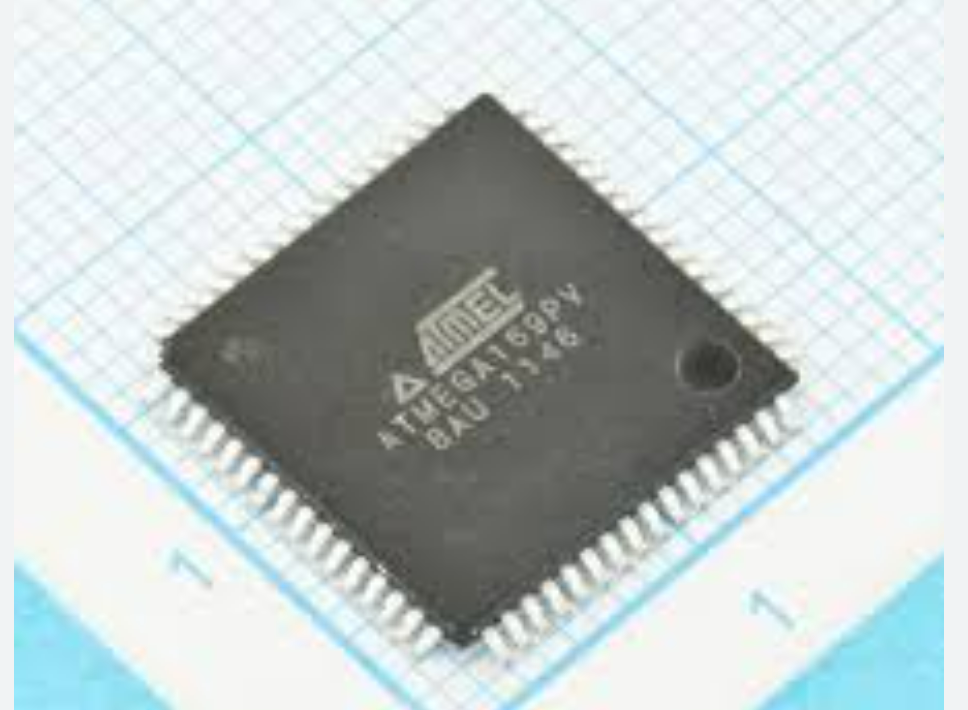
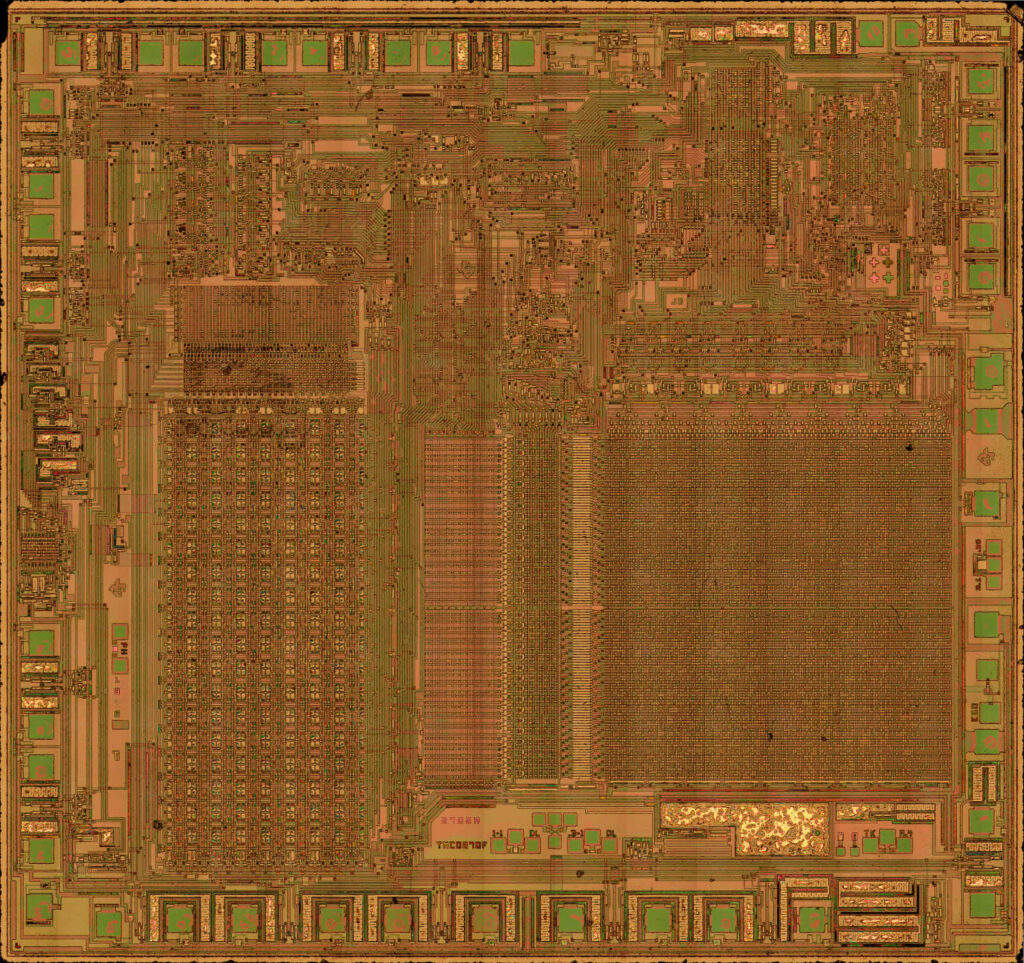
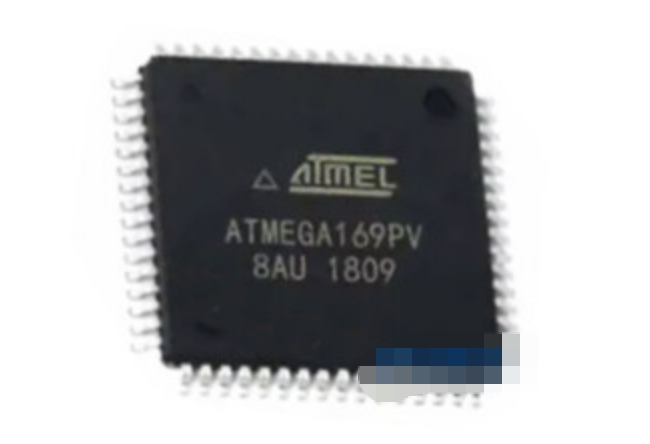
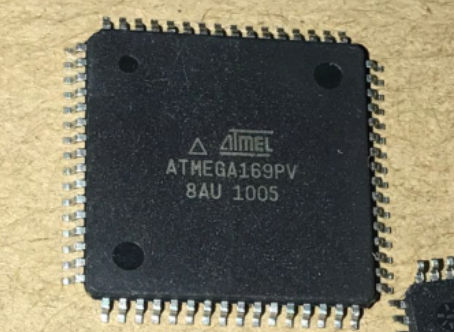
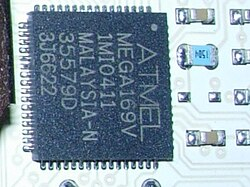
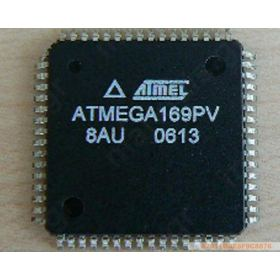
Crack IC ATmega169PV Flash is a specialized technical service aimed at recovering embedded firmware and restoring functional program data from systems built around the reliable ATmega169PV. This AVR-based MCU features 16KB Flash memory, 1KB SRAM, and 512 bytes EEPROM, along with an integrated LCD controller, timers, ADC modules, and communication interfaces such as SPI and I²C. Its low-power design and display-driving capability make it widely deployed in smart metering, industrial monitoring equipment, medical instruments, and portable electronic devices. To protect proprietary software and firmware, manufacturers often configure the chip with protective fuse settings, resulting in a locked or encrypted IC where direct access to memory, program files, and firmware data is restricted.
Die Fähigkeit, Firmware von einem geschützten ATMEGA169PV-Mikrocontroller auszulesen, zu entschlüsseln, zu replizieren und zu kopieren, ist von entscheidender Bedeutung. Ingenieure müssen häufig den gesperrten Speicher des ATMEGA169PV-Mikrocontrollers entsperren, verschlüsselte Firmware-Daten extrahieren und Binärprogramme wiederherstellen, um die Kompatibilität mit bestehenden Hardwareplattformen zu gewährleisten. Unsere Expertise im Knacken und Wiederherstellen der Flash-Firmware des ATMEGA169PV-Mikrocontrollers ermöglicht es uns, hochwertige, auf die Bedürfnisse der Endanwender zugeschnittene Lösungen anzubieten. Wir sind spezialisiert auf das Extrahieren von Firmware aus gesperrten und verschlüsselten ICs, die Rekonstruktion vollständiger Binär- und Hexadezimalarchive und die Bereitstellung sofort einsatzbereiter Programmdateien für die Replikation des ATMEGA169PV-Mikrocontrollers. Ingenieure müssen fortgeschrittene Techniken anwenden, um die im Flash- und EEPROM-Speicher des ATMEGA169PV-Mikroprozessors gespeicherte Firmware zu knacken, zu entsperren, zu entschlüsseln, auszulesen, zu kopieren und zu sichern. Ziel ist die Wiederherstellung des vollständigen Binärarchivs, einschließlich der im Mikroprozessor gespeicherten Programmanweisungen, Konfigurationsdaten und Systemparameter.
Cracking a secured microcontroller like the ATmega169PV involves retrieving firmware and data from a protected, locked, or encrypted chip where standard programming tools cannot perform a normal readout. In such cases, engineers must utilize advanced techniques to crack, unlock, decrypt, dump, copy, and readout the firmware stored in the MCU Flash and EEPROM memory. The objective is to recover the complete binary archive, including program instructions, configuration data, and system parameters stored within the microprocessor. By reconstructing the firmware file and validating the binary and heximal data, the original program can be replicated and restored for reuse. This process is essential when source code, software archives, or development files are unavailable, allowing the firmware to be recovered directly from the chip.
Instructions that use indirect addressing access the upper 128 bytes of RAM. For example, the following indirect addressing instruction, where R0 contains 0A0H, accesses the data byte at address 0A0H, rather than P2 (whose address is 0A0H).
Korumalı bir ATMEGA169PV mikroişlemcisinden bellenimi dökme, şifresini çözme, çoğaltma ve kopyalama yeteneği kritik hale gelir. Mühendisler genellikle kilitli ATMEGA169PV mikroişlemci belleğinin kilidini açmaya, şifrelenmiş bellenim verilerini çıkarmaya ve mevcut donanım platformlarıyla uyumluluğu korumak için ikili program arşivlerini yeniden oluşturmaya ihtiyaç duyarlar. ATMEGA169PV mikroişlemcisinin Flash bellenimini kırma ve geri yükleme konusundaki uzmanlığımız, son kullanıcılara özel yüksek kaliteli çözümler sunmamızı sağlar. Kilitli ve şifrelenmiş entegre devrelerden bellenim çıkarma, eksiksiz ikili ve onaltılık arşivleri yeniden oluşturma ve ATMEGA169PV mikroişlemci çoğaltılması için kullanıma hazır program dosyaları sağlama konusunda uzmanlaşmış durumdayız. Mühendisler, mikroişlemcinin Flash ve EEPROM belleğinde depolanan bellenimi kırmak, kilidini açmak, şifresini çözmek, dökmek, kopyalamak ve okumak için gelişmiş teknikler kullanmalıdır. Amaç, mikroişlemci içinde depolanan program talimatları, yapılandırma verileri ve sistem parametreleri de dahil olmak üzere eksiksiz ikili arşivi kurtarmaktır.
MOV @R0, #data Note that stack operations are examples of indirect addressing, so the upper 128 bytes of data RAM are available as stack space. The programmable Watchdog Timer (WDT) operates from an independent oscillator. The prescaler bits, PS0, PS1 and PS2 in SFR WCON are used to set the period of the Watchdog Timer from 16 ms to 2048 ms. The available timer periods are shown in the following table and the actual timer periods (at VCC = 5V) are within ±30% of the nominal. The WDT is disabled by Power-on Reset and during Power Down.
La capacità di estrarre, decrittografare, replicare e copiare il firmware da un microcontrollore ATMEGA169PV protetto diventa fondamentale. Gli ingegneri spesso hanno bisogno di sbloccare la memoria bloccata del microcontrollore ATMEGA169PV, estrarre i dati del firmware crittografati e ricostruire gli archivi binari del programma per mantenere la compatibilità con le piattaforme hardware esistenti. La nostra esperienza nel cracking e nel ripristino del firmware Flash del microcontrollore ATMEGA169PV ci consente di fornire soluzioni di alta qualità su misura per gli utenti finali. Siamo specializzati nell’estrazione del firmware da circuiti integrati bloccati e crittografati, nella ricostruzione di archivi binari ed esadecimali completi e nella fornitura di file di programma pronti all’uso per la replica del microcontrollore ATMEGA169PV. Gli ingegneri devono utilizzare tecniche avanzate per crackare, sbloccare, decrittografare, estrarre, copiare e leggere il firmware memorizzato nella memoria Flash ed EEPROM del microprocessore ATMEGA169PV. L’obiettivo è recuperare l’intero archivio binario, comprese le istruzioni del programma, i dati di configurazione e i parametri di sistema memorizzati all’interno del microprocessore.
It is enabled by setting the WDTEN bit in SFR WCON (address = 96H). The WDT is reset by setting the WDTRST bit in WCON. When the WDT times out without being reset or disabled, an internal RST pulse is generated to reset the CPU. Timer 0 and Timer 1 in the ATMEGA169PV operate the same way as Timer 0 and Timer 1 in the ATMEGA169PV. For further information, see the October 1995 Microcontroller Data Book, page 2-45, section titled, “Timer/Counters.”. Timer 2 is a 16 bit Timer/Counter that can operate as either a timer or an event counter. The type of operation is selected by bit C/T2 in the SFR T2CON (shown in Table 2). Timer 2 has three operating modes: capture, auto-reload (up or down counting), and baud rate generator. The modes are selected by bits in T2CON, as shown in Table 8. Timer 2 consists of two 8-bit registers, TH2 and TL2. In the Timer function, the TL2 register is incremented every machine cycle. Since a machine cycle consists of 12 oscillator periods, the count rate is 1/12 of the oscillator frequency.
La capacité d’extraire, de décrypter, de répliquer et de copier le firmware d’un microcontrôleur ATMEGA169PV protégé est essentielle. Les ingénieurs doivent souvent déverrouiller la mémoire verrouillée du microcontrôleur ATMEGA169PV, extraire les données du firmware chiffrées et reconstruire les archives binaires afin de garantir la compatibilité avec les plateformes matérielles existantes. Notre expertise dans le décryptage et la restauration du firmware Flash du microcontrôleur ATMEGA169PV nous permet de fournir des solutions de haute qualité, adaptées aux besoins des utilisateurs finaux. Nous sommes spécialisés dans l’extraction de firmware à partir de circuits intégrés verrouillés et chiffrés, la reconstruction d’archives binaires et hexadécimales complètes et la fourniture de fichiers de programme prêts à l’emploi pour la réplication du microcontrôleur ATMEGA169PV. Les ingénieurs doivent utiliser des techniques avancées pour décrypter, déverrouiller, extraire, copier et lire le firmware stocké dans la mémoire Flash et EEPROM du microprocesseur ATMEGA169PV. L’objectif est de récupérer l’archive binaire complète, incluant les instructions du programme, les données de configuration et les paramètres système stockés dans le microprocesseur.
From a technical perspective, accessing firmware in a locked ATmega169PV chip presents several challenges. The MCU may include encrypted Flash memory, protected EEPROM regions, and fuse configurations that disable firmware readout entirely. Incorrect attempts to access the chip can trigger automatic memory erase, permanently destroying the firmware data. Additionally, long-term use in harsh environments may lead to memory degradation, corrupted EEPROM data, or incomplete firmware dumps. Extracting a reliable firmware binary therefore requires precise control, advanced diagnostic methods, and strict validation to ensure that the recovered program file maintains full functional integrity.
Можливість створювати дамп, розшифровувати, реплікувати та копіювати прошивку із захищеного мікрочіпа ATMEGA169PV стає критично важливою. Інженерам часто потрібно розблокувати заблоковану пам’ять мікрочіпа ATMEGA169PV, витягти зашифровані дані прошивки та відновити архіви бінарних програм для підтримки сумісності з існуючими апаратними платформами. Наш досвід у зломі та відновленні флеш-прошивки мікроконтролера ATMEGA169PV дозволяє нам пропонувати високоякісні рішення, адаптовані до потреб кінцевих користувачів. Ми спеціалізуємося на вилученні прошивки із заблокованих та зашифрованих мікросхем, реконструкції повних бінарних та шістнадцяткових архівів та наданні готових до використання програмних файлів для реплікації мікрочіпа ATMEGA169PV. Інженери повинні використовувати передові методи для злому, розблокування, розшифровки, створення дампу, копіювання та зчитування прошивки, що зберігається у флеш-пам’яті та EEPROM мікропроцесора ATMEGA169PV. Метою є відновлення повного бінарного архіву, включаючи інструкції програми, дані конфігурації та системні параметри, що зберігаються в мікропроцесорі.
Send us the part number, package type and quantity and we will confirm the feasible method, the deliverable and the turnaround before any sample is touched.