Copy ATmel MCU AT89C5131A-PLTIL
The demand for embedded system firmware restoration and duplication is growing, especially as legacy devices continue to serve in critical roles across industrial, medical, and commercial sectors. One common case is the need to copy ATmel MCU AT89C5131A, a USB-compatible microcontroller based on the 8051 core. This MCU is often found in industrial controllers, automotive modules, consumer devices, and security systems. When the original firmware is lost or the device is locked, it becomes essential to recover or replicate the embedded program for repair, upgrade, or system duplication purposes.
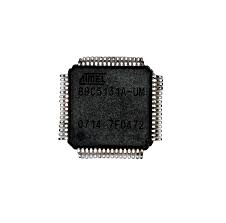
The AT89C5131A is a powerful and compact chip from Atmel (now Microchip), offering enhanced USB functionality, a built-in EEPROM, internal flash memory, and robust I/O control capabilities. The controller is widely appreciated for its efficiency in handling communication tasks and data transfer in low-power applications.
However, one of its core features is the firmware protection mechanism, which ensures that the internal program, memory, and binary data are secured from unauthorized access. This protection is critical for product IP security, but it also poses a major challenge when users legitimately need to restore or copy the MCU due to firmware corruption, hardware damage, or device replacement.
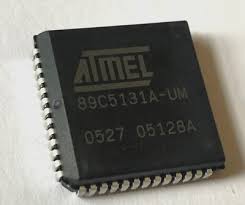
Once code protection is enabled, direct readout of the flash or EEPROM becomes nearly impossible through standard development tools. The chip may block external access, making it difficult to extract, dump, or decrypt the original source code or heximal program data. Furthermore, attempts to open, decapsulate, or attack the microcontroller physically may risk damaging the chip if not done with precision.
Efforts to clone, duplicate, or replicate such a locked MCU involve deep knowledge of reverse engineering, and sometimes include highly controlled probing or advanced side-channel analysis. However, revealing too much about these techniques poses both ethical and technical risks. Instead, the focus should be on safely retrieving or restoring the embedded firmware using proven, non-destructive methods.
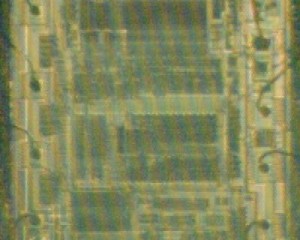
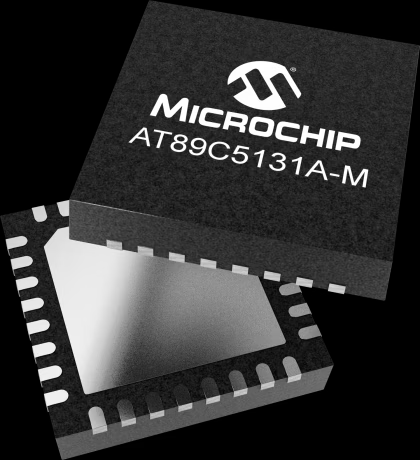
Copy ATmel MCU AT89C5131A-PLTIL, please view below Atmel MCU AT89C5131A-PLTIL’s feature for your reference:
AT89C5130A/31A-M is a high-performance Flash version of the 80C51 single-chip 8-bit micro-controllers with full speed USB functions. AT89C5130A/31A-M features a full-speed USB module compatible with the USB specifications Version 1.1 and 2.0. This module integrates the USB transceivers with a 3.3V voltage regulator and the Serial Interface Engine (SIE) with Digital Phase Locked Loop and 48 MHz clock recovery.
USB Event detection logic (Reset and Suspend/Resume) and FIFO buffers supporting the mandatory control Endpoint (EP0) and up to 6 versatile Endpoints (EP1/EP2/EP3/EP4/EP5/EP6) with minimum software overhead are also part of the USB module.
AT89C5130A/31A-M retains the features of the Atmel 80C52 with extended Flash capacity (16/32-Kbytes), 256 bytes of internal RAM, a 4-level interrupt system, two 16-bit timer/counters (T0/T1), a full duplex enhanced UART (EUART) and an on-chip oscillator.
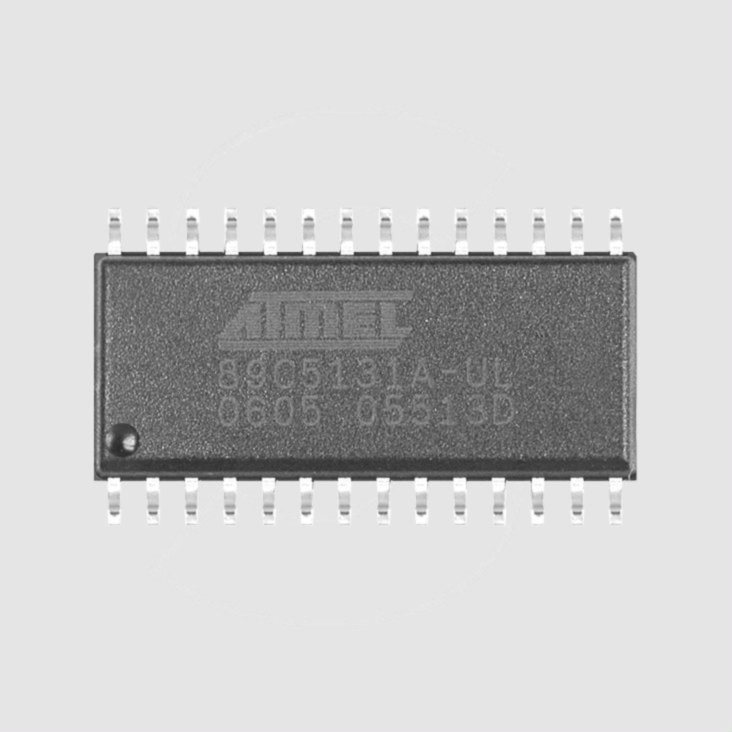
In addition, AT89C5130A/31A-M has an on-chip expanded RAM of 1024 bytes (ERAM), a dual data pointer, a 16-bit up/down Timer (T2), a Programmable Counter Array (PCA), up to 4 programmable LED current sources, a programmable hardware watchdog and a power-on reset.
AT89C5130A/31A-M has two software-selectable modes of reduced activity for further reduction in power consumption. In the idle mode the CPU is frozen while the timers, the serial ports and the interrupt system are still operating. In the power-down mode the RAM is saved, the peripheral clock is frozen, but the device has full wake-up capability through USB events or external interrupts.
The AT89C5131A is used in a wide range of industries due to its reliability and USB interface support. Common applications include:
- Automotive modules for control systems
- Industrial automation controllers and PLC devices
- Consumer electronics, such as USB dongles and digital locks
- Medical devices for data collection and transfer
- Smart card readers and security devices
In all these areas, a failed or inaccessible chip can halt operations or require costly redesigns. This is why secure, accurate firmware recovery is essential.
We offer comprehensive support to copy ATmel MCU AT89C5131A in cases where the original firmware needs to be retrieved or duplicated. Our services include:
- Secure, non-invasive firmware extraction and readout
- Skilled handling of secured, encrypted, or locked MCUs
- Professional reverse engineering and program duplication
- Legal and confidential handling of client data and proprietary code
Whether your need is to recover data from a damaged device, replicate a working system, or restore production of a legacy product, we are equipped with the expertise and tools to deliver reliable results.
Contact Us
If you’re facing challenges with a locked AT89C5131A, don’t risk damaging your valuable devices through unsafe attempts. Let our experienced team handle the process safely and professionally. We provide tailored solutions to unlock, dump, and recover your embedded firmware with precision and care.