
-
Product Categories
-
Live Support Chat


Break AVR Microcontroller ATmel ATmega168
Break AVR Microcontroller Atmel ATmega168 is a specialized engineering service designed to recover embedded firmware and reconstruct executable program archives from secured devices built around the popular ATmega168. This AVR-based MCU integrates 16KB Flash program memory, 1KB SRAM, and 512B EEPROM, along with multiple timers, PWM outputs, SPI, I²C (TWI), USART communication, and a 10-bit ADC module. Known for its balance between performance and efficiency, the ATmega168 microcontroller has been widely deployed in consumer electronics, automotive subsystems, industrial control boards, IoT devices, and embedded monitoring systems. Its compatibility with development ecosystems like Arduino has further extended its adoption across prototyping and production environments. However, when firmware source code or original development archives are unavailable, breaking protection and restoring binary data becomes essential for system maintenance and replication.
The AVR core combines a rich instruction set with 32 general purpose working registers by Break AVR Microcontroller ATmel ATmega168. All the 32 registers are directly connected to the Arithmetic Logic Unit (ALU), allowing two independent registers to be accessed in one single instruction executed in one clock cycle.
In many real-world applications, the firmware stored inside an ATmega168 MCU is secured, protected, encrypted, or locked using fuse and lock bits. Once enabled, these protections prevent direct access to Flash program memory and EEPROM data, making it impossible to read or export the firmware file through standard programming interfaces. In such scenarios, advanced methods are required to crack, unlock, decrypt, dump, copy, and replicate the firmware binary from the microcontroller. The goal is to recover the complete program archive—including Flash memory, EEPROM configuration, and heximal firmware file—so that the MCU can be accurately cloned. By performing a controlled binary dump and reconstructing the firmware data, engineers can generate a validated program file that allows seamless replication of the original chip. This process ensures that even a locked or encrypted microprocessor can be restored into a usable firmware archive for production or repair.
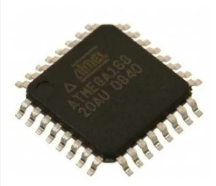
The resulting architecture is more code efficient while achieving throughputs up to ten times faster than conventional CISC microcontrollers. The ATmega48/88/168 provides the following features: 4K/8K/16K bytes of In-System Programmable Flash with Read-While-Write capabilities, 256/512/512 bytes EEPROM, 512/1K/1K bytes SRAM, 23 general purpose I/O lines, 32 general purpose working registers, three flexible Timer/Counters with compare modes, internal and external interrupts, a serial programmable USART, a byte-oriented 2-wire Serial Interface, an SPI serial port, a 6-channel 10-bit ADC (8 channels in TQFP and MLF packages), a programmable Watchdog Timer with internal Oscillator, and five software selectable power saving modes. The Idle mode stops the CPU while allowing the SRAM, Timer/Counters, USART, 2-wire Serial Interface, SPI port, and interrupt system to continue functioning.
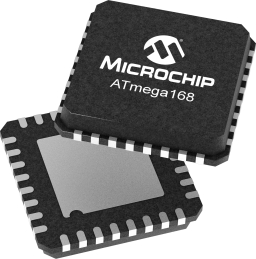
The Power-down mode saves the register contents but freezes the Oscillator, disabling
all other chip functions until the next interrupt or hardware reset. In Power-save mode, the asynchronous timer continues to run, allowing the user to maintain a timer base while the rest of the device is sleeping. The ADC Noise Reduction mode stops the CPU and all I/O modules except asynchronous timer and ADC, to minimize switching noise during ADC conversions when Break AVR Microcontroller ATmel ATmega168.
In Standby mode, the crystal/resonator Oscillator is running while the rest of the device is sleeping. This allows very fast start-up combined with low power consumption. The device is manufactured using Atmel’s high density non-volatile memory technology.
The On-chip ISP Flash allows the program memory to be reprogrammed In-System through an SPI serial interface, by a conventional non-volatile memory programmer, or by an On-chip Boot program running on the AVR core. The Boot program can use any interface to download the application program in the Application Flash memory.
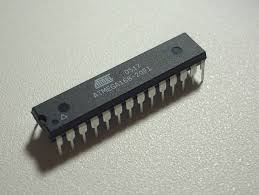
Software in the Boot Flash section will continue to run while the Application Flash section is updated, providing true Read-While-Write operation. By combining an 8-bit RISC CPU with In-System Self-Program mable Flash on a monolithic ch ip, the Atmel ATmega168 is a powerful microcontroller that provides a highly flexible and cost effective solution to many embedded control applications.
The ATmega48/88/168 AVR is supported with a full suite of program and system development tools including: C Compilers, Macro Assemblers, Program Debugger/Simulators, In-Circuit Emulators, and Evaluation kits.
The Break AVR Microcontroller Atmel ATmega168 workflow focuses on extracting and rebuilding firmware from protected memory structures where direct readout is restricted. Engineers must carefully analyze the MCU, identify secured memory regions, and apply controlled techniques to decrypt and recover binary data without triggering destructive erase functions. The recovered firmware archive typically includes the full program memory, EEPROM data, and configuration settings necessary for proper device operation. Once the binary file is verified, it can be converted into a heximal archive and used to replicate or copy the firmware into new microcontroller units. Concentrating on firmware dump accuracy, data integrity, and secure memory extraction ensures that the replicated MCU behaves identically to the original locked chip in its target application.
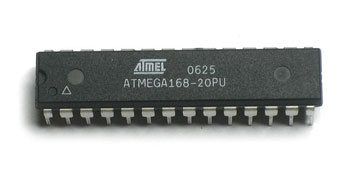
Despite the feasibility of firmware recovery, several technical challenges must be addressed when attempting to unlock a protected ATmega168 chip. Security lock bits are designed to prevent unauthorized access and may automatically erase Flash memory if incorrect read attempts are made. Additionally, environmental stress, long-term usage, or electrical instability may result in partial corruption of EEPROM or degradation of Flash memory cells, complicating the dump process. Encrypted firmware segments, custom bootloader implementations, and device-specific calibration data further increase the complexity of reconstructing a complete and functional firmware file. Because even minor inconsistencies in the recovered binary can affect system performance, maintaining data accuracy throughout the extraction process is critical.
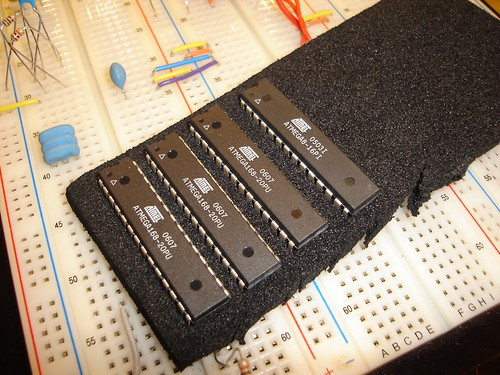
From a business perspective, the ability to break and recover firmware from a secured ATmega168 microcontroller provides significant advantages for manufacturers and service providers. By unlocking protected MCU memory and reconstructing the firmware archive, clients can replicate discontinued products, extend the lifecycle of existing equipment, and avoid costly hardware redesign. Recovering the binary program file enables direct MCU replacement, ensuring compatibility with current systems and minimizing downtime. This capability also protects valuable intellectual property embedded within the firmware while restoring full control over production and maintenance processes. Ultimately, breaking and replicating a locked ATmega168 transforms inaccessible chip memory into a reusable engineering resource, supporting long-term operational stability and sustainable product development.