Decode AVR Microcontroller ATMEL ATmega1280

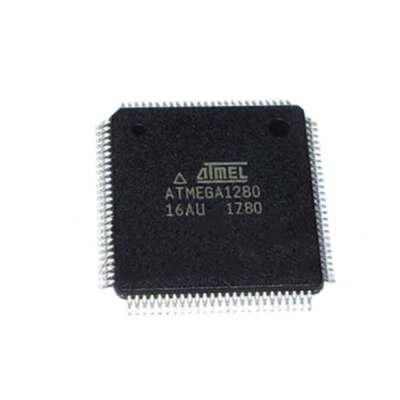
Decode AVR Microcontroller ATMEL ATmega1280 is a professional technical service aimed at recovering and replicating embedded firmware from legacy and industrial control systems built around the powerful ATmega1280. This high-performance AVR microcontroller integrates 128KB of Flash program memory, 8KB SRAM, and 4KB EEPROM, together with multiple UART interfaces, SPI, I²C (TWI), 16-channel ADC, timers, PWM outputs, and advanced interrupt architecture. As a feature-rich MCU, the ATmega1280 has been widely deployed in industrial automation controllers, robotics systems, medical instruments, automotive diagnostic tools, 3D printers, and communication gateways. Its large memory capacity and stable AVR core make it ideal for complex firmware applications that require reliable data processing and real-time control. However, when original firmware source code or project archives are lost, decoding and cloning the binary file from a secured chip becomes essential for maintenance and reproduction.
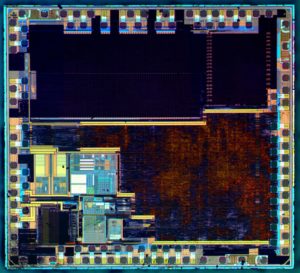
Decode AVR Microcontroller ATMEL ATMEGA1280

In many real-world cases, the ATmega1280 microcontroller is configured as a secured, protected, or locked MCU, with fuse bits and lock bits enabled to prevent unauthorized access to its Flash and EEPROM memory. Under such conditions, standard programmers cannot simply read, copy, or dump the firmware binary, heximal file, or program archive. Our Decode AVR Microcontroller ATMEL ATmega1280 service focuses on safely crack, unlock, decrypt, and replicate the encrypted firmware stored inside the chip. The objective is to recover the complete binary data archive—including Flash program memory, EEPROM configuration file, and calibration parameters—without altering the integrity of the microprocessor. By performing a controlled firmware dump and reconstructing the binary file, we can replicate the MCU program image even when the device is locked or encrypted. This process allows clients to restore a missing source code baseline, rebuild a functional firmware archive, and copy the program data into new replacement chips. Concentrating on binary extraction, memory recovery, and decryption of protected data ensures that the cloned microcontroller operates identically to the original secured unit.

Endurance: Up to 64K Bytes Optional External Memory Space

JTAG (IEEE std. 1149.1 compliant) Interface

– Boundary-scan Capabilities According to the JTAG Standard

Extensive On-chip Debug Support

– Programming of Flash, EEPROM, Fuses, and Lock Bits through the JTAG Interface

Peripheral Features

– Two 8-bit Timer/Counters with Separate Prescaler and Compare Mode

– Four 16-bit Timer/Counter with Separate Prescaler, Compare- and Capture Mode

– Real Time Counter with Separate Oscillator
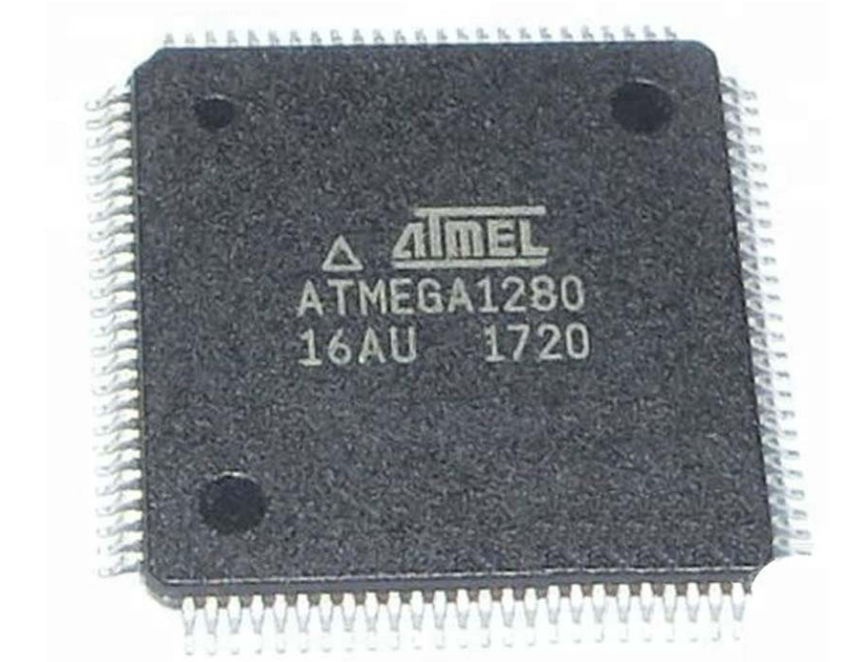
Die Möglichkeit, AVR-Mikrocontroller vom Typ ATMEL Microchip ATmega1280 zu dekodieren, bietet Herstellern und Systemintegratoren erhebliche Vorteile. Durch die Wiederherstellung und Entschlüsselung des Firmware-Binärarchivs eines geschützten Microchip ATmega1280-Mikroprozessors können Kunden nicht mehr produzierte Produkte nachbilden, langfristige Lieferketten aufrechterhalten und kostspielige Hardware-Neuentwicklungen vermeiden. Die Wiederherstellung des ursprünglichen Programmspeichers und der EEPROM-Daten ermöglicht die präzise Duplizierung des gesicherten Microchip ATmega1280-Mikrocontrollers und gewährleistet die Kompatibilität mit der bestehenden Systemarchitektur. Für Branchen, die auf stabile eingebettete Steuerungssysteme angewiesen sind, sichert das Klonen eines gesperrten, verschlüsselten Microchip ATmega1280-Mikrocontrollers geistiges Eigentum, reduziert Ausfallzeiten und verlängert den Produktlebenszyklus. Letztendlich wandelt die Dekodierung und Replikation eines gesicherten, gesperrten Microchip ATmega1280-Mikrocontrollers unzugängliche Firmware-Daten in ein wiederherstellbares technisches Gut um und unterstützt so eine nachhaltige Produktion und einen zuverlässigen Kundendienst.

– Four 8-bit PWM Channels

– Six/Twelve PWM Channels with Programmable Resolution from 2 to 16 Bits

(ATmega1281/2561, ATmega640/1280/2560)

– Output Compare Modulator

– 8/16-channel, 10-bit ADC (ATmega1281/2561, ATmega640/1280/2560)

– Two/Four Programmable Serial USART (ATmega1281/2561,ATmega640/1280/2560)

Master/Slave SPI Serial Interface

– Byte Oriented 2-wire Serial Interface

– Programmable Watchdog Timer with Separate On-chip Oscillator

– On-chip Analog Comparator

– Interrupt and Wake-up on Pin Change

Special Microcontroller Features

– Power-on Reset and Programmable Brown-out Detection

– Internal Calibrated Oscillator

– External and Internal Interrupt Sources

– Six Sleep Modes: Idle, ADC Noise Reduction, Power-save, Power-down, Standby, and Extended Standby I/O and Packages

– 54/86 Programmable I/O Lines (ATmega1281/2561, ATmega640/1280/2560)

– 64-pad QFN/MLF, 64-lead TQFP (ATmega1281/2561)

– 100-lead TQFP, 100-ball CBGA (ATmega640/1280/2560)

– RoHS/Fully Green

Temperature Range:

– -40°C to 85°C Industrial

Ultra-Low Power Consumption

– Active Mode: 1 MHz, 1.8V: 500 µA

– Power-down Mode: 0.1 µA at 1.8V

Speed Grade:
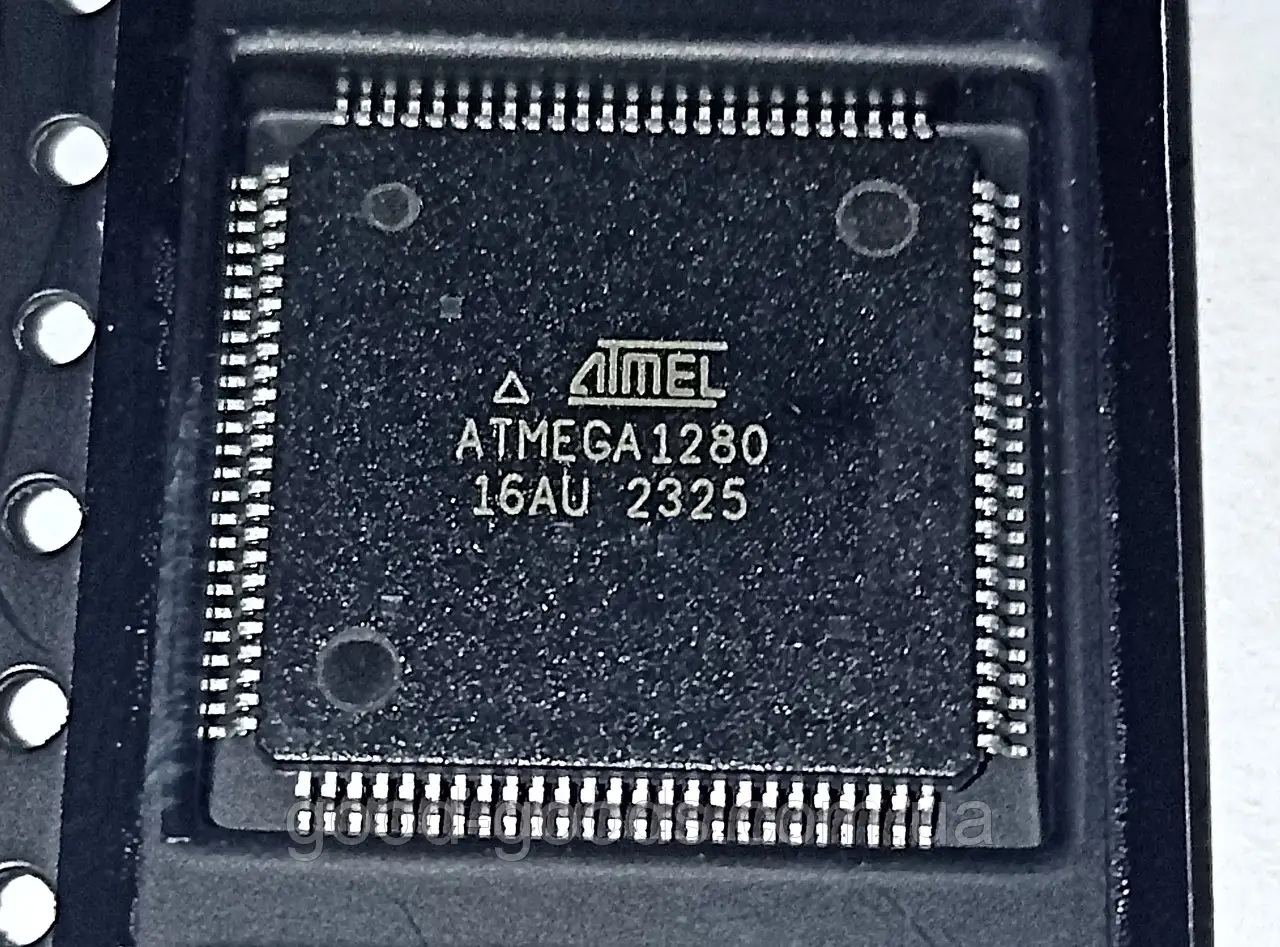
La capacidad de decodificar dispositivos Microchip ATmega1280 con microcontroladores AVR ATMEL ofrece importantes beneficios a fabricantes e integradores de sistemas. Al recuperar y descifrar el archivo binario de firmware de un microprocesador Microchip ATmega1280 protegido, los clientes pueden replicar productos descontinuados, mantener cadenas de suministro a largo plazo y evitar costosos rediseños de plataformas de hardware. La restauración de la memoria de programa original y los datos EEPROM permite una duplicación precisa del MCU protegido Microchip ATmega1280, garantizando la compatibilidad con la arquitectura de sistema existente. Para las industrias que dependen de sistemas de control embebidos estables, la clonación de un microcontrolador cifrado Microchip ATmega1280 bloqueado protege la inversión intelectual, reduce el tiempo de inactividad y extiende la vida útil del producto. En definitiva, la decodificación y replicación de un microcontrolador bloqueado Microchip ATmega1280 seguro transforma los datos de firmware inaccesibles en un activo de ingeniería recuperable, lo que facilita una producción sostenible y un servicio posventa confiable.

ATmega640V/ATmega1280V/ATmega1281V:

0 – 4 MHz @ 1.8 – 5.5V, 0 – 8 MHz @ 2.7 – 5.5V

– ATmega2560V/ATmega2561V:

0 – 2 MHz @ 1.8 – 5.5V, 0 – 8 MHz @ 2.7 – 5.5V

– ATmega640/ATmega1280/ATmega1281:

0 – 8 MHz @ 2.7 – 5.5V, 0 – 16 MHz @ 4.5 – 5.5V

– ATmega2560/ATmega2561:

0 – 16 MHz @ 4.5 – 5.5V

Technically, attempting to break the protection of a locked ATmega1280 chip involves multiple engineering challenges. The security architecture of this MCU may trigger automatic erase procedures if improper read commands are issued. Voltage instability, aging Flash cells, corrupted EEPROM segments, or partially damaged memory blocks can further complicate the firmware dump procedure. Additionally, encrypted or protected configurations often hide critical program sections, making direct binary extraction impossible through conventional ISP interfaces. Because of these risks, decoding a secured AVR microcontroller requires precise control, non-destructive analysis, and strict data validation to ensure that the recovered firmware file is complete and accurate. The complexity of unlocking such a microprocessor explains why professional decoding is necessary when production continuity depends on it.
La capacità di decodificare i dispositivi ATMEL Microchip ATmega1280 con microcontrollore AVR offre notevoli vantaggi a produttori e integratori di sistemi. Recuperando e decrittografando l'archivio binario del firmware da un microprocessore Microchip ATmega1280 protetto, i clienti possono replicare prodotti fuori produzione, mantenere catene di fornitura a lungo termine ed evitare costose riprogettazioni delle piattaforme hardware. Il ripristino della memoria di programma originale e dei dati EEPROM consente una duplicazione accurata dell'MCU protetto Microchip ATmega1280, garantendo la compatibilità con l'architettura di sistema esistente. Per le aziende che si affidano a sistemi di controllo embedded stabili, la clonazione di un microcontrollore Microchip ATmega1280 crittografato e bloccato salvaguarda l'investimento intellettuale, riduce i tempi di inattività e prolunga il ciclo di vita del prodotto. In definitiva, la decodifica e la replica di un microcontrollore Microchip ATmega1280 protetto e bloccato trasforma i dati del firmware inaccessibili in una risorsa ingegneristica recuperabile, supportando una produzione sostenibile e un servizio post-vendita affidabile.
La capacità di decodificare i dispositivi ATMEL Microchip ATmega1280 con microcontrollore AVR offre notevoli vantaggi a produttori e integratori di sistemi. Recuperando e decrittografando l’archivio binario del firmware da un microprocessore Microchip ATmega1280 protetto, i clienti possono replicare prodotti fuori produzione, mantenere catene di fornitura a lungo termine ed evitare costose riprogettazioni delle piattaforme hardware. Il ripristino della memoria di programma originale e dei dati EEPROM consente una duplicazione accurata dell’MCU protetto Microchip ATmega1280, garantendo la compatibilità con l’architettura di sistema esistente. Per le aziende che si affidano a sistemi di controllo embedded stabili, la clonazione di un microcontrollore Microchip ATmega1280 crittografato e bloccato salvaguarda l’investimento intellettuale, riduce i tempi di inattività e prolunga il ciclo di vita del prodotto. In definitiva, la decodifica e la replica di un microcontrollore Microchip ATmega1280 protetto e bloccato trasforma i dati del firmware inaccessibili in una risorsa ingegneristica recuperabile, supportando una produzione sostenibile e un servizio post-vendita affidabile.

From a strategic perspective, the ability to decode AVR microcontroller ATMEL ATmega1280 devices delivers substantial benefits to manufacturers and system integrators. By recovering and decrypting the firmware binary archive from a protected chip, clients can replicate discontinued products, maintain long-term supply chains, and avoid costly redesign of hardware platforms. Restoring the original program memory and EEPROM data allows accurate duplication of the MCU, ensuring compatibility with existing system architecture. For industries relying on stable embedded control systems, cloning a locked microcontroller safeguards intellectual investment, reduces downtime, and extends product lifecycle. Ultimately, decoding and replicating a secured ATmega1280 transforms inaccessible firmware data into a recoverable engineering asset, supporting sustainable production and reliable after-sales service.
La capacité de décoder les microcontrôleurs AVR ATMEL Microchip ATmega1280 offre des avantages considérables aux fabricants et aux intégrateurs de systèmes. En récupérant et en déchiffrant l'archive binaire du firmware d'un microprocesseur Microchip ATmega1280 protégé, les clients peuvent répliquer des produits abandonnés, maintenir des chaînes d'approvisionnement à long terme et éviter des refontes coûteuses de leurs plateformes matérielles. La restauration de la mémoire programme et des données EEPROM d'origine permet une duplication précise du microcontrôleur sécurisé Microchip ATmega1280, garantissant ainsi la compatibilité avec l'architecture système existante. Pour les industries qui dépendent de systèmes de contrôle embarqués stables, le clonage d'un microcontrôleur Microchip ATmega1280 verrouillé et chiffré protège les investissements intellectuels, réduit les temps d'arrêt et prolonge le cycle de vie des produits. En définitive, le décodage et la réplication d'un microcontrôleur Microchip ATmega1280 verrouillé et sécurisé transforment des données de firmware inaccessibles en un actif d'ingénierie récupérable, favorisant une production durable et un service après-vente fiable.
La capacité de décoder les microcontrôleurs AVR ATMEL Microchip ATmega1280 offre des avantages considérables aux fabricants et aux intégrateurs de systèmes. En récupérant et en déchiffrant l’archive binaire du firmware d’un microprocesseur Microchip ATmega1280 protégé, les clients peuvent répliquer des produits abandonnés, maintenir des chaînes d’approvisionnement à long terme et éviter des refontes coûteuses de leurs plateformes matérielles. La restauration de la mémoire programme et des données EEPROM d’origine permet une duplication précise du microcontrôleur sécurisé Microchip ATmega1280, garantissant ainsi la compatibilité avec l’architecture système existante. Pour les industries qui dépendent de systèmes de contrôle embarqués stables, le clonage d’un microcontrôleur Microchip ATmega1280 verrouillé et chiffré protège les investissements intellectuels, réduit les temps d’arrêt et prolonge le cycle de vie des produits. En définitive, le décodage et la réplication d’un microcontrôleur Microchip ATmega1280 verrouillé et sécurisé transforment des données de firmware inaccessibles en un actif d’ingénierie récupérable, favorisant une production durable et un service après-vente fiable.